What Is a Mobile Cath Lab and When Do Hospitals Need One?
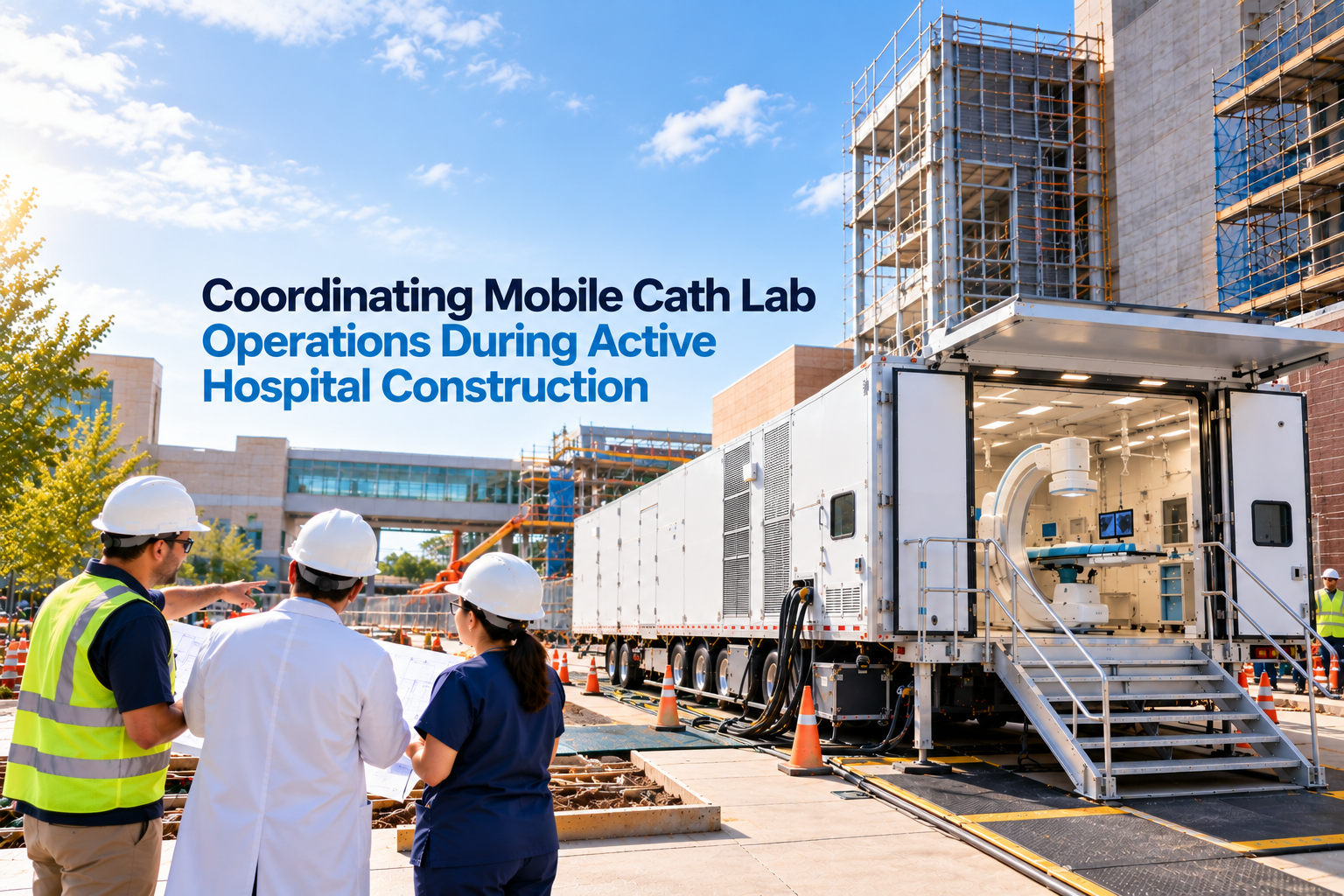
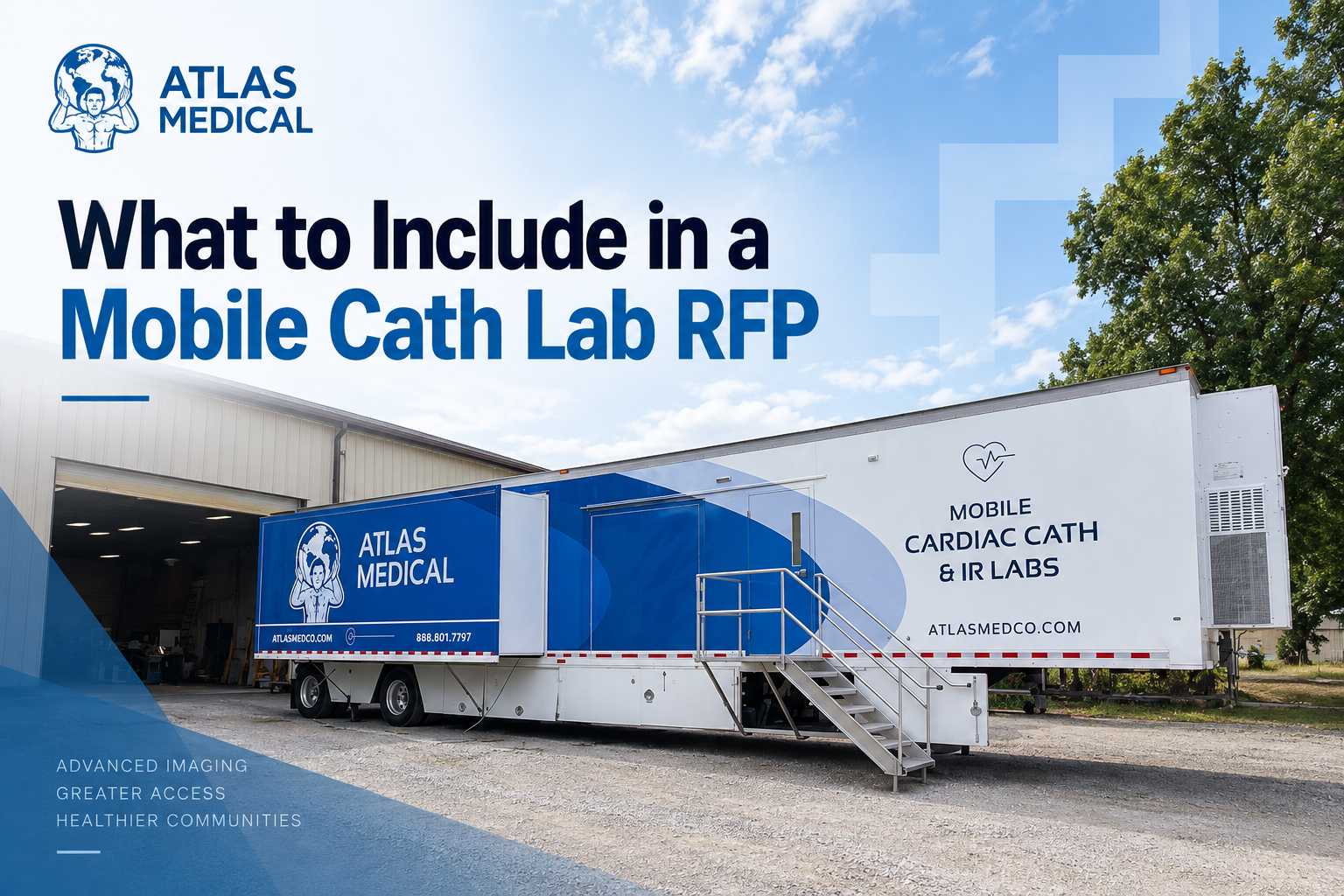
- A mobile cath lab is a temporary cardiac catheterization procedure room built inside a transportable medical trailer.
- Hospitals use mobile cath labs during cath lab renovations, equipment replacements, construction projects, unexpected downtime, or temporary capacity shortages.
- For hospital leaders, a mobile cath lab helps maintain patient access, protect procedure volume, and keep cardiac and vascular services running while the permanent room is offline.
When a hospital cath lab goes offline, the impact is immediate. Cardiology teams lose access to the room they rely on for diagnostic and interventional procedures. Patients face delays. Physicians need to reschedule cases. Hospital leadership begin worrying about revenue loss, referral leakage, and disruption to critical service lines.
This is where a mobile cath lab becomes an important temporary solution.
A mobile cath lab gives hospitals a fully equipped, transportable procedure lab that can be deployed on-site while a permanent cath lab is being renovated, replaced, expanded, repaired, or upgraded. Instead of diverting or delaying cardiac and vascular procedures, hospitals can use a mobile cath lab to maintain continuity of care and keep cases moving during a period of transition.
For hospitals, the value of a mobile cath lab is not simply that it provides a temporary lab. The real value is that it helps protect patient access, physician workflow, and procedural volume when downtime would otherwise create operational strain.
What Is a Mobile Cath Lab?
A mobile cath lab is a temporary cardiac catheterization lab built inside a transportable medical trailer. It is designed to support image-guided cardiovascular procedures when a hospital’s permanent cath lab is unavailable or when additional temporary capacity is needed.
A cath lab, or catheterization laboratory, is used by cardiologists and cardiovascular specialists to diagnose and treat heart and vascular conditions through minimally invasive procedures. These procedures often require advanced imaging, specialized equipment, trained staff, and a controlled clinical environment.
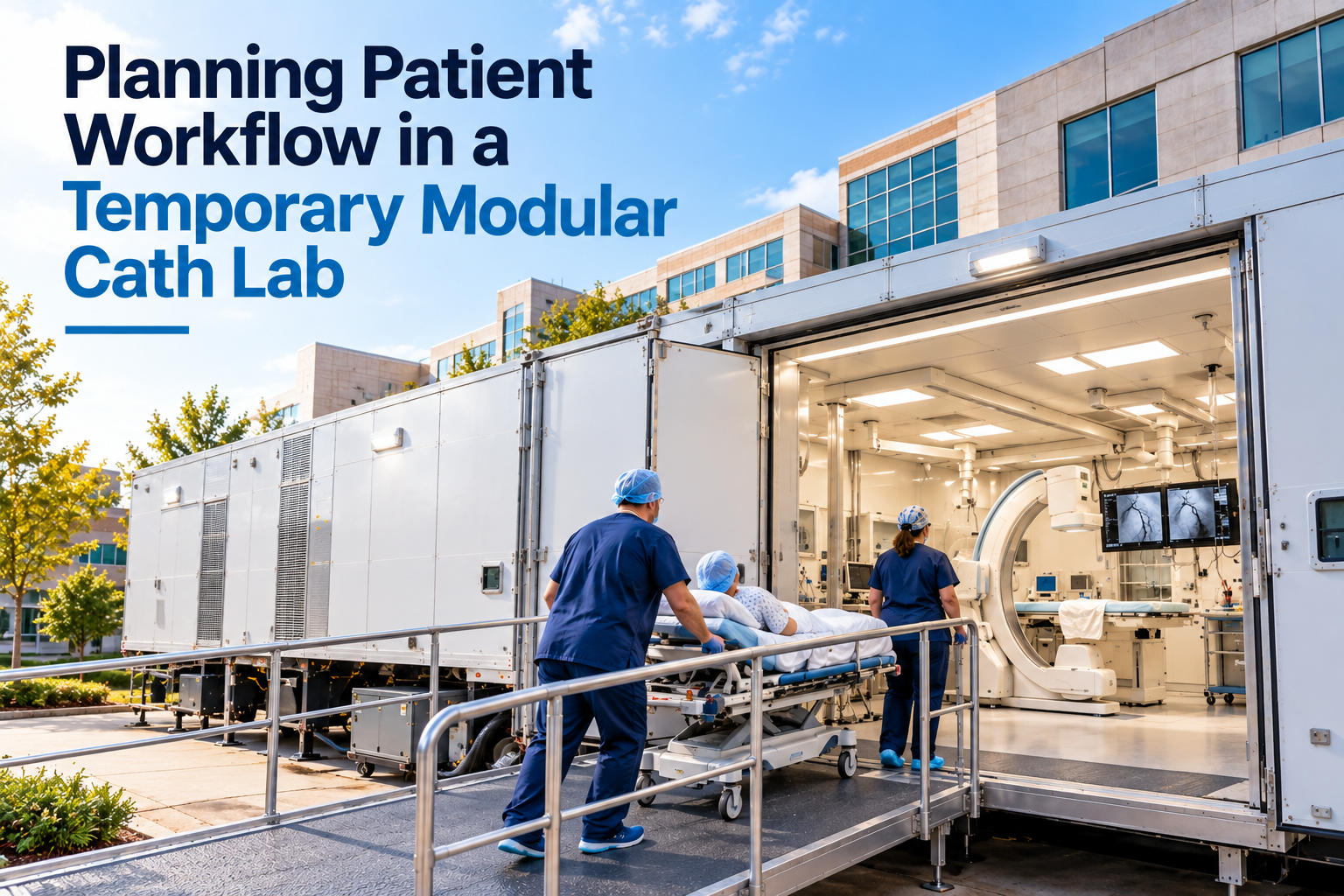
A mobile cath lab brings that type of procedure space to the hospital campus in a mobile format. The unit can be delivered to the site, connected to required utilities, integrated into facility workflows, used for the project period, and removed once the permanent space is ready.
A mobile cath lab is not just a trailer. It is a temporary lab that allowshospitals to continue cardiac and vascular procedures when their permanent room is down.
Why Hospitals Use Mobile Cath Labs
Hospitals use mobile cath labs because cath lab downtime can create serious operational problems. A cath lab is often tied directly to procedure volume, patient access, physician satisfaction, and hospital revenue. When that room is unavailable, the hospital may need to delay procedures, refer cases elsewhere, or ask physicians and staff to work around a constrained schedule.
A mobile cath lab gives the hospital a way to bridge the gap.
Instead of pausing patient care and procedures during a renovation, replacement, or equipment upgrade, the hospital can continue performing cases in a temporary on-site environment. This helps reduce disruption and gives hospital leadership more flexibility when planning construction or equipment projects.
Mobile cath labs are especially useful when the hospital needs a solution that can be deployed for a defined project period. Once the permanent cath lab is ready, the mobile unit can be removed or relocated.
When Do Hospitals Need a Mobile Cath Lab?
Hospitals typically need a mobile cath lab when their permanent cath lab is unavailable, overloaded, or at risk of disrupting service continuity. The most common triggers include equipment replacement, renovation, construction, system failure, and temporary capacity shortages.
1. Cath Lab Equipment Replacement
One of the most common reasons hospitals need a mobile cath lab is equipment replacement.
Cath lab imaging systems eventually need to be replaced due to age, performance requirements, technology upgrades, or changing clinical needs. However, replacing cath lab equipment is not a quick process. The room needs to be taken offline for deinstall , construction, installation, testing, and final setup.
During that time, the hospital still needs to serve patients.
A mobile cath lab can act as a project bridge while the permanent room is being upgraded. This allows the hospital to move forward with the replacement project while continuing to perform cardiac and vascular procedures.
2. Cath Lab Renovation
Cath lab renovation can also require temporary procedure space.
Hospitals may renovate a cath lab to modernize the room, improve workflow, upgrade infrastructure, create a better staff environment, or support newer imaging technology. Even when the renovation is planned carefully, the room may still be unavailable for months.
Without a temporary solution, the hospital may have to reduce procedure volume or reroute cases.
A mobile cath lab helps maintain access during renovation. It allows the hospital to continue treating patients while construction takes place inside the permanent space.
3. Construction or Expansion Projects
Hospitals also use mobile cath labs during larger construction or service-line expansion projects.
For example, a hospital may be expanding its cardiovascular program, building a new procedural area, or reconfiguring existing clinical space. These projects can temporarily disrupt normal operations. In some cases, the hospital may need interim capacity before the new space is complete.
A mobile cath lab gives the hospital flexibility during that transition. It can support current case volume while the hospital completes the long-term facility plan.
This is especially valuable when demand is already strong and the hospital cannot afford to slow down procedures during construction.
4. Unexpected Downtime or Equipment Failure
Not every cath lab disruption is planned.
Sometimes equipment fails unexpectedly. A major system issue can threaten patient access and create pressure on the hospital to find a fast solution. If the hospital depends on that cath lab for regular procedure volume, even a short period of downtime can become costly.
In these situations, a mobile cath lab can help restore operational continuity while the hospital repairs or replaces the affected system.
This is where speed, reliability, and experienced deployment support matter. Hospitals need a partner that understands site planning, logistics, utilities, IT integration, applications support, and service responsiveness.
5. Temporary Capacity Shortages
A hospital may also need a mobile cath lab even if its existing cath lab is still operational.
If procedure volume increases, the current cath lab schedule may become too limited. Physicians may have difficulty getting time in the room. Patients may wait longer for procedures. The hospital may start seeing bottlenecks that affect both care delivery and revenue.
A mobile cath lab can provide temporary added capacity during a high-demand period.
This can be useful for hospitals experiencing service-line growth, seasonal volume shifts, staffing changes, or an increase in referrals. Instead of delaying cases or turning away volume, the hospital can use the mobile lab as additional procedural space.
What Problems Does a Mobile Cath Lab Help Solve?
A mobile cath lab helps solve several operational challenges at once.
- Patient access. When the permanent cath lab is down, patients may face delays unless the hospital has another option. A mobile cath lab helps keep patient care available on-site without delays.
- Physician workflow. Cardiologists and interventional teams need a reliable environment where they can perform their procedures. If the temporary solution feels too cramped, outdated, or disconnected from normal workflow, physician acceptance may become a concern. A well-planned mobile cath lab removes that friction.
- Revenue protection. Cath lab procedures are an important service line for many hospitals. When cases are delayed, canceled, or referred elsewhere, the financial impact can add up quickly.
- Project flexibility. Hospitals can move forward with renovations, equipment upgrades, and construction projects without forcing a complete shutdown of the service line.
- Risk reduction. A mobile cath lab gives the hospital a more controlled way to plan for downtime rather than reacting to it after the room is already unavailable.
What Should Hospitals Consider Before Choosing a Mobile Cath Lab?
Choosing a mobile cath lab requires more than looking at equipment alone. Hospitals should consider space, technology, workflow, setup requirements, integration, and vendor support.
Clinical Technology
The technology inside the mobile cath lab must meet the clinical needs of the physicians and service line. Ideally, the mobile cath lab will utilize the same technology as the hospital’s current cath lab. Hospitals should review the imaging system, software capabilities, procedure requirements, and expected case mix.
The goal is to make sure the temporary environment can support the procedures the team needs to continue performing during the project period.
Procedure Room Space
Space matters.
One common concern hospitals have is whether the mobile cath lab will be large enough for physicians, staff, equipment, and patient movement. If the room feels too tight, it may affect workflow and user acceptance.
Procedural space is important. Hospitals are not only looking for a trailer. They are looking for a temporary lab where their team can continue working effectively with a similar or identical workflow as their permanent cath lab.
Site Planning Requirements
A mobile cath lab also requires proper site planning.
The hospital needs to prepare for a pad , power, data connections, water, drainage, access, and safety requirements. Atlas’ site planning team can help identify important considerations such as pad support, power requirements, data connections, water supply, wastewater handling, and facility connection planning.
Early planning helps reduce surprises during delivery and setup. It also helps the hospital understand what internal departments may need to be involved, including facilities, IT, clinical leadership, construction, and operations.
IT and Workflow Integration
Hospitals should also consider how the mobile cath lab will connect to internal systems and workflows.
This may include PACS, worklist, image review workstations, network access, dedicated IP addresses, phone or data connections, and workflow coordination. A temporary lab still needs to function inside the hospital’s clinical ecosystem.
Smooth integration reduces staff frustration and helps the mobile lab feel less like a workaround and more like an operational extension of the hospital.
Vendor Experience and Support
The hospital’s mobile cath lab partner’s experience matters. obile cath lab deployment is a complex process.
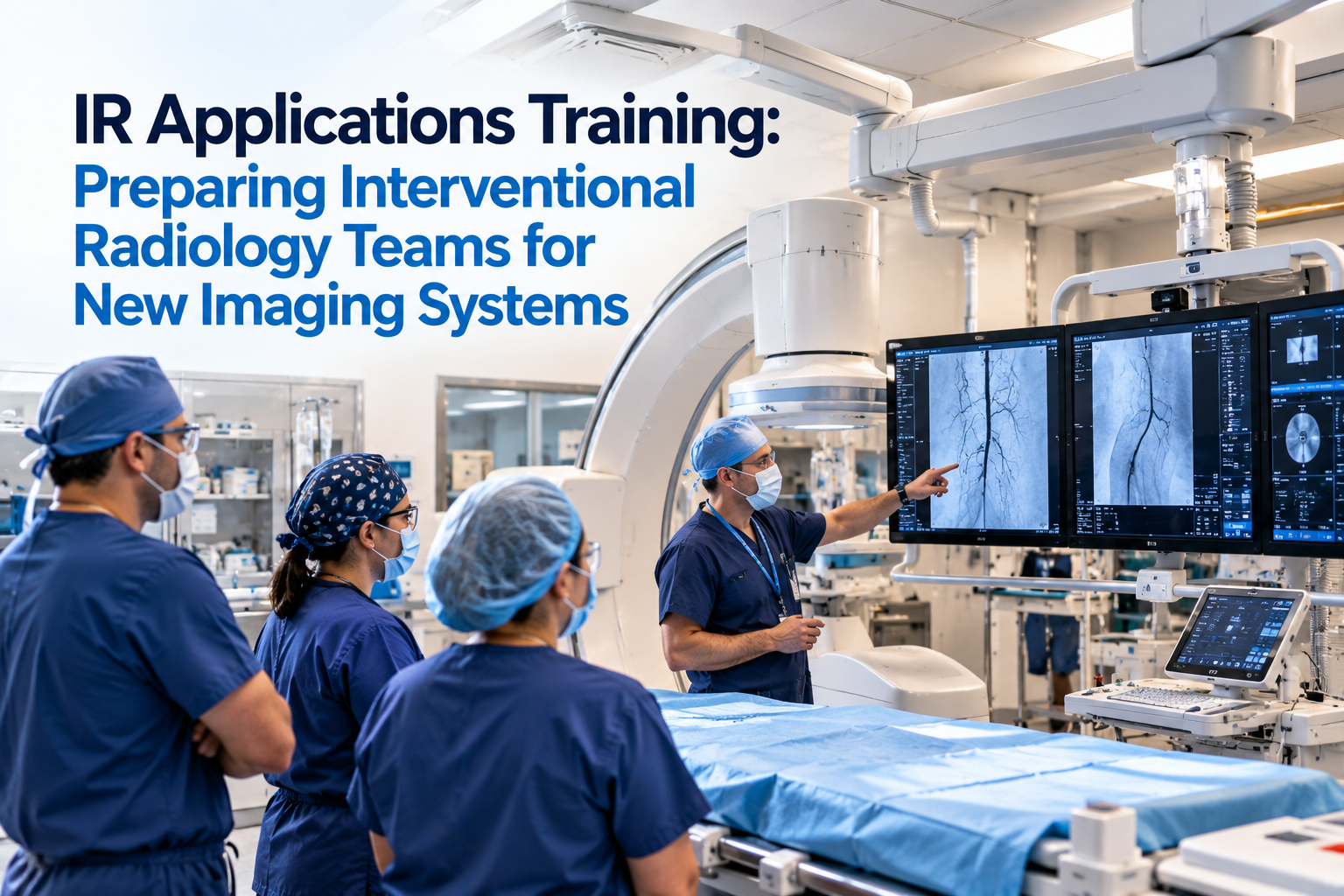
Hospitals need a partner that can support planning, logistics, delivery, setup, applications training, and ongoing service. The temporary solution must be reliable, and the mobile cath lab partner must communicate clearly throughout the project.
A hospital dealing with renovation, equipment replacement, or downtime cannot have a partner that overpromises and underdelivers. The mobile cath lab partner needs to understands the stakes.
Mobile Cath Lab vs. Modular Cath Lab
Hospitals may also compare a mobile cath lab with a modular cath lab.
A mobile cath lab is built on a trailer platform and is generally used when mobility, speed, flexibility, and short-term deployment are important. It is designed to be delivered, used for a temporary period, and removed when the project is complete.
A modular cath lab is a prefabricated on-site structure that feels more like a building extension. Modular solutions are often used for longer-term needs, larger space requirements, ground-level access, or situations where the hospital wants a more permanent-feeling temporary environment.
The right choice depends on the hospital’s timeline, available space, project type, clinical needs, and operational goals.
For many hospitals, a mobile cath lab is the best fit when they need a temporary, turnkey solution to bridge a defined period of downtime.
Why Early Planning Matters
The best time to plan for a mobile cath lab is months or years before the permanent cath lab goes offline.
Early planning gives the hospital time to evaluate the site, understand utility requirements, coordinate internal teams, confirm equipment needs, and schedule the mobile unit around the project timeline.
Waiting too long can create unnecessary pressure. If the hospital does not secure a mobile cath lab early enough, it may have fewer options when the room is ready to come offline.
For planned renovations or replacements, mobile cath lab planning should be part of the broader project timeline. This helps leadership protect patient access while still moving forward with necessary upgrades.
To Sum it Up
If your hospital is planning a cath lab renovation, equipment replacement, construction project, or temporary service expansion, the best time to plan for a mobile cath lab is months to years before downtime begins.
Atlas Medical helps hospitals maintain cardiac and vascular procedure access with turnkey mobile cath lab solutions designed for continuity, workflow support, and reduced disruption. From planning and site preparation to delivery, setup, and ongoing service support, Atlas works with your team to help keep your cath lab service line moving.
Contact Atlas Medical to discuss your project timeline, site requirements, and mobile cath lab availability.

Sean Schneider
Mobile Project Manager · Atlas Medical
About the Author
Say hello to Sean Schneider - our Mobile Project Manager at Atlas Medical. Sean has worked in the medical imaging industry for over 20 years, including 10 years with Atlas Medical.
Sean has a knack for making complicated projects simple to understand. Around here, Sean's the man who keeps things moving smoothly.
When Sean isn't helping launch our mobile imaging units at new sites he enjoys spending time with his family, golf, and hockey.
Request a Mobile Imaging Solution
Our Services Include: