Mobile CT Scanner Rentals, Leases, and Sales

Atlas Medical Mobile CT Rentals, Leases, and Sales

The face of modern healthcare is changing swiftly, and Atlas Medical is poised to help you stay one step ahead. Rather than battling the overhead of new construction or letting patients wait in line, you can expand imaging services now—without the headache. How? By renting or leasing a mobile CT unit that can move where you need it, when you need it.


Below, we’ll explore the world of mobile CT scanner rentals, highlight the advantages, and reveal why Atlas Medical is the trusted partner for clinics, hospitals, and imaging centers across the country.


Rent a Mobile CT Scanner

A mobile CT scanner is an ideal solution for healthcare facilities aiming to ramp up diagnostic capacity without breaking ground on new radiology suites. By opting for a mobile ct rental, you position your practice to react swiftly to demand fluctuations and serve patients in both urban and remote settings.

  • Short-Term or Long-Term: Whether it’s covering a few weeks during construction or spanning multiple years for expanding service lines, you dictate the terms.
  • Flexible Financing: Don’t let budget constraints stifle innovation. Many providers, including Atlas Medical, offer leases or monthly billing arrangements that spare you the hefty upfront capital outlay.

Advantages of Mobile CT Scanners

Rapid Deployment

Forget year-long construction timelines. A mobile ct scanner truck or trailer can be delivered and set up fast, letting you scan patients without putting your practice on hold.

Lower Costs

Purchasing a brand-new CT scanner can put a deep dent in your capital. Renting a mobile ct unit spreads out costs, preserving funds for other vital projects.

Portable Diagnostics

Load up a mobile CT scanner trailer and set off to satellite clinics or health fairs. By rotating a single unit among multiple sites, you bring essential imaging services straight to patients.

Test New Markets

Unsure if a region has enough patient volume to sustain permanent imaging? Deploy a mobile ct solution for a set period—if it flourishes, you know you can invest confidently.

Why Rent a Mobile CT Scanner

Seasonal Surges

Snowbird season? Summer sports injuries? Surging patient traffic shouldn’t result in overbooked schedules. A mobile ct rental fills gaps swiftly and efficiently.

Construction Projects

Renovating your radiology department is no reason to turn patients away. Keep scanning with a mobile ct unit parked outside, ensuring continuity of care.

Budget Constraints

Don’t let a limited budget keep you from delivering top-tier diagnostics. Renting sidesteps the huge capital expense of owning a new scanner outright.

Mobile CT Scanner Price

Curious what you’ll pay for a mobile ct scanner truck or trailer? Pricing depends on several key factors:


  • Scanner Model & Slice Count: Cutting-edge, higher-slice scanners demand higher monthly fees.
  • Length of Rental: Longer commitments often reduce monthly costs.
  • Service & Maintenance Packages: Opting for a full-service plan can raise costs but remove the burden of repairs.
  • Geographic Location: Transport fees and regulatory requirements may bump up the final price.


Our typical Mobile CT rentals range from $20k to $40k per month.

Learn more about what goes into Mobile CT Rental Pricing HERE.

Turnkey Mobile CT Scanner


A “turnkey” mobile CT unit means all in one, no guesswork necessary. From power hookups and specialized staff training to compliance with local regulations, Atlas Medical delivers a seamless experience. Roll in, plug in, and start scanning—it’s that straightforward.


We offer Mobile CT rentals featuring all the major OEMs:
GE
Siemens Philips Canon



Why Choose Atlas Medical

Extensive Inventory

Whether you’re after a 16-slice workhorse or a high-slice advanced system, we have the mobile ct scanner trailer or truck to match your needs. We offer mobile CT scanner from major OEMs such as GE, Siemens, Canon, and Philips.

Flexible Agreements

From short-term mobile ct rental options to purchase and long-term leases, we tailor solutions that fit your budget and strategic goals.

Dedicated Support

Our expert team isn’t just about dropping off a trailer. We handle setup, maintenance, and regulatory compliance so you can focus on patient care. To get started we can help you choose the best mobile CT scanner for YOU and guide you through site prep requirements.

Proven Reputation

Hundreds of clinics, hospitals, and imaging centers nationwide trust Atlas Medical to expand their diagnostic services. We'll even guide you through Mobile CT legal regulations and requirements.

Ready to elevate your imaging capabilities?

Let us help you bring advanced diagnostic services directly to your patients—without the cost and wait of permanent construction. When you need to rent, lease, or buy a mobile ct unit, trust Atlas Medical to deliver modern solutions for modern healthcare.


Close-up portrait of a man with short gray hair and a neutral expression against a blurred background

Sean Schneider

Mobile Project Manager · Atlas Medical


About the Author

Say hello to Sean Schneider - our Mobile Project Manager at Atlas Medical. Sean has worked in the medical imaging industry for over 20 years, including 10 years with Atlas Medical. 


Sean has a knack for making complicated projects simple to understand. Around here, Sean's the man who keeps things moving smoothly.


When Sean isn't helping launch our mobile imaging units at new sites he enjoys spending time with his family, golf, and hockey.

Request a Mobile Imaging Solution

Our Services Include:
Medical lab category buttons

Mobile CT scanner installation at a hospital showing delivery, utility setup, and preparation for cl
By Jared Labtic September 13, 2026
By the time a mobile CT scanner arrives at a hospital, much of the planning should already be complete. The site has been selected. Facilities has reviewed the proposed location. Power and connectivity requirements have been discussed. The hospital knows when temporary CT capacity needs to become available. But delivery is not the same as go-live. A mobile CT scanner installation still involves positioning the unit, connecting infrastructure, integrating the scanner with hospital systems, verifying equipment readiness, preparing technologists, and completing the hospital's own pre-clinical requirements. Understanding that sequence helps project teams avoid treating the arrival date as the same thing as the clinical start date. Hospitals evaluating temporary CT capacity can review Atlas Medical's mobile CT scanner solutions before building their deployment schedule. Atlas currently offers mobile CT systems from major OEMs and includes applications training and integration support as part of its turnkey approach.
Mobile cath lab unit showing the type of equipment and facility setup hospitals should consider when
By Jared Labtic September 13, 2026
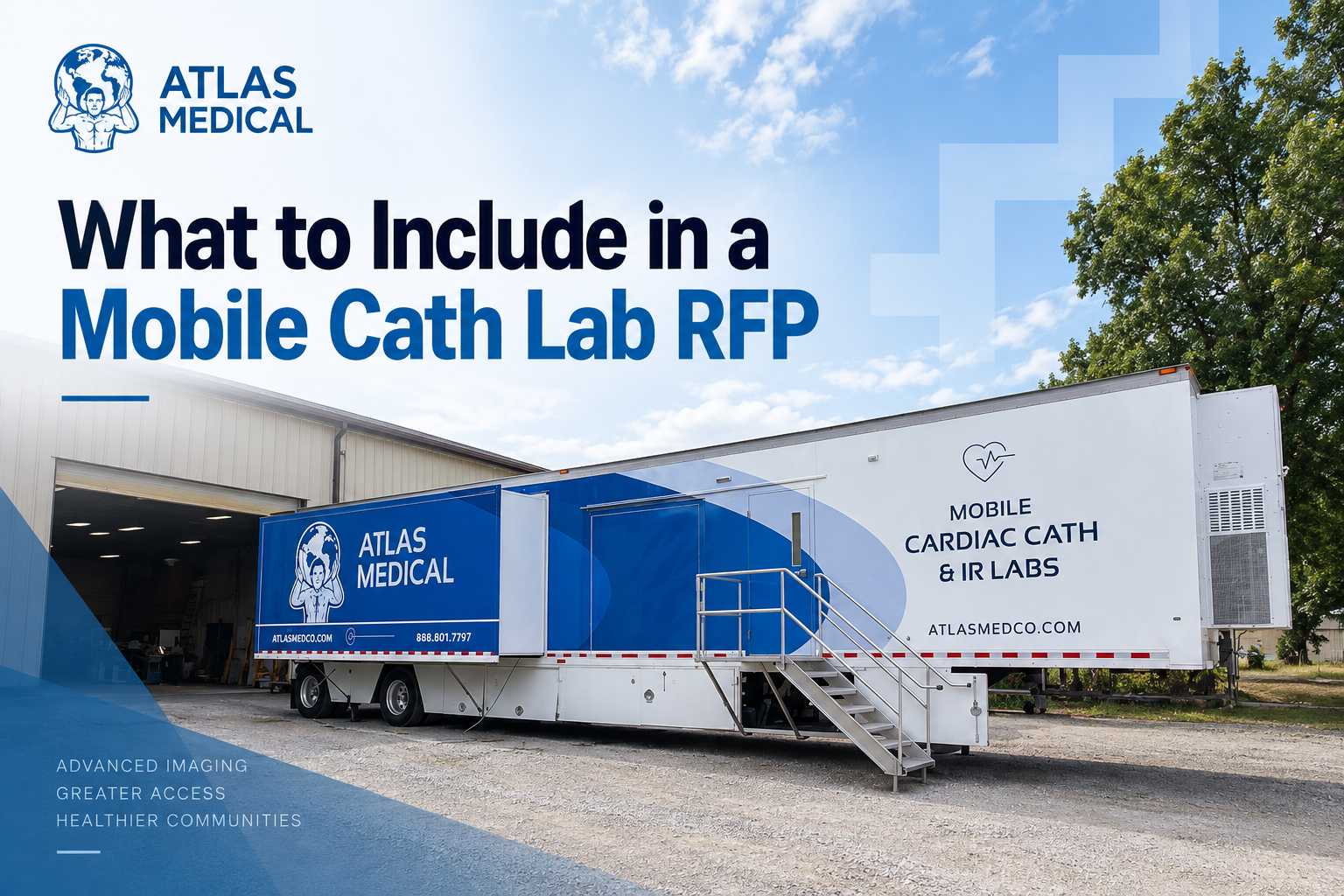
A hospital preparing to rent a mobile cath lab needs more than a price and an available trailer.  The hospital needs to know whether the temporary lab can support its procedures, fit the site, integrate with existing systems, arrive on schedule, support staff workflow, and remain available for the full project period. A well-written mobile cath lab RFP helps procurement teams compare vendors against the same requirements instead of evaluating proposals that describe completely different solutions. The RFP should therefore be developed with input from more than procurement alone. Cath lab leadership, facilities, IT, clinical engineering, project management, infection prevention, finance, and other appropriate hospital stakeholders may all have requirements that affect the temporary lab. Hospitals still defining the type of temporary solution they need can review Atlas Medical's mobile cath lab rental solutions before developing the RFP.
By Jared Labtic September 9, 2026
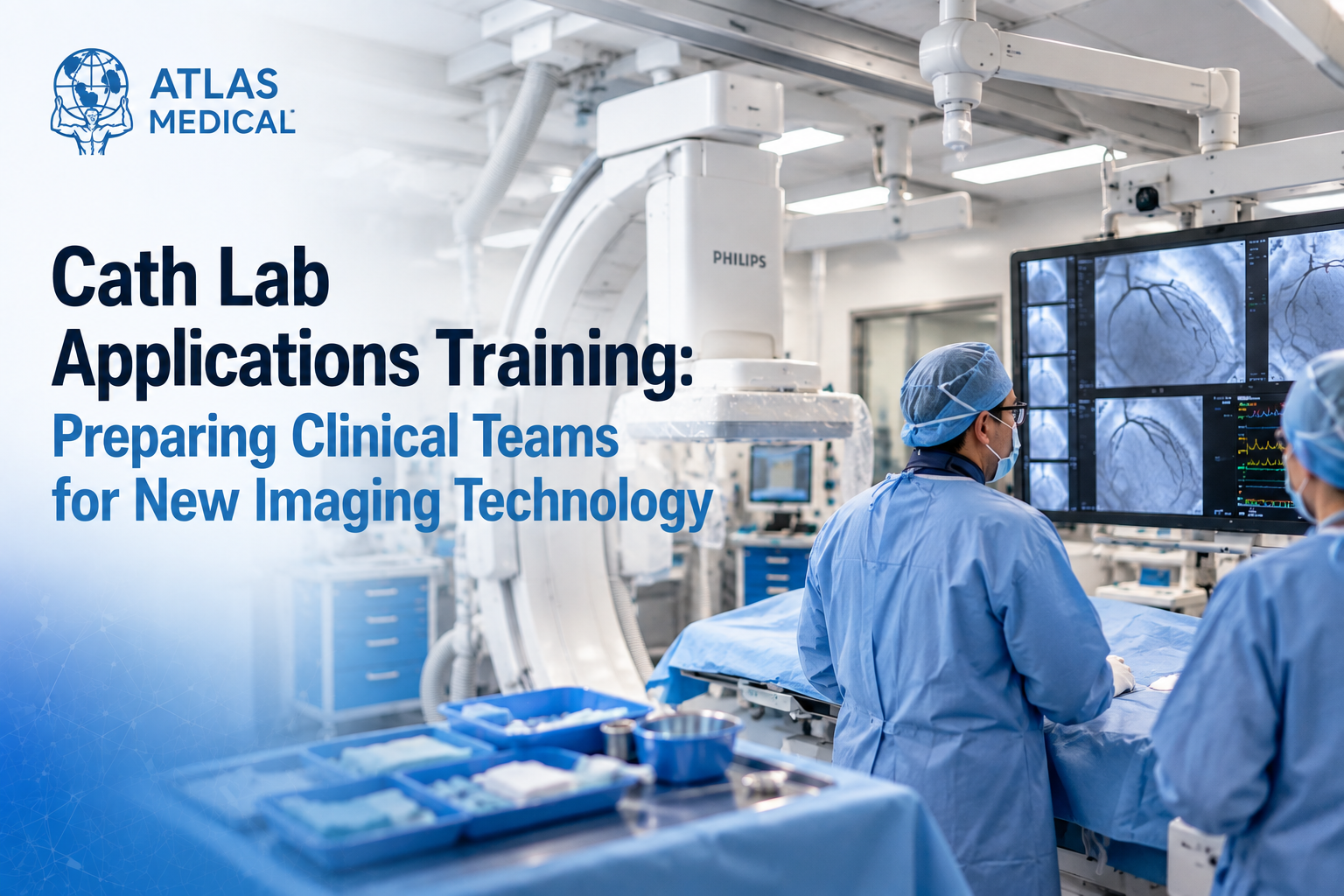
Installing or gaining access to a cath lab imaging system is only part of getting the room ready for clinical use.  The people operating the technology also need to understand how that particular system fits into their daily workflow. A clinical team may already have years of cath lab experience and still need time to become comfortable with a different interface, room controls, imaging modes, table and C-arm movements, image review tools, and system-specific workflows. That is where cath lab applications training becomes valuable. Rather than teaching cath lab fundamentals, applications training focuses on helping experienced clinical teams understand and effectively use the imaging technology available to them. Hospitals that need project-based support can explore Atlas Medical's imaging applications training and temporary technologist staffing .
By Jared Labtic September 8, 2026
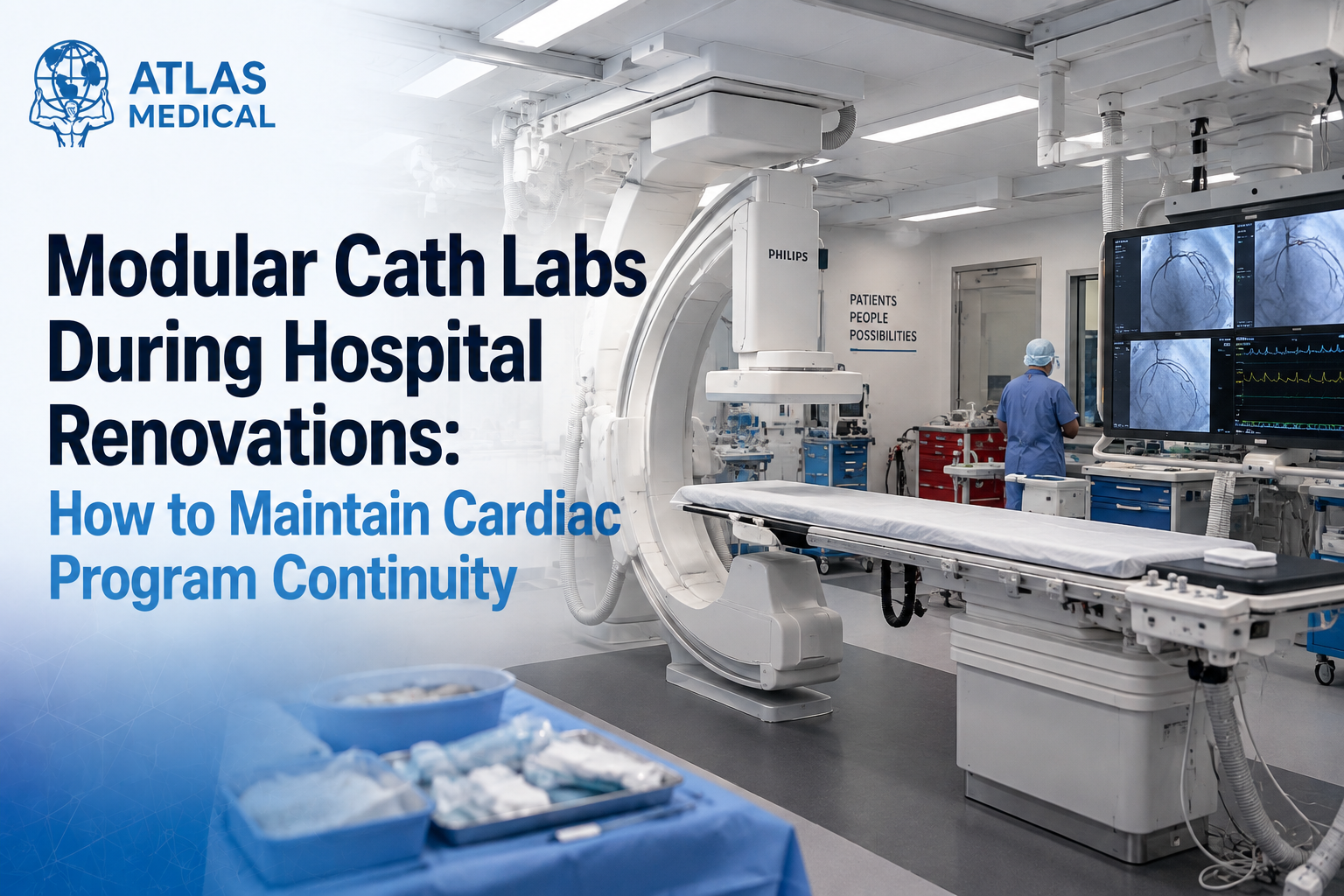
A cath lab renovation creates an unusual planning challenge for hospitals: the project is designed to improve cardiac services, but completing it may temporarily take critical procedural space out of operation. The construction schedule is only part of the problem.  Hospital leaders also have to decide what happens to procedures, physicians, staff, patients, and workflows while the permanent lab is unavailable. A modular cath lab for hospital renovation can provide temporary procedural capacity on-site while work progresses inside the permanent facility. Atlas Medical specifically positions its modular cath lab rentals for renovations, temporary capacity, and projects where hospitals need to keep cases running. The key is to treat the modular lab as part of the renovation strategy—not as equipment that gets added after the construction plan is already finished.
By Jared Labtic September 1, 2026
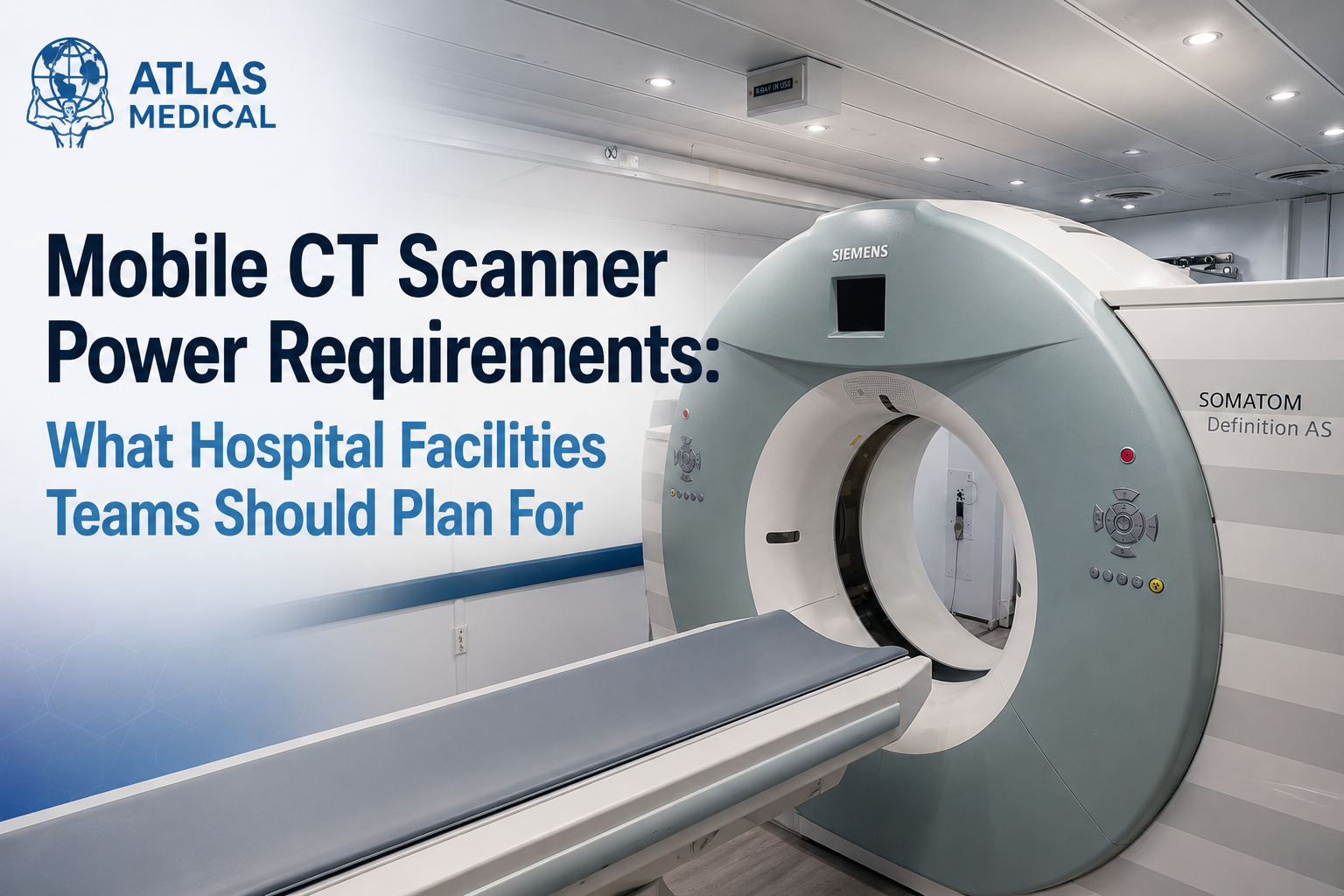
A mobile CT scanner may arrive on a trailer, but it still needs the electrical infrastructure required to operate advanced diagnostic imaging equipment. For hospital facilities and engineering teams, that makes power one of the first technical questions to resolve before delivery. Atlas Medical notes that a typical mobile CT unit requires 480V, 3-phase power . However, hospitals should not treat that figure as a universal specification for every trailer or scanner. The electrical requirements should always be confirmed for the specific mobile CT unit assigned to the project. Getting that information early gives facilities teams time to evaluate the site's existing electrical capacity, determine whether electrical work is necessary, coordinate responsibilities, and have the connection ready before the mobile unit arrives.
By Jared Labtic August 30, 2026
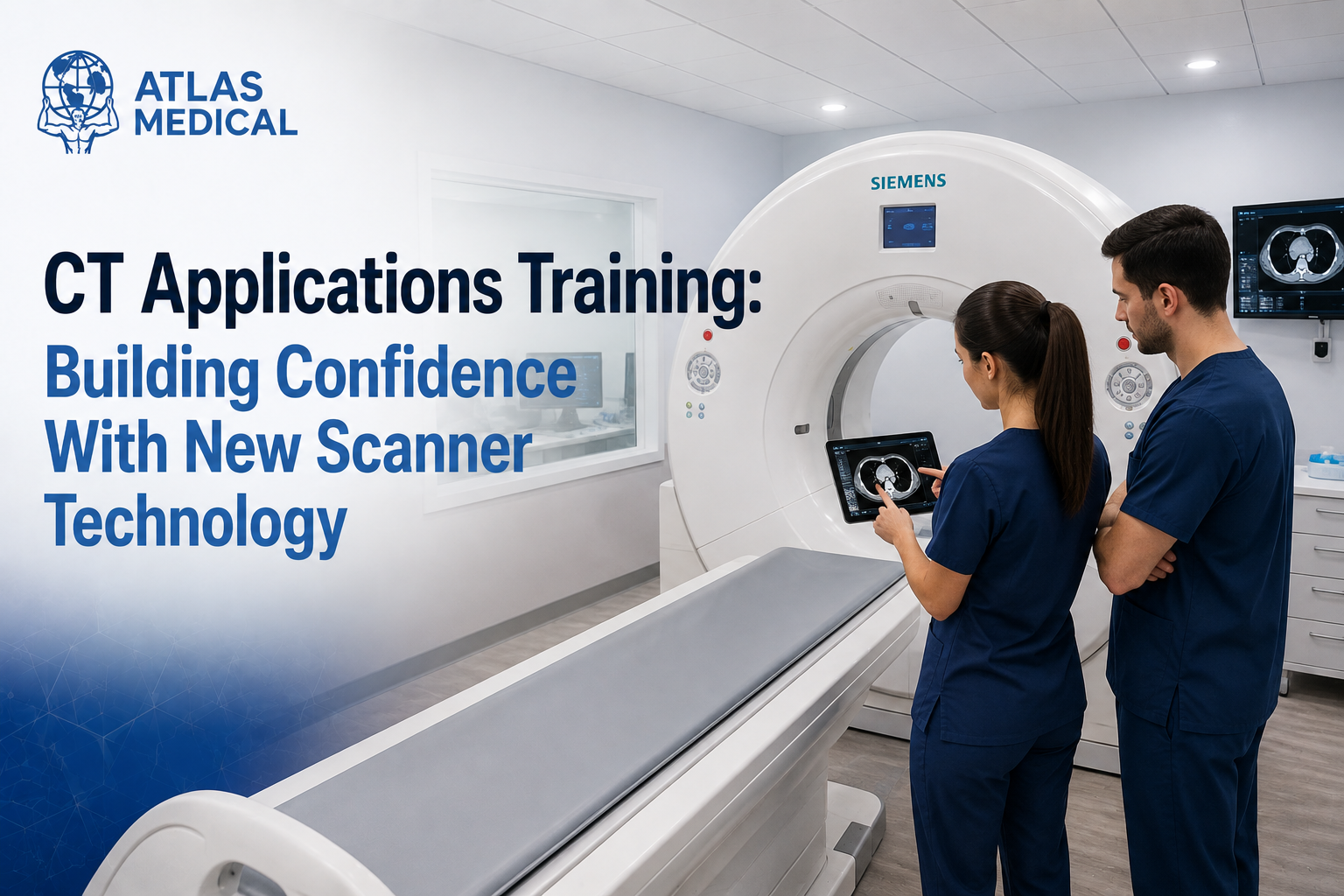
An experienced CT technologist already understands patient care, positioning, scan preparation, and the clinical demands of a busy imaging department. What changes when the scanner changes is the technology used to perform that work. A new interface, different protocol structure, unfamiliar reconstruction tools, or a change in manufacturer can create a learning curve even for an experienced team. CT applications training gives technologists hands-on, system-specific support so they can understand how the scanner fits into their department's clinical workflow. Hospitals may need this support when installing a scanner, replacing older equipment, changing OEM platforms, introducing advanced applications, opening a temporary imaging location, or onboarding additional staff. Atlas Medical provides imaging applications training and temporary technologist staffing for hospitals and imaging providers with project-based clinical support needs.