Philips Allura FD20 vs. Philips Azurion: Which Mobile or Modular Lab Fits Your Clinical Workflow?

Philips Azurion and Allura Cath Lab and IR Suite Rentals
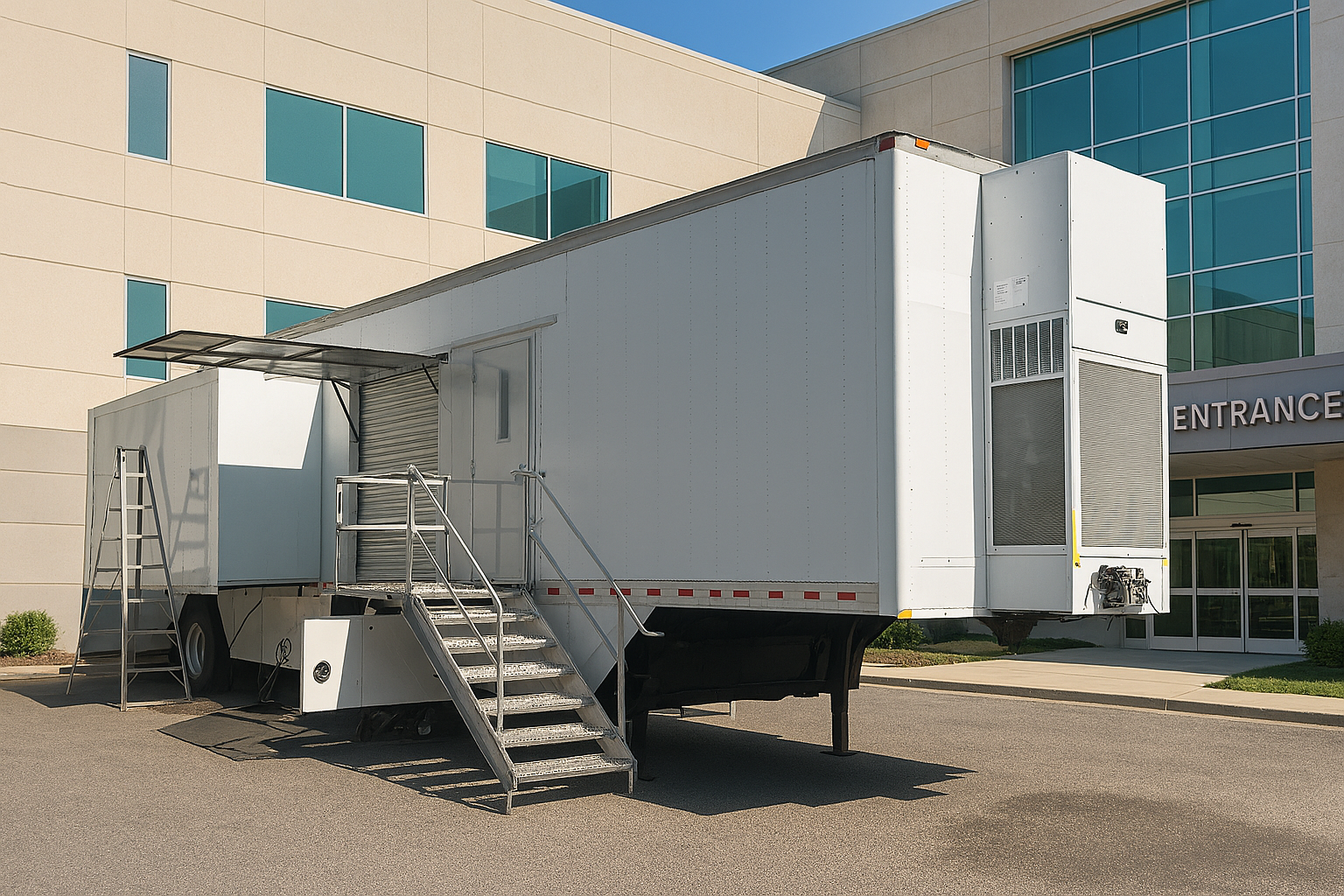
White mobile trailer with stairs parked outside a modern building entrance under a blue sky

Why Two Philips Options Exist—and Why the Choice Matters

Atlas Medical offers both of Philips' flagship interventional platforms in our mobile trailers and modular buildings: the Allura FD20 (a proven workhorse found in thousands of cath and IR rooms) and the newer Azurion series (designed for ultra-fast workflow and integrated image guidance). Both are available from Atlas Medical in turnkey trailers or modular suites—but each fits a slightly different clinical rhythm. Understanding those differences helps you reserve the trailer that feels most like your permanent room.


Core Strengths at a Glance

Philips Allura FD20

  • 40cm x 30cm flat panel detector ideal for IR, Vascular, and Cardiac work
  • Familiar Philips Allura UI—many techs know it cold.
  • DoseWise technology keeps radiation low while retaining clarity.
  • Slightly smaller footprint inside the trailer—good for tight pads.

Philips Azurion

  • 40 cm × 30 cm detector covers cardiac and peripheral procedures.
  • Touch-screen “Azurion Workspace” with drag-and-drop preset recall.
  • ClarityIQ algorithms reduce motion blur in long CTO and EVAR cases.


Choosing by Clinical Use-Case

  • High-Volume Cardiology + Peripheral Vascular
    – Pick Azurion. The workflow streamline PCI, iliac stents, and EVAR follow-ups without extra table moves.
  • Focused Neuro-IR or GI Bleed Control
    – Pick Allura FD20. The detector size easily frames head-and-neck vessels; dose remains ultra-low for long DSA runs.
  • Mixed Cath & Structural Heart
    – Pick Azurion. Integrated IVUS/OCT and FFR controls sit on one touch-screen, reducing swap-outs during TAVR or LAA closures.
  • Space-Constrained Sites
    – Pick Allura FD20. A smaller trailer body and tighter rotation radius help if your pad is squeezed between buildings.


Workflow & Staff Training

  • Allura users often need under two hours of orientation if they come from a fixed FD20 room.
  • Azurion introduces the Workspace touch-screen, but most teams reach full speed after a one-day apps session.
  • Both systems export DICOM and HL7 in Philips standard formats—no extra IT development.


Cost Considerations

  • Azurion carries a slight premium
  • Both units include 24/7 service, on-site applications training, and Atlas project management.


Still Unsure Which Unit Fits?

Scroll down to the Contact Us form and tell us a little about your project. We'll have a specialist reach out to discuss your project with you within 1 business day.


No, we’re not changing the world. But we help the healthcare providers that are.

-Atlas Medical

Close-up portrait of a man with short gray hair and a neutral expression against a blurred background

Sean Schneider

Mobile Project Manager · Atlas Medical


About the Author

Say hello to Sean Schneider - our Mobile Project Manager at Atlas Medical. Sean has worked in the medical imaging industry for over 20 years, including 10 years with Atlas Medical. 


Sean has a knack for making complicated projects simple to understand. Around here, Sean's the man who keeps things moving smoothly.


When Sean isn't helping launch our mobile imaging units at new sites he enjoys spending time with his family, golf, and hockey.

Request a Mobile Imaging Solution

Our Services Include:
Medical lab category buttons

Mobile CT scanner installation at a hospital showing delivery, utility setup, and preparation for cl
By Jared Labtic September 13, 2026
By the time a mobile CT scanner arrives at a hospital, much of the planning should already be complete. The site has been selected. Facilities has reviewed the proposed location. Power and connectivity requirements have been discussed. The hospital knows when temporary CT capacity needs to become available. But delivery is not the same as go-live. A mobile CT scanner installation still involves positioning the unit, connecting infrastructure, integrating the scanner with hospital systems, verifying equipment readiness, preparing technologists, and completing the hospital's own pre-clinical requirements. Understanding that sequence helps project teams avoid treating the arrival date as the same thing as the clinical start date. Hospitals evaluating temporary CT capacity can review Atlas Medical's mobile CT scanner solutions before building their deployment schedule. Atlas currently offers mobile CT systems from major OEMs and includes applications training and integration support as part of its turnkey approach.
Mobile cath lab unit showing the type of equipment and facility setup hospitals should consider when
By Jared Labtic September 13, 2026
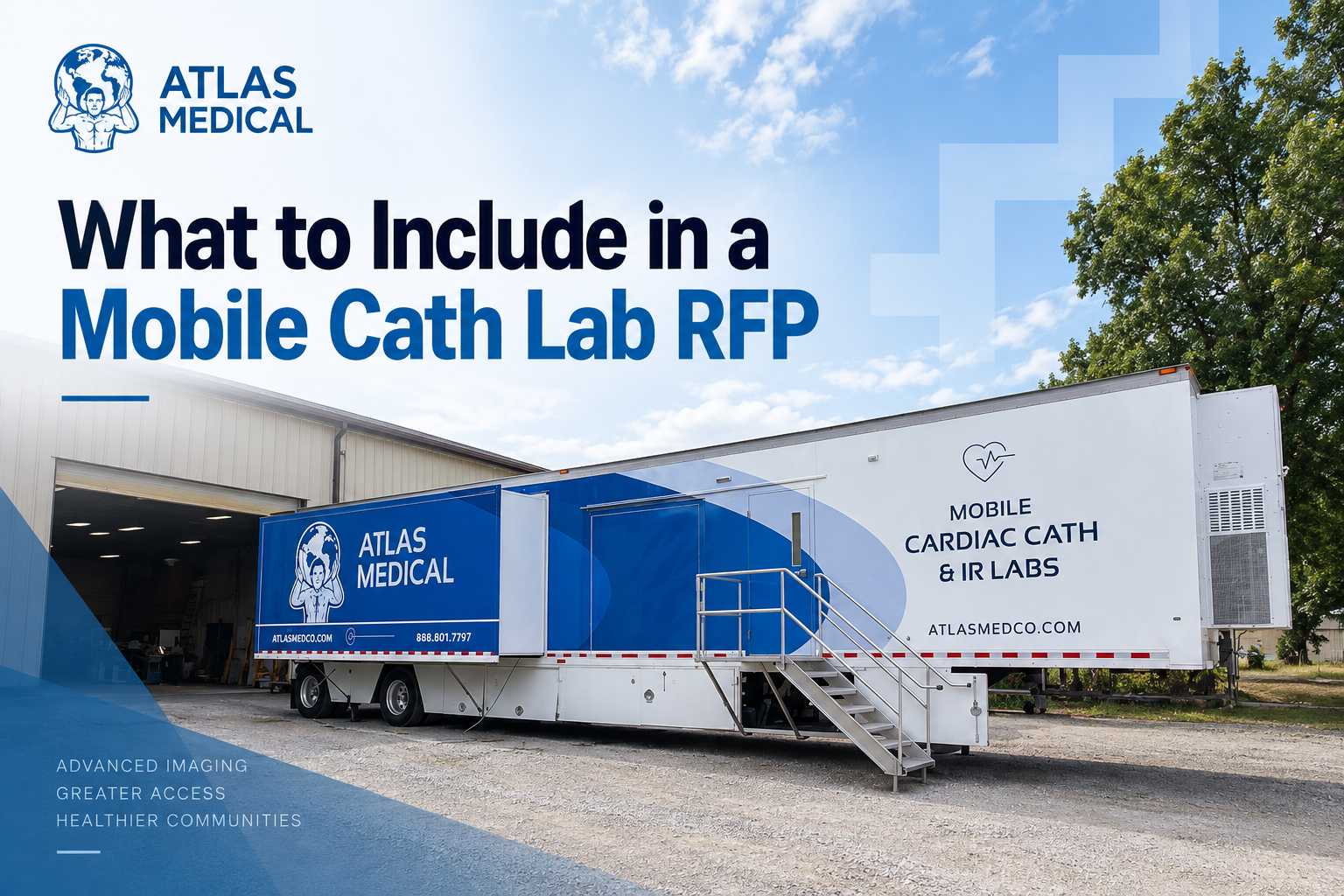
A hospital preparing to rent a mobile cath lab needs more than a price and an available trailer.  The hospital needs to know whether the temporary lab can support its procedures, fit the site, integrate with existing systems, arrive on schedule, support staff workflow, and remain available for the full project period. A well-written mobile cath lab RFP helps procurement teams compare vendors against the same requirements instead of evaluating proposals that describe completely different solutions. The RFP should therefore be developed with input from more than procurement alone. Cath lab leadership, facilities, IT, clinical engineering, project management, infection prevention, finance, and other appropriate hospital stakeholders may all have requirements that affect the temporary lab. Hospitals still defining the type of temporary solution they need can review Atlas Medical's mobile cath lab rental solutions before developing the RFP.
By Jared Labtic September 9, 2026
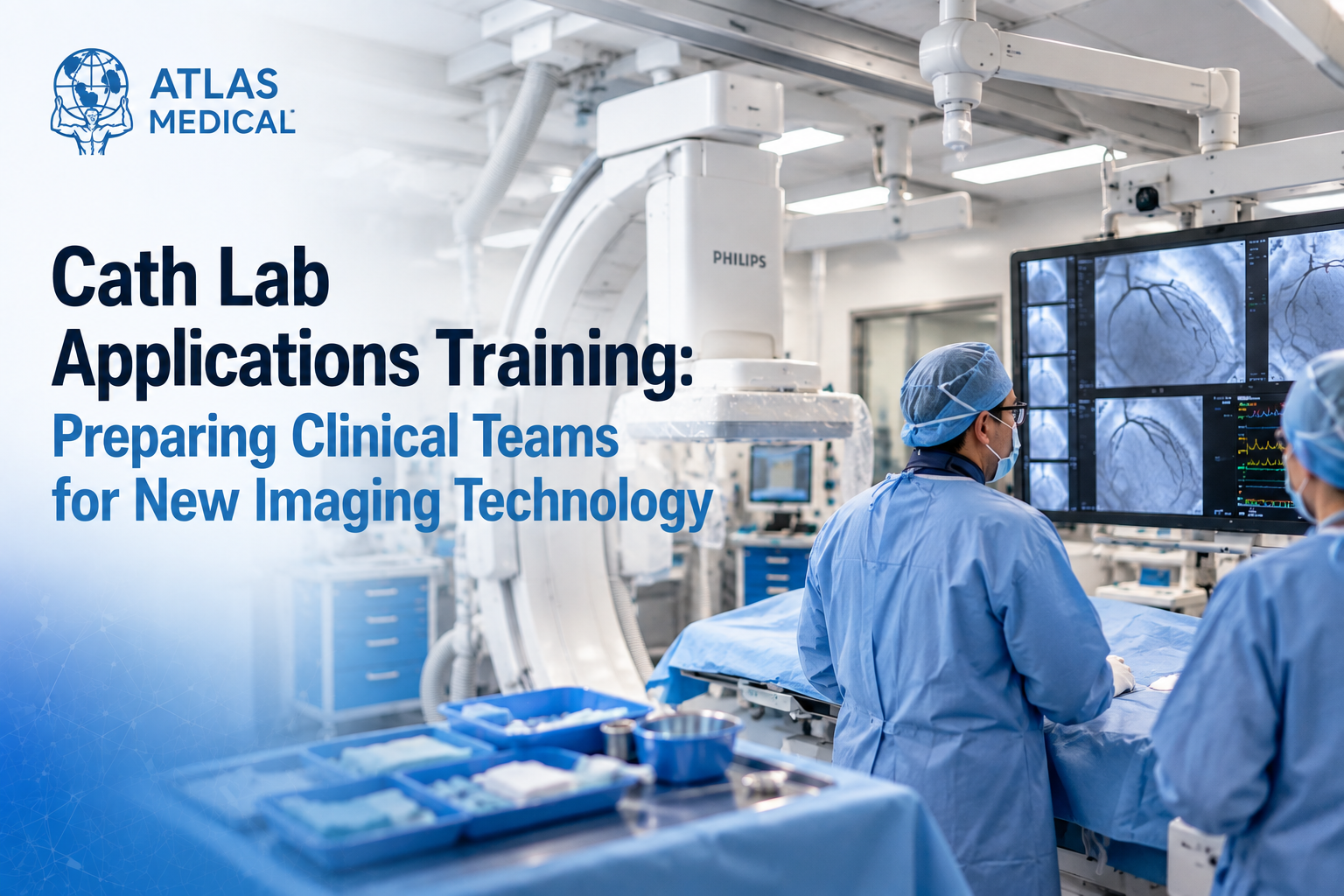
Installing or gaining access to a cath lab imaging system is only part of getting the room ready for clinical use.  The people operating the technology also need to understand how that particular system fits into their daily workflow. A clinical team may already have years of cath lab experience and still need time to become comfortable with a different interface, room controls, imaging modes, table and C-arm movements, image review tools, and system-specific workflows. That is where cath lab applications training becomes valuable. Rather than teaching cath lab fundamentals, applications training focuses on helping experienced clinical teams understand and effectively use the imaging technology available to them. Hospitals that need project-based support can explore Atlas Medical's imaging applications training and temporary technologist staffing .
By Jared Labtic September 8, 2026
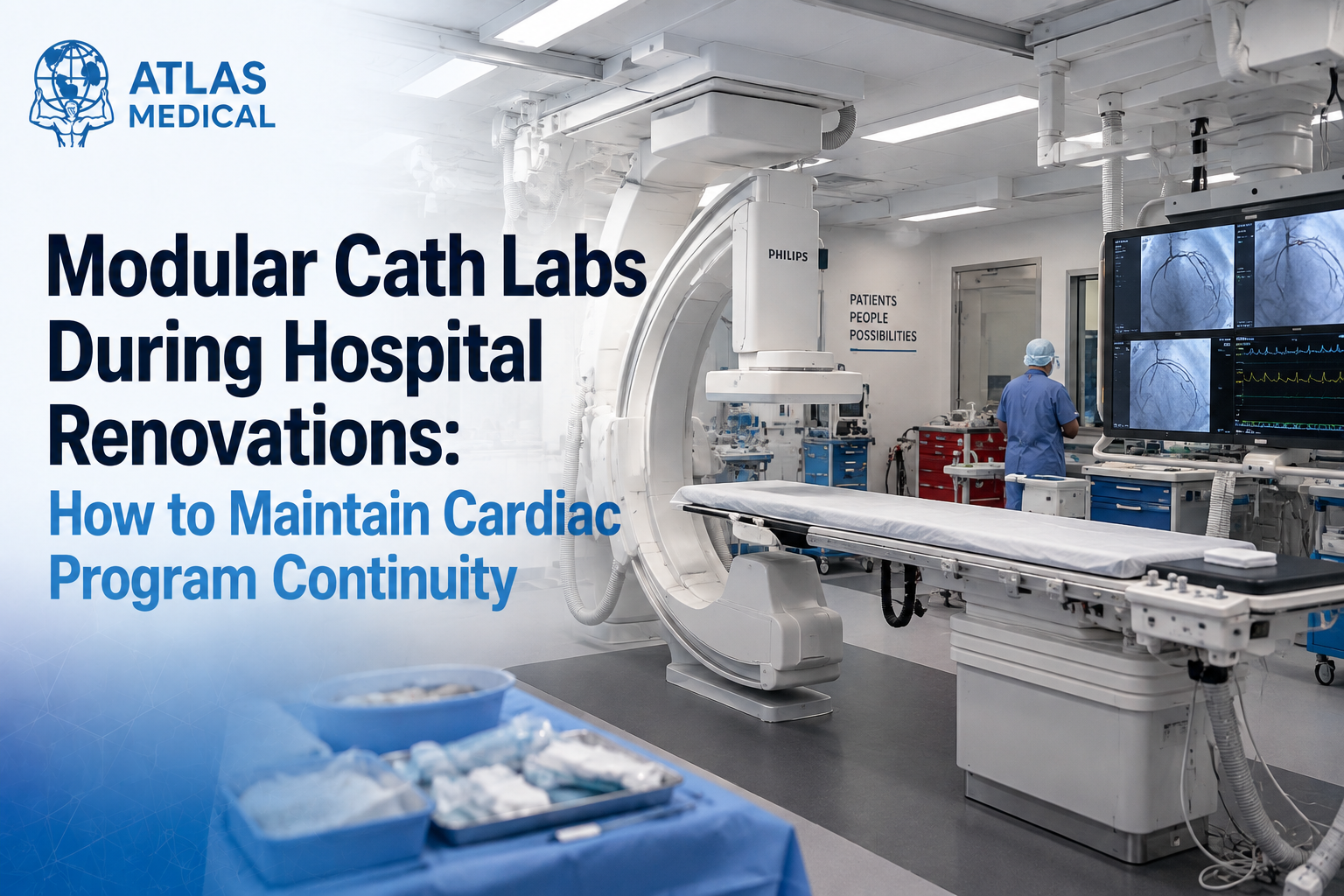
A cath lab renovation creates an unusual planning challenge for hospitals: the project is designed to improve cardiac services, but completing it may temporarily take critical procedural space out of operation. The construction schedule is only part of the problem.  Hospital leaders also have to decide what happens to procedures, physicians, staff, patients, and workflows while the permanent lab is unavailable. A modular cath lab for hospital renovation can provide temporary procedural capacity on-site while work progresses inside the permanent facility. Atlas Medical specifically positions its modular cath lab rentals for renovations, temporary capacity, and projects where hospitals need to keep cases running. The key is to treat the modular lab as part of the renovation strategy—not as equipment that gets added after the construction plan is already finished.
By Jared Labtic September 1, 2026
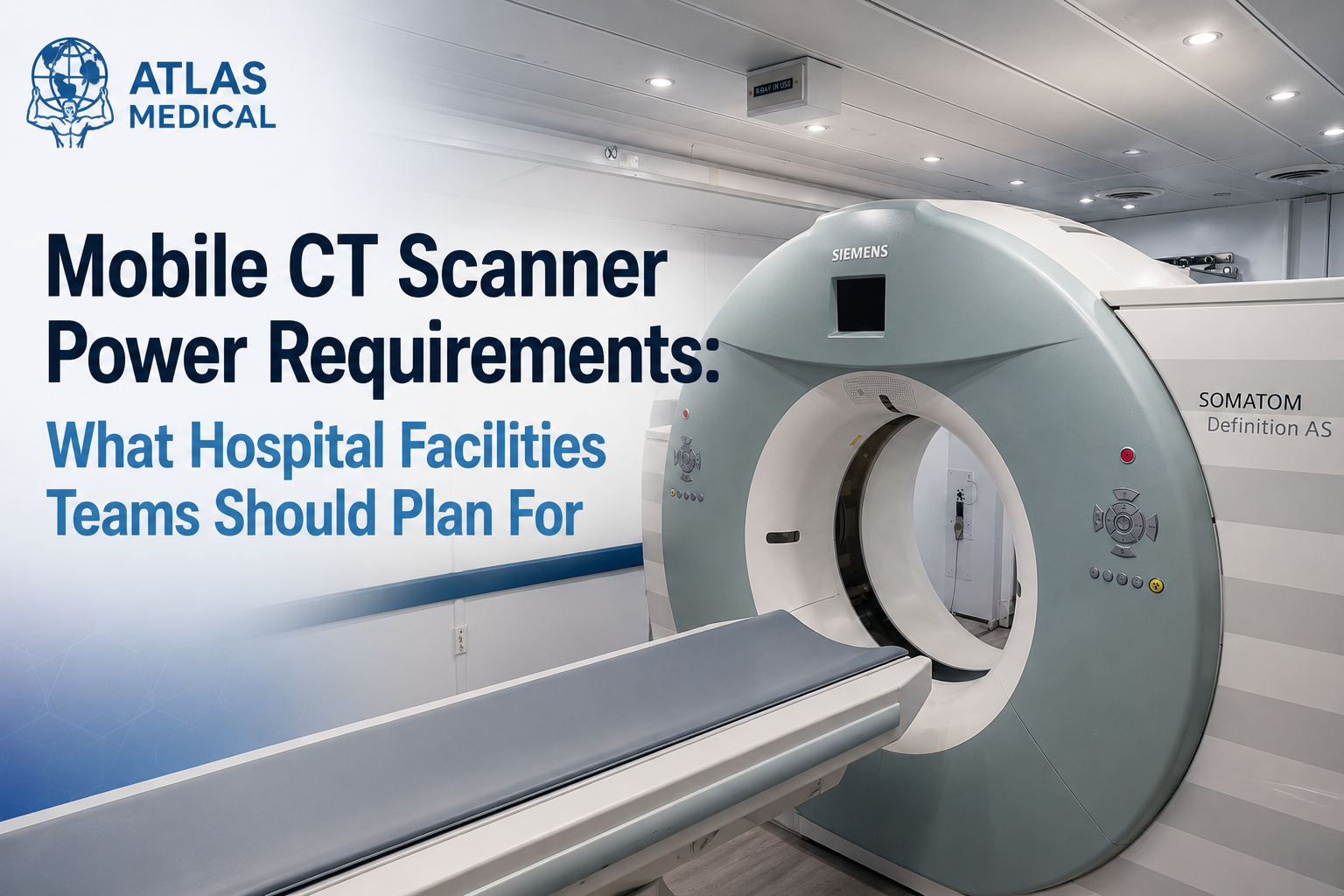
A mobile CT scanner may arrive on a trailer, but it still needs the electrical infrastructure required to operate advanced diagnostic imaging equipment. For hospital facilities and engineering teams, that makes power one of the first technical questions to resolve before delivery. Atlas Medical notes that a typical mobile CT unit requires 480V, 3-phase power . However, hospitals should not treat that figure as a universal specification for every trailer or scanner. The electrical requirements should always be confirmed for the specific mobile CT unit assigned to the project. Getting that information early gives facilities teams time to evaluate the site's existing electrical capacity, determine whether electrical work is necessary, coordinate responsibilities, and have the connection ready before the mobile unit arrives.
By Jared Labtic August 30, 2026
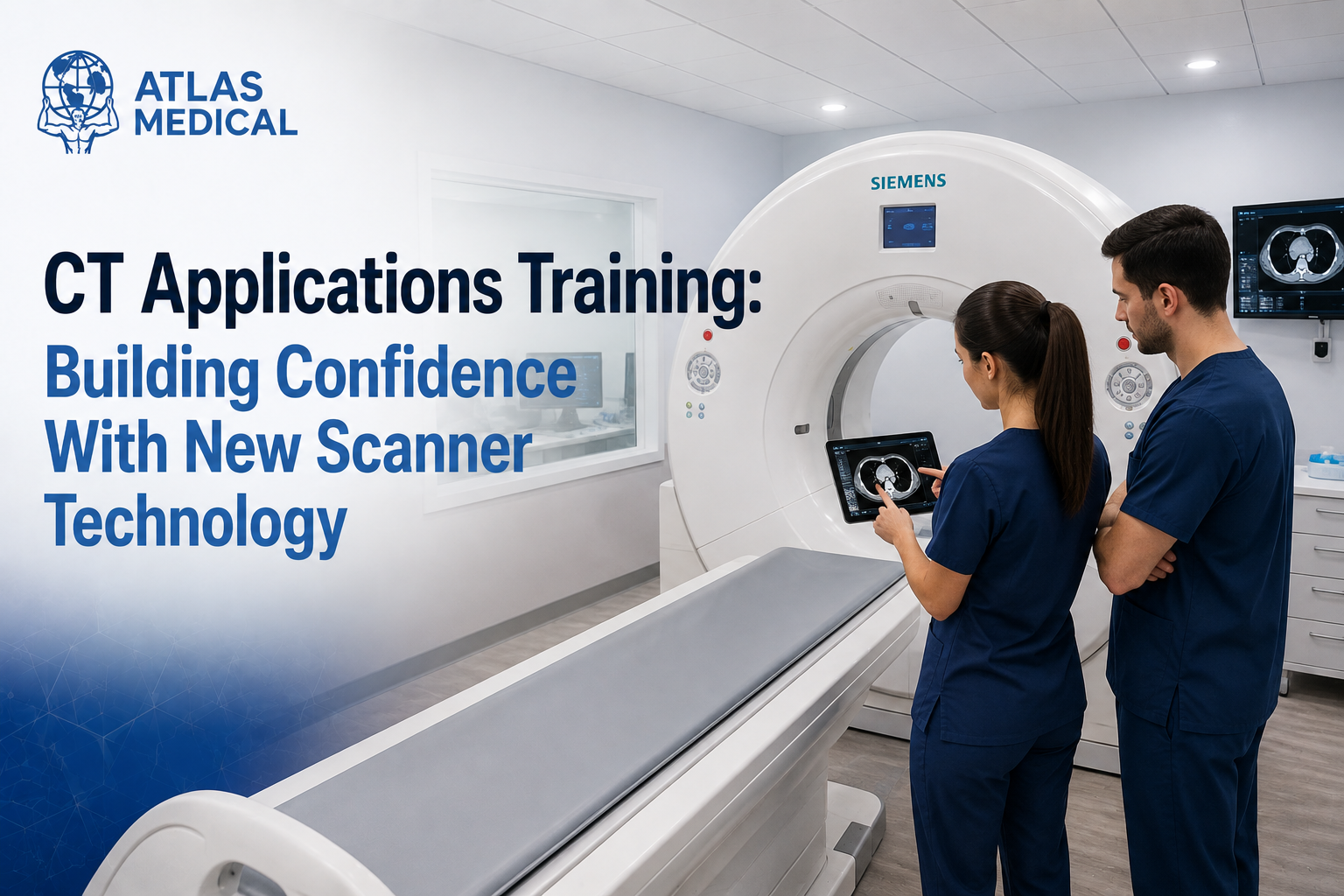
An experienced CT technologist already understands patient care, positioning, scan preparation, and the clinical demands of a busy imaging department. What changes when the scanner changes is the technology used to perform that work. A new interface, different protocol structure, unfamiliar reconstruction tools, or a change in manufacturer can create a learning curve even for an experienced team. CT applications training gives technologists hands-on, system-specific support so they can understand how the scanner fits into their department's clinical workflow. Hospitals may need this support when installing a scanner, replacing older equipment, changing OEM platforms, introducing advanced applications, opening a temporary imaging location, or onboarding additional staff. Atlas Medical provides imaging applications training and temporary technologist staffing for hospitals and imaging providers with project-based clinical support needs.