Preparing for Your Mobile CT Scanner

Mobile CT Scanner Site Prep Tips From Atlas Medical
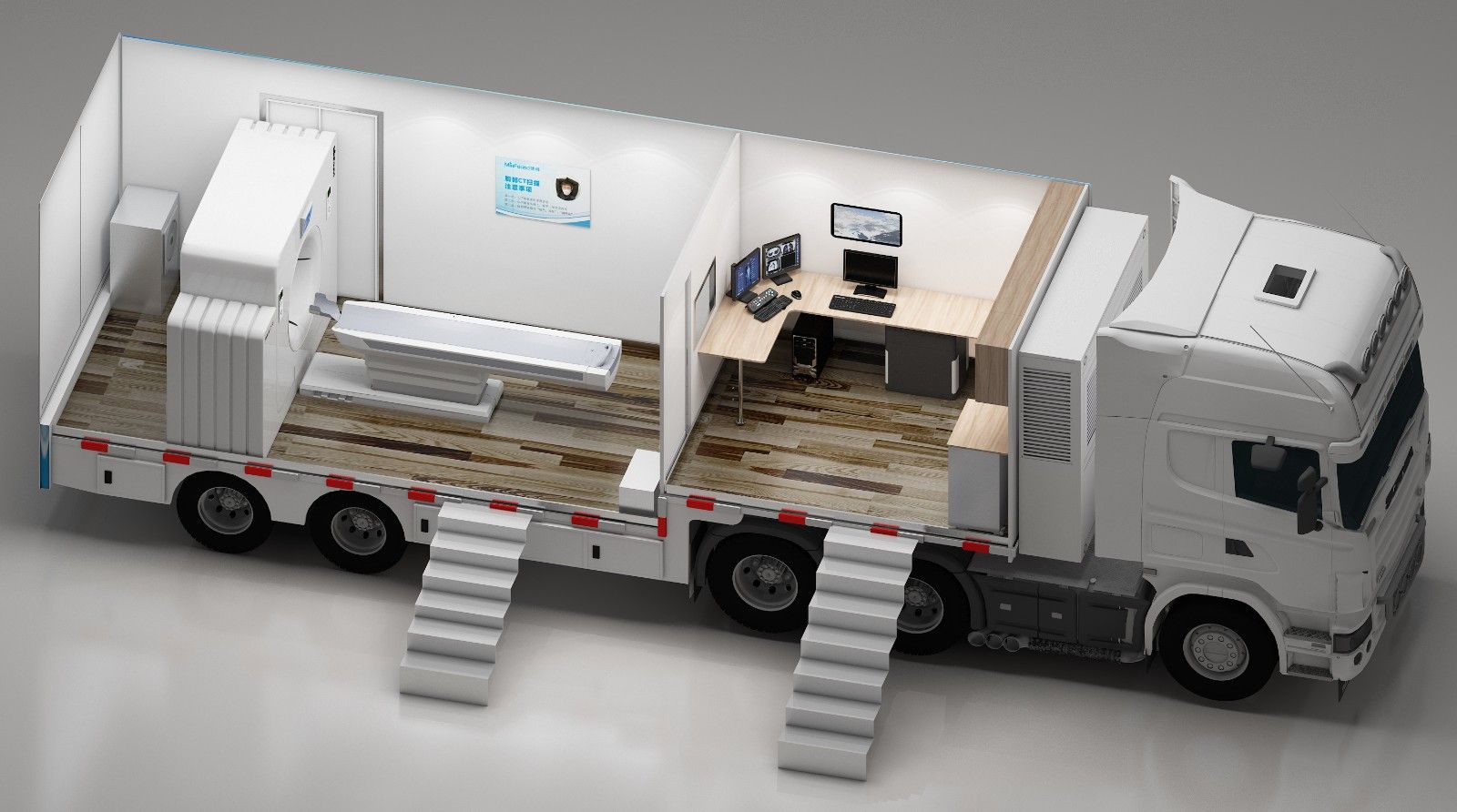
Imagine the freedom of offering top-tier imaging on demand—no new construction, no massive capital outlay. That’s the promise of a mobile CT scanner. But to truly harness its potential, you must prepare your site with care. Let’s explore exactly how to do that.


Surface and Space Prep

The First Step to Smooth Operation
You’ll need a
level, stable surface large enough for your mobile CT scanner trailer or truck. Clear overhead obstructions—like power lines or tree branches—and ensure there’s ample space for patient flow and staff movement. A cramped or uneven spot only leads to issues, so start off on the right foot by giving your mobile CT unit the room it deserves.


Network Communications

Connectivity Is Non-Negotiable
Today’s patient data travels far and wide: to radiologists, specialists, and consulting providers. Check for reliable
Wi-Fi or wired internet to transmit images securely to your PACS or teleradiology partners. Consult your IT staff early, so you’re not scrambling on launch day.


Power Requirements

Powering Advanced Diagnostics
A typical
mobile ct unit demands 480V, 3-phase power. Verify your facility or site can handle this load. Without the right setup, you risk damaging equipment—or worse, halting patient scans.


Stock Consumables

Stay Stocked, Stay Operational
From contrast media to routine cleaning supplies, having the basics at hand streamlines workflow.
Running out mid-day disrupts patient care and tarnishes your service reputation. A simple inventory checklist ensures continuous scanning without the dreaded “sorry, we’re out of stock” moment.


Regulatory Requirements

No Surprises on Launch Day
Before operating a
mobile CT scanner in your area, confirm local radiation regulations and health department mandates. Check for any required state permits or inspections. A bit of homework here saves you from licensing nightmares later.


We can help guide you through regulatory requirements - learn more HERE.


Why Choose Atlas Medical?

  1. Expert Guidance: We offer detailed site prep checklists and on-site evaluations, so you never feel adrift.
  2. Comprehensive Setup: Our technicians install and calibrate the scanner for optimal performance.
  3. Streamlined Approach: From power hookups to network integration, we handle it all. You focus on patients; we’ll handle the rest.


A bit of foresight makes all the difference in launching a successful Mobile CT  service. With the right surface, connectivity, power supply, consumables, and regulatory diligence, you’ll be up and running in no time. Need help? Reach out to Atlas Medical. We’ll guide you from planning to patient scans—smoothly, efficiently, easily.

Close-up portrait of a man with short gray hair and a neutral expression against a blurred background

Sean Schneider

Mobile Project Manager · Atlas Medical


About the Author

Say hello to Sean Schneider - our Mobile Project Manager at Atlas Medical. Sean has worked in the medical imaging industry for over 20 years, including 10 years with Atlas Medical. 


Sean has a knack for making complicated projects simple to understand. Around here, Sean's the man who keeps things moving smoothly.


When Sean isn't helping launch our mobile imaging units at new sites he enjoys spending time with his family, golf, and hockey.

Request a Mobile Imaging Solution

Our Services Include:
Medical lab category buttons

Mobile cath lab unit showing the type of equipment and facility setup hospitals should consider when
By Jared Labtic September 13, 2026
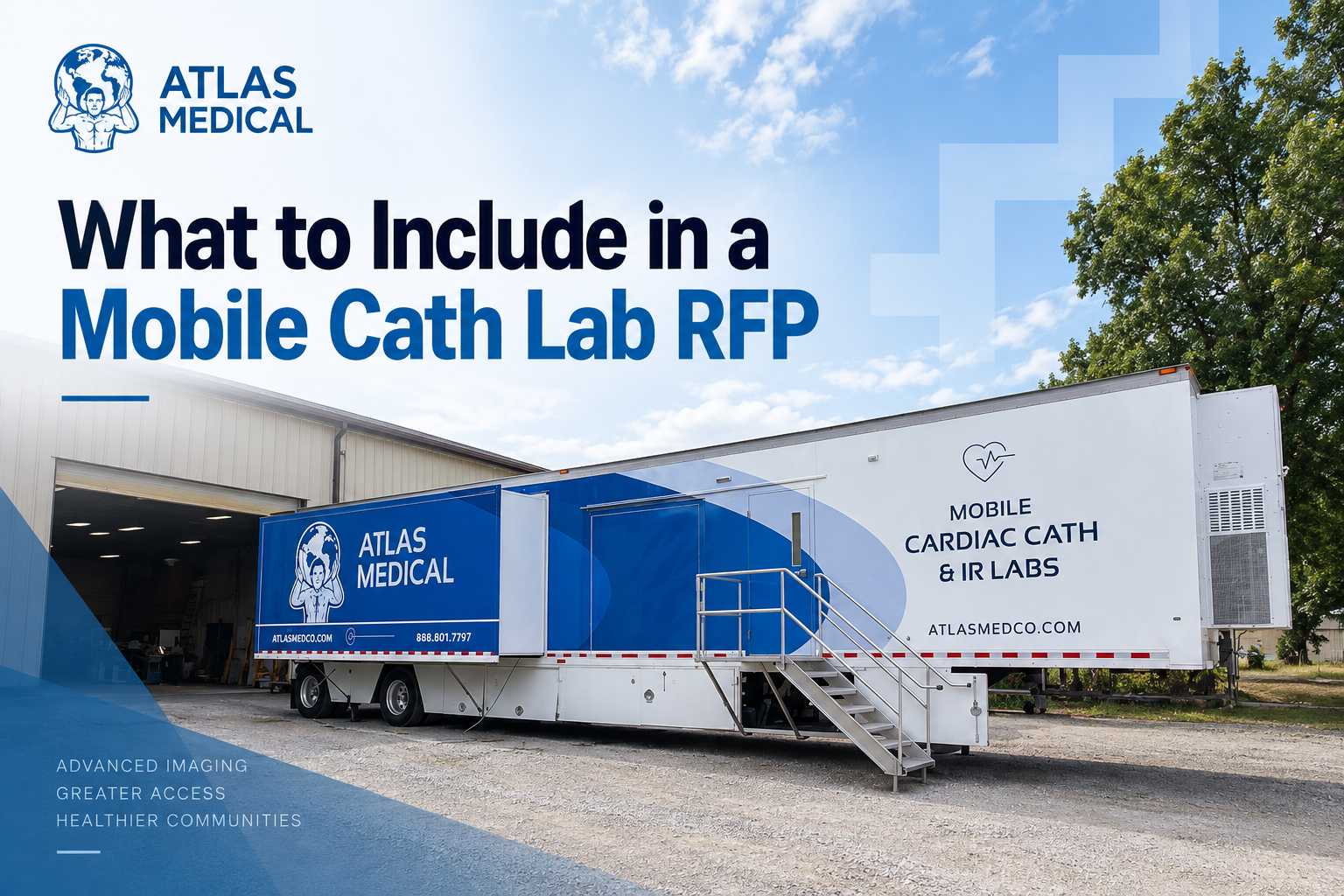
A hospital preparing to rent a mobile cath lab needs more than a price and an available trailer.  The hospital needs to know whether the temporary lab can support its procedures, fit the site, integrate with existing systems, arrive on schedule, support staff workflow, and remain available for the full project period. A well-written mobile cath lab RFP helps procurement teams compare vendors against the same requirements instead of evaluating proposals that describe completely different solutions. The RFP should therefore be developed with input from more than procurement alone. Cath lab leadership, facilities, IT, clinical engineering, project management, infection prevention, finance, and other appropriate hospital stakeholders may all have requirements that affect the temporary lab. Hospitals still defining the type of temporary solution they need can review Atlas Medical's mobile cath lab rental solutions before developing the RFP.
By Jared Labtic September 9, 2026
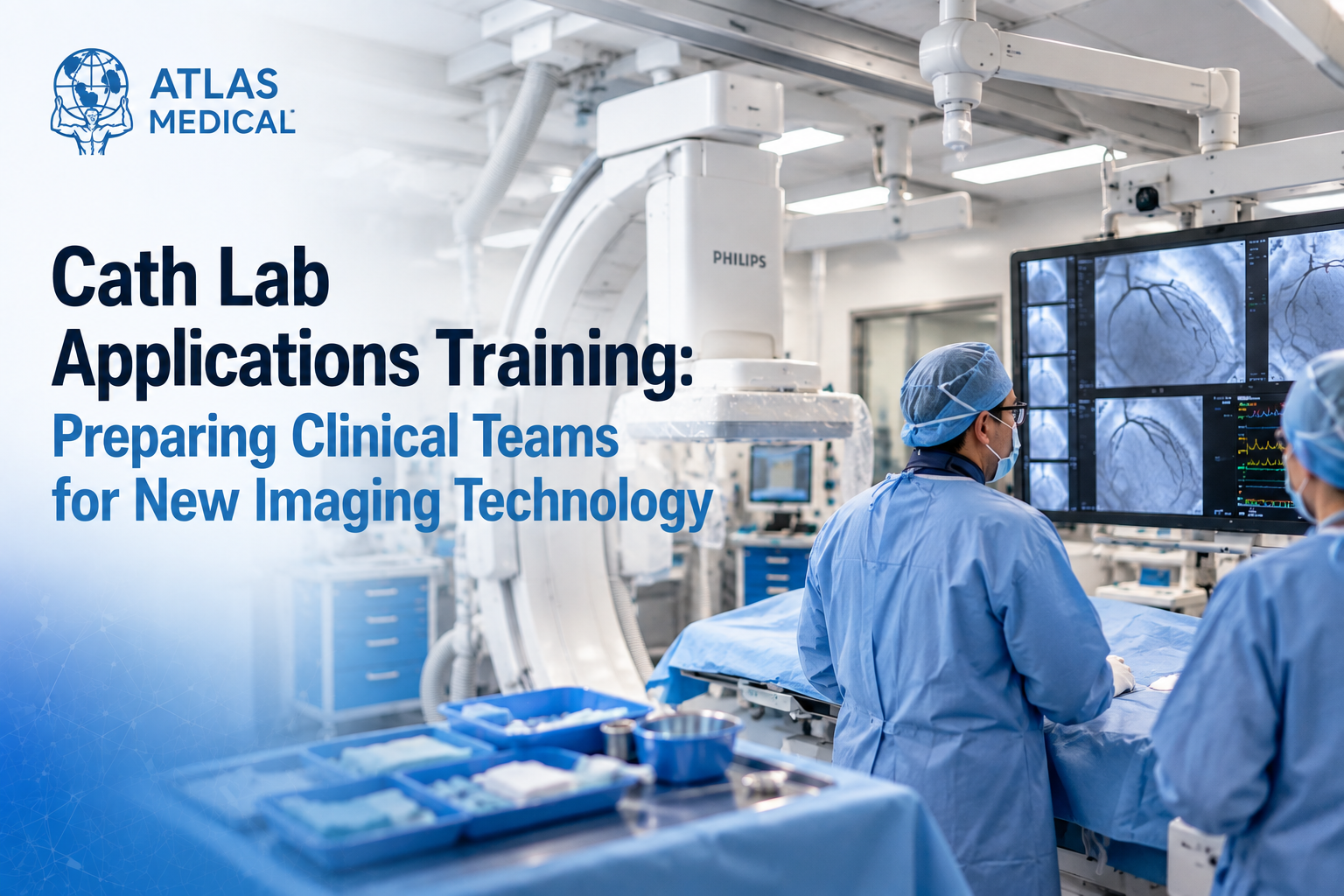
Installing or gaining access to a cath lab imaging system is only part of getting the room ready for clinical use.  The people operating the technology also need to understand how that particular system fits into their daily workflow. A clinical team may already have years of cath lab experience and still need time to become comfortable with a different interface, room controls, imaging modes, table and C-arm movements, image review tools, and system-specific workflows. That is where cath lab applications training becomes valuable. Rather than teaching cath lab fundamentals, applications training focuses on helping experienced clinical teams understand and effectively use the imaging technology available to them. Hospitals that need project-based support can explore Atlas Medical's imaging applications training and temporary technologist staffing .
By Jared Labtic September 8, 2026
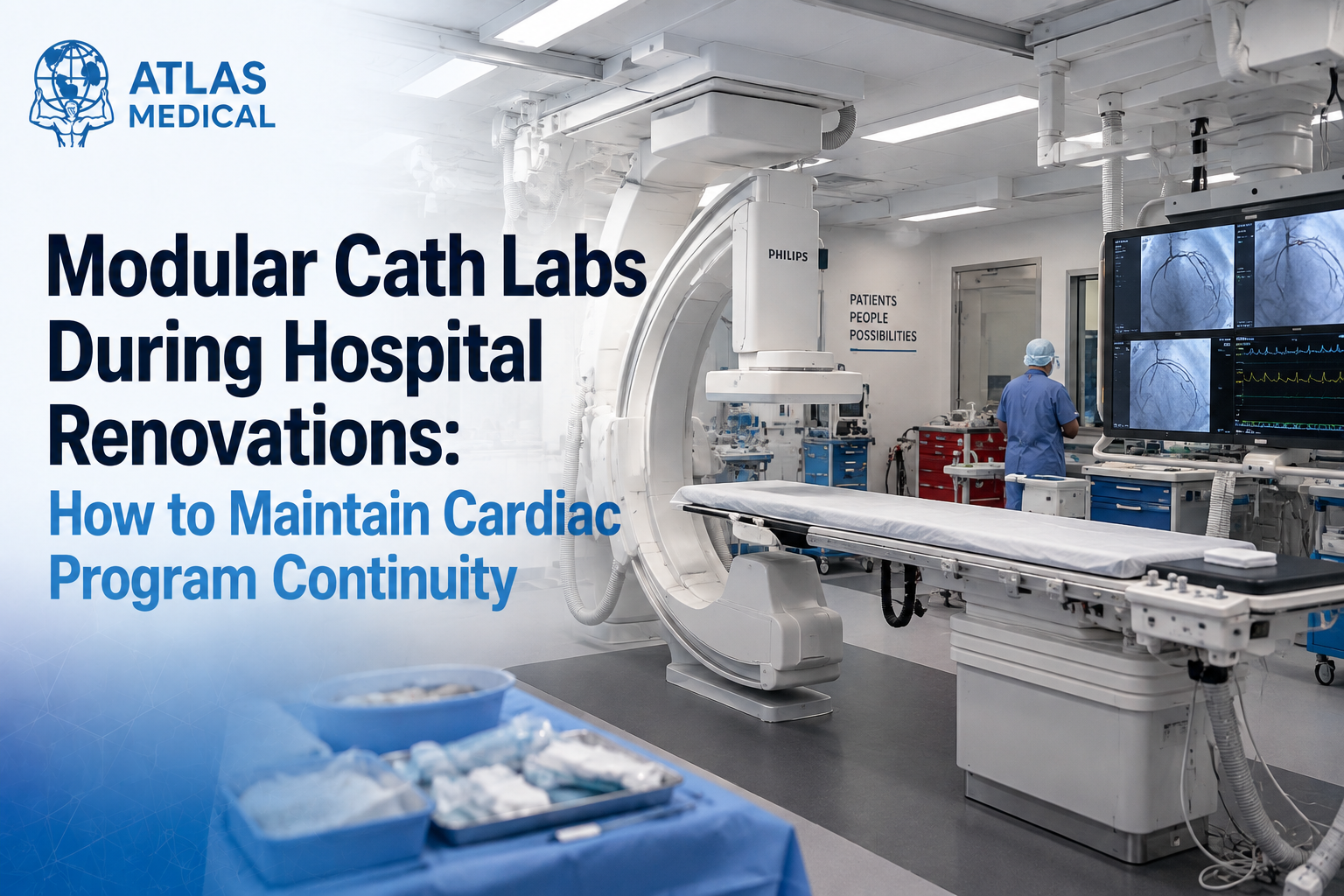
A cath lab renovation creates an unusual planning challenge for hospitals: the project is designed to improve cardiac services, but completing it may temporarily take critical procedural space out of operation. The construction schedule is only part of the problem.  Hospital leaders also have to decide what happens to procedures, physicians, staff, patients, and workflows while the permanent lab is unavailable. A modular cath lab for hospital renovation can provide temporary procedural capacity on-site while work progresses inside the permanent facility. Atlas Medical specifically positions its modular cath lab rentals for renovations, temporary capacity, and projects where hospitals need to keep cases running. The key is to treat the modular lab as part of the renovation strategy—not as equipment that gets added after the construction plan is already finished.
By Jared Labtic September 1, 2026
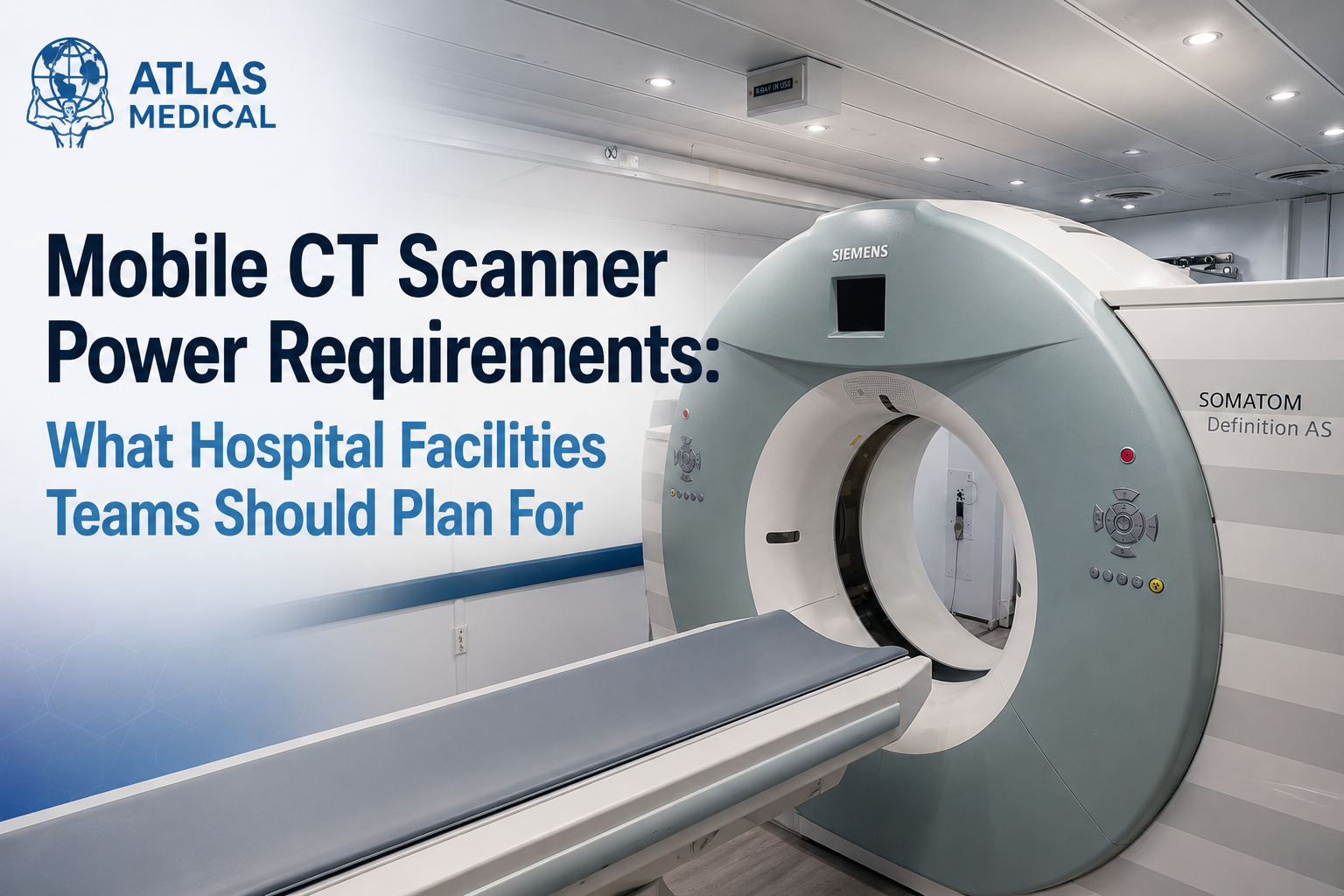
A mobile CT scanner may arrive on a trailer, but it still needs the electrical infrastructure required to operate advanced diagnostic imaging equipment. For hospital facilities and engineering teams, that makes power one of the first technical questions to resolve before delivery. Atlas Medical notes that a typical mobile CT unit requires 480V, 3-phase power . However, hospitals should not treat that figure as a universal specification for every trailer or scanner. The electrical requirements should always be confirmed for the specific mobile CT unit assigned to the project. Getting that information early gives facilities teams time to evaluate the site's existing electrical capacity, determine whether electrical work is necessary, coordinate responsibilities, and have the connection ready before the mobile unit arrives.
By Jared Labtic August 30, 2026
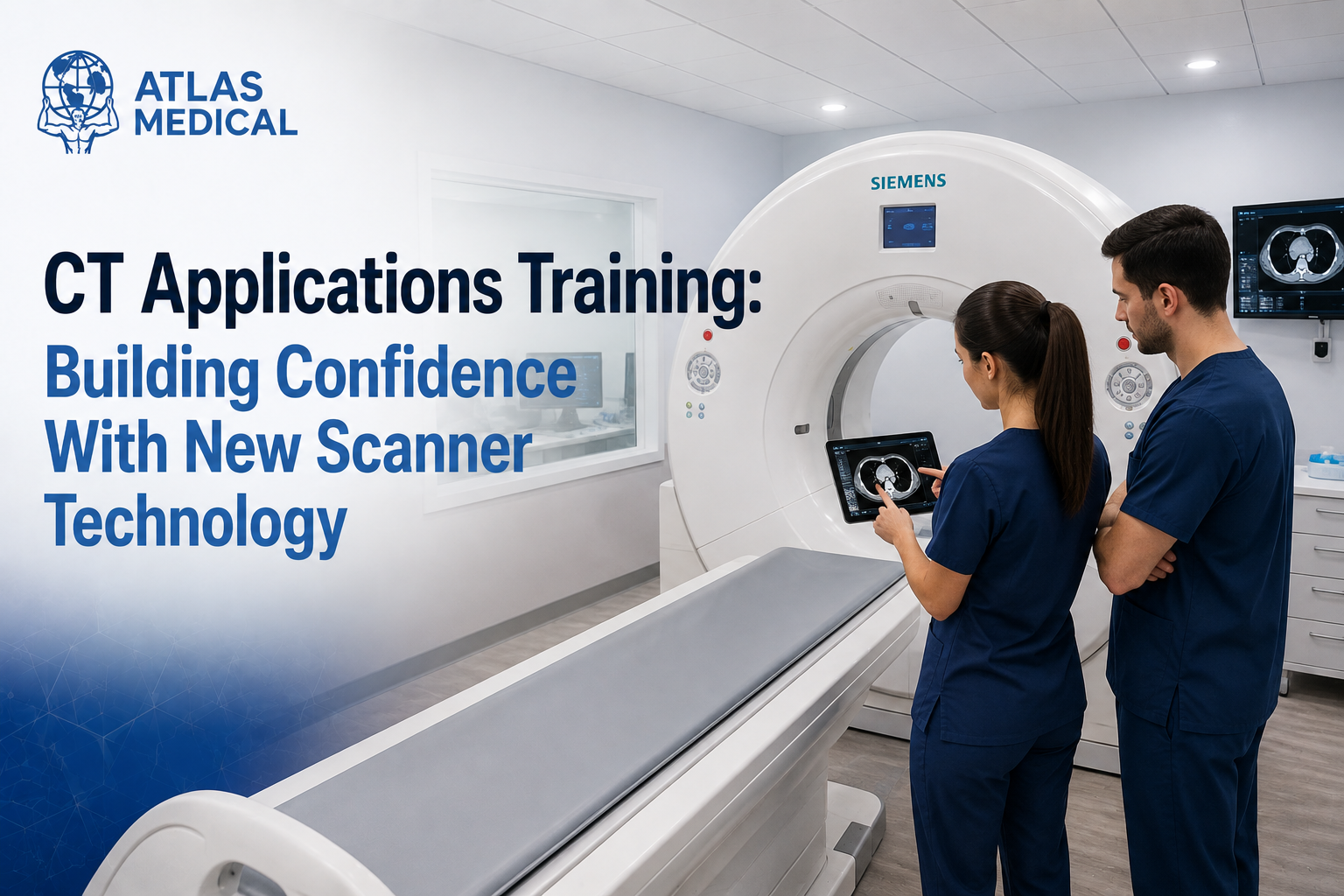
An experienced CT technologist already understands patient care, positioning, scan preparation, and the clinical demands of a busy imaging department. What changes when the scanner changes is the technology used to perform that work. A new interface, different protocol structure, unfamiliar reconstruction tools, or a change in manufacturer can create a learning curve even for an experienced team. CT applications training gives technologists hands-on, system-specific support so they can understand how the scanner fits into their department's clinical workflow. Hospitals may need this support when installing a scanner, replacing older equipment, changing OEM platforms, introducing advanced applications, opening a temporary imaging location, or onboarding additional staff. Atlas Medical provides imaging applications training and temporary technologist staffing for hospitals and imaging providers with project-based clinical support needs.
Mobile cath lab rental unit outside a hospital with healthcare professionals planning temporary cath
By Jared Labtic August 20, 2026
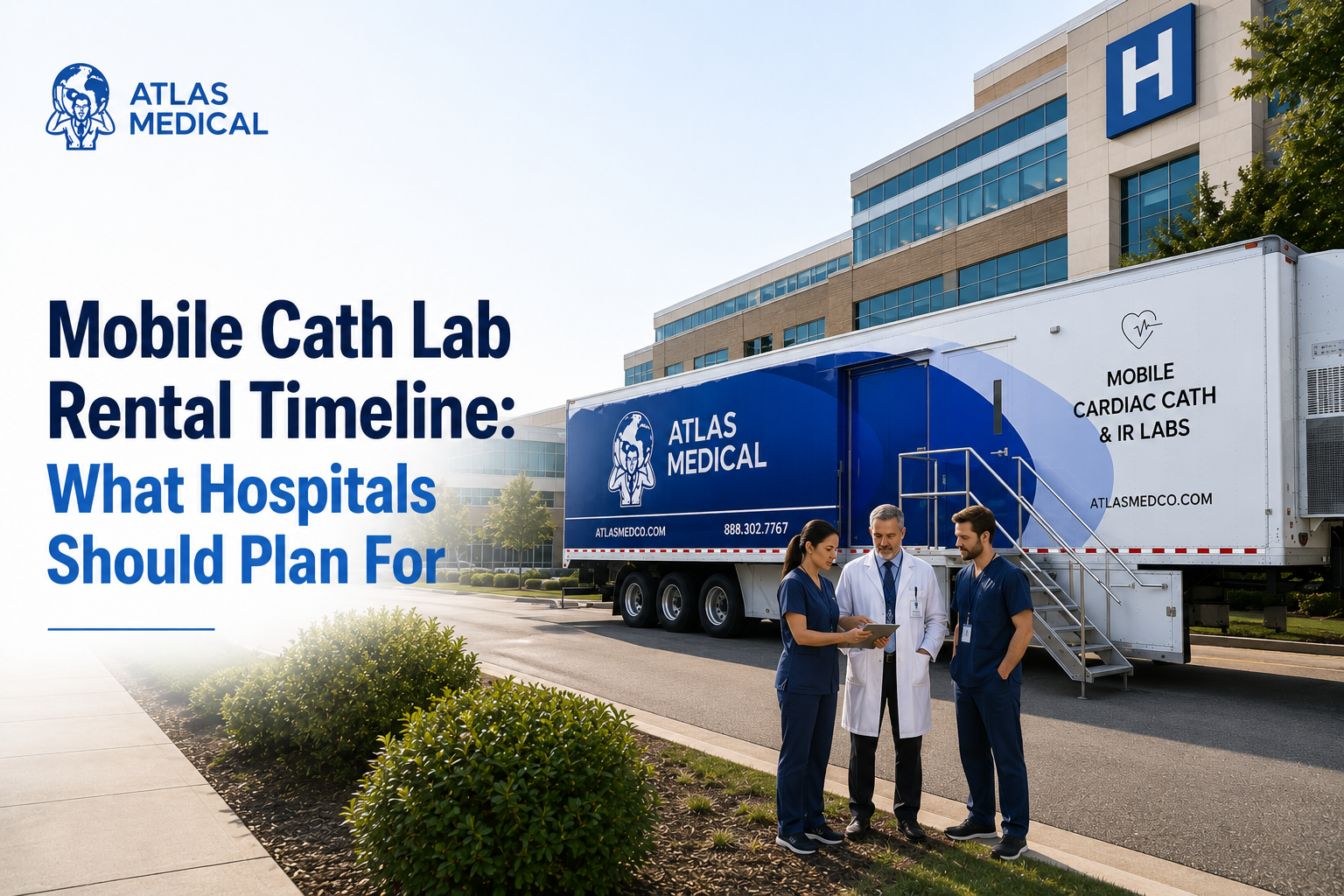
Planning a mobile cath lab rental? Learn the key stages hospitals should prepare for, from project assessment and site readiness to delivery and go-live.