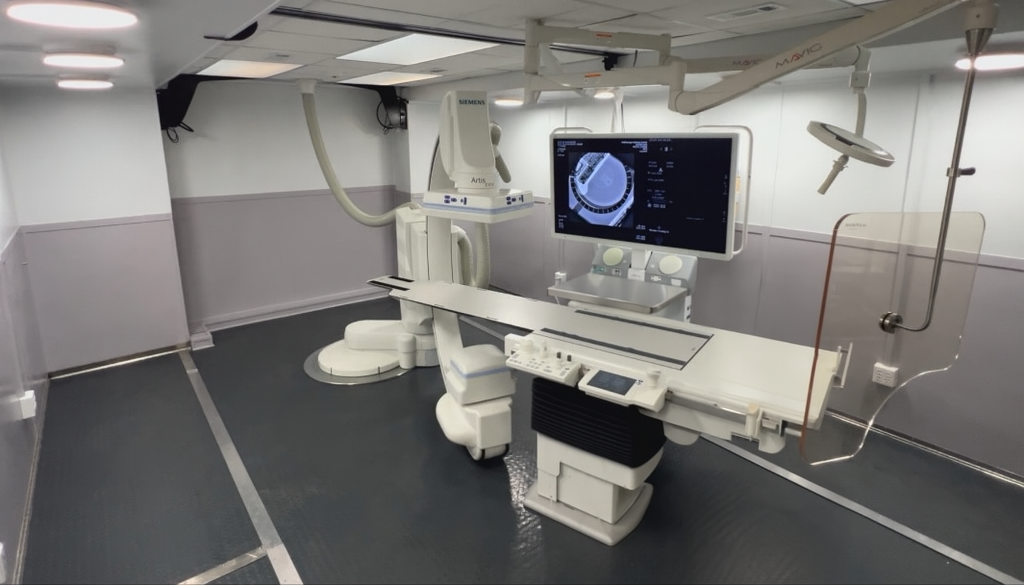
When a cath lab moves into a temporary environment, the team may be used to communication habits shaped by its permanent room. Staff know who can hear them, where the control-room team sits and how to get someone's attention. A different layout can leave those assumptions unresolved even when everyone has experience in cath lab work.
For a temporary cath lab project, a room-to-control-room communication planning sheet helps the hospital ask the right questions before finalizing the arrangement. It records who reviews communication needs, which equipment details require confirmation and how the team will document its agreed approach. Clinical communication procedures remain the hospital's responsibility.
Begin with the proposed room arrangement
Use the current project layout to identify the procedure-room and control-room positions. Ask staff from both areas to review how the proposed arrangement differs from their existing environment. Include any hospital roles that normally work across the two spaces.
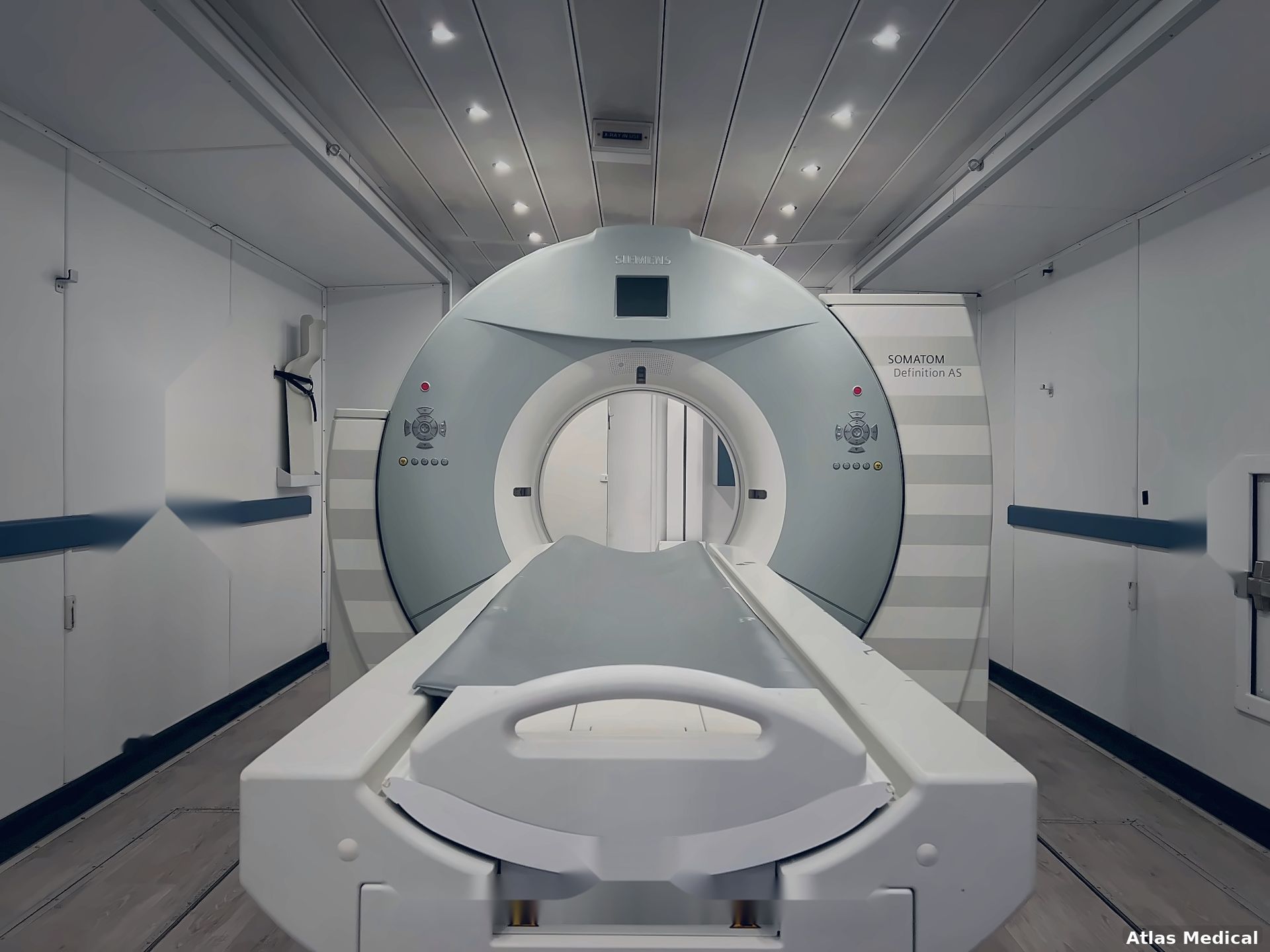
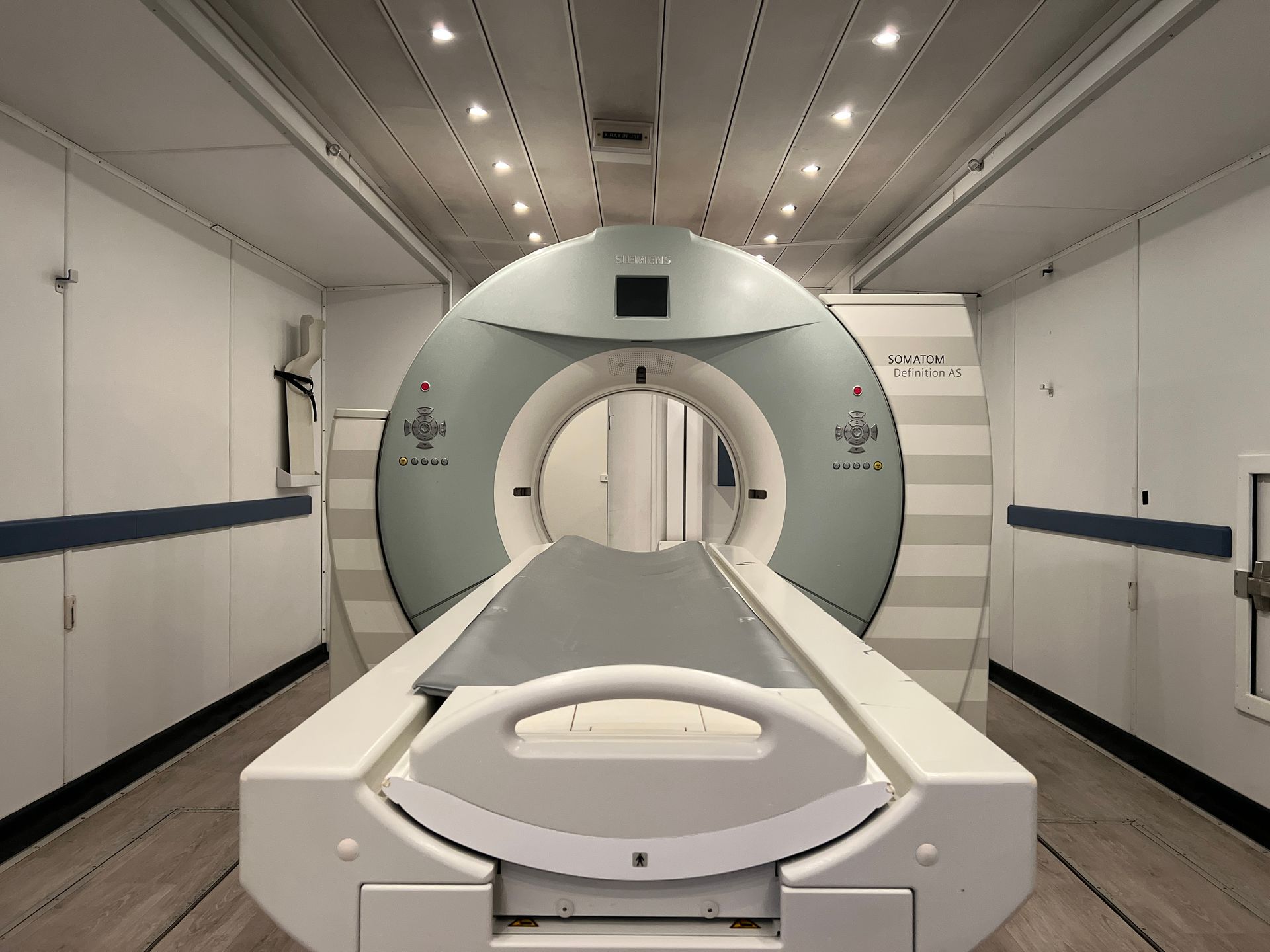
The discussion should focus on questions such as who needs to communicate with whom, what line of sight is expected and where the team needs project-specific information. A general tour or representative photo can introduce the environment, but it cannot confirm how the assigned unit will support the hospital's communication requirements.
Ask the provider for the relevant equipment and layout documents. Record which details are confirmed for the proposed unit and which remain under review. Avoid carrying an equipment assumption from one temporary room into another.
Separate three kinds of communication questions
First, identify layout questions. These concern staff positions, visibility and the relationship between the two rooms. Second, identify equipment questions, such as the supplied communication system and the people responsible for reviewing its suitability. Third, identify workflow questions: how the hospital will adapt its approved communication expectations to the temporary arrangement.
Keeping these categories separate helps route the answer. A provider may clarify what is installed, while hospital clinical leadership determines how its team will use the arrangement under local policies. Facilities, IT or clinical engineering may need to participate when a question falls within their responsibilities.
Ask the hospital reviewers to identify which questions must be answered before the proposed arrangement can be accepted. A room diagram may be enough to begin a discussion about staff positions, while an equipment question may require additional documentation. Record those different evidence needs so a project meeting does not close both questions simply because the layout has been discussed.
Make each open question answerable
Use a short register rather than a list of broad concerns:
| Planning question | Evidence to request | Review owner |
|---|---|---|
| What communication equipment accompanies the proposed unit? | Project-specific equipment information | Provider contact |
| Where will the hospital's room and control-room roles be positioned? | Reviewed layout and role list | Cath lab leadership |
| What needs review by IT or clinical engineering? | Defined interface or equipment question | Relevant hospital specialist |
| How will staff learn the agreed communication arrangement? | Hospital preparation plan | Department educator or leadership |
| Who owns unanswered questions before the move? | Open-item list with response dates | Project coordinator |
An answer should point to a document or an agreed decision. "Team aware" does not explain what the team has accepted or what is still missing.
Plan how understanding will be confirmed
The hospital can identify an appropriate opportunity for staff from both rooms to review the arrangement together. The planning record should state who participates, what questions need confirmation and where observations will be recorded. The scope and content of any clinical rehearsal should be set by the hospital's responsible leaders.
AHRQ's check-back guidance describes acknowledgment followed by confirmation of shared understanding. For a nonclinical planning example, the provider can identify a proposed equipment arrangement, the hospital reviewer can restate the requirement being evaluated, and both can confirm what information is still needed. This prevents a question from being closed on the basis of two different interpretations.
Preserve the agreed arrangement through changes
Record the reviewed layout revision, equipment reference, hospital decision owner and outstanding actions on the planning sheet. If the assigned unit or room arrangement changes, reopen the affected questions and route them to the original reviewers.
Bring this sheet to discussions with Atlas and the hospital project team. It makes the communication requirement visible early, gives each question an owner and creates a record of what was actually confirmed. The result is a clearer planning handoff to the hospital teams responsible for staff preparation and local workflow.