Site Prep Checklist for a Philips Azurion Trailer — Power, Network, and Footprint

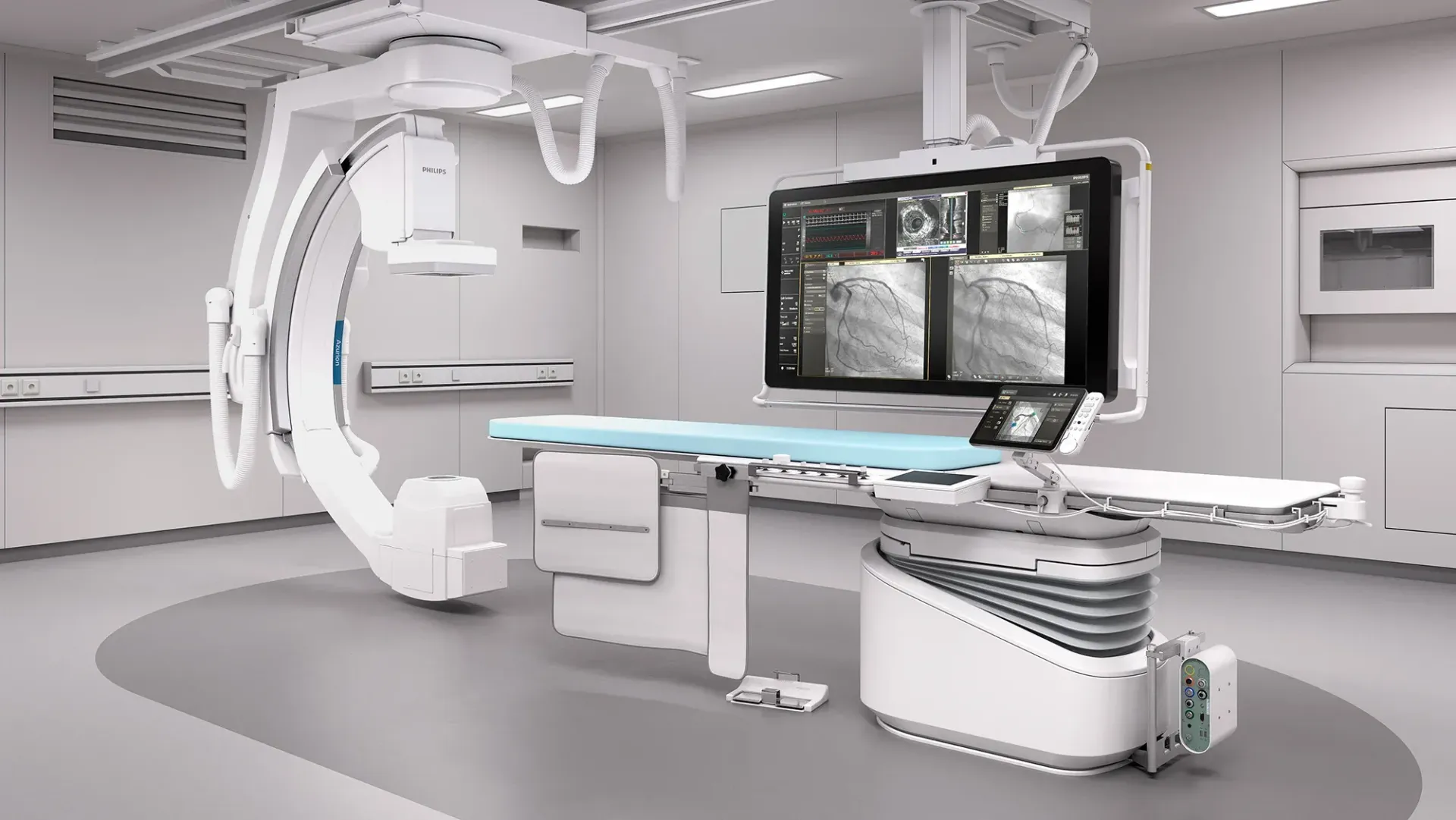
Philips Azurion Trailer and Modular Rentals
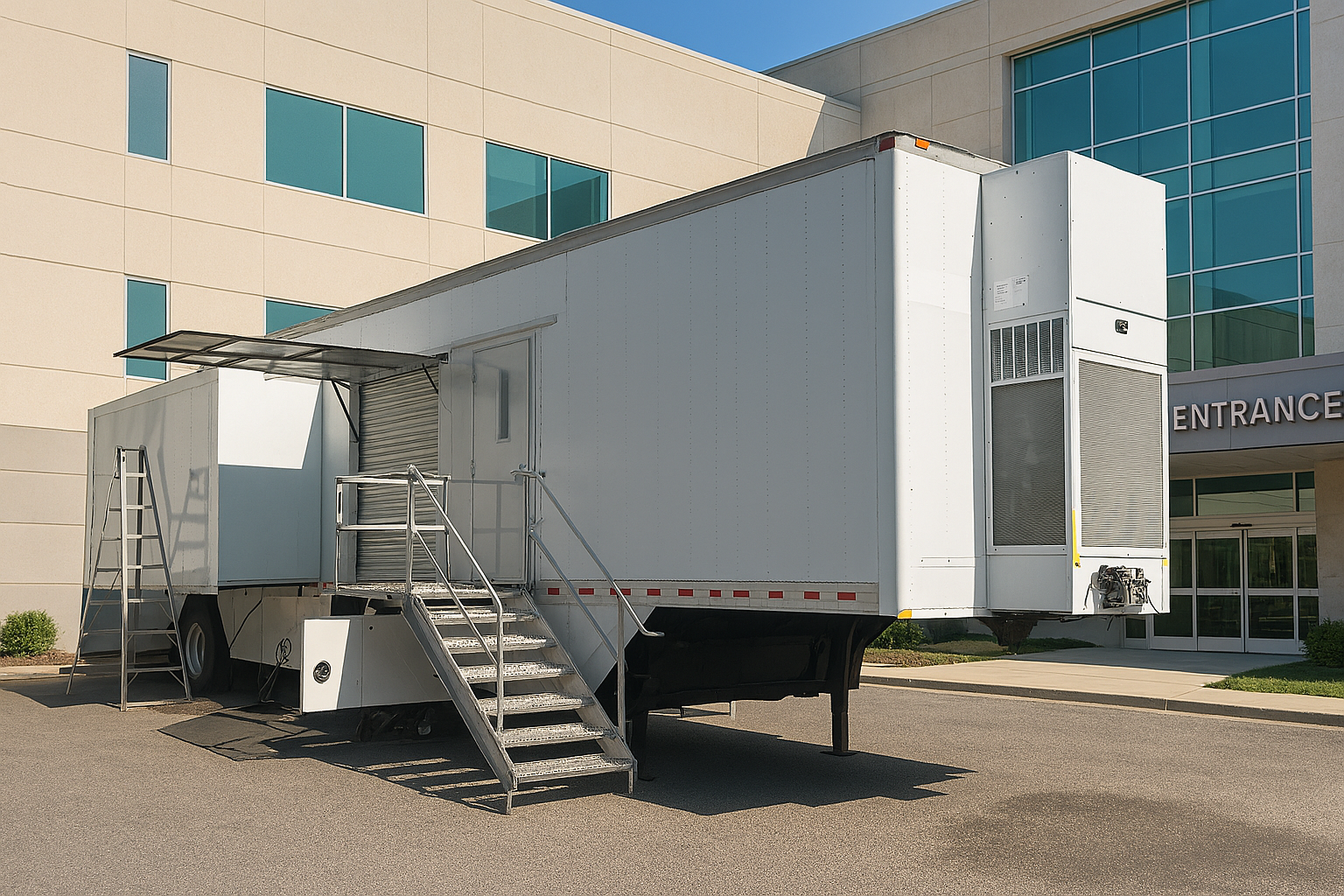
When the decision is made to rent a Philips Azurion mobile cath lab, the next question is always: “Will our site be ready the day it arrives?”


Use this checklist to ensure your pad, power, and network meet every Philips specification—so the trailer rolls in, plugs in, and your first patient is on the table within 24 hours.


1. Physical Footprint & Access

Pad size - 65 ft (L) × 18 ft (W) clear, level concrete or asphalt

Height clearance - 14 ft total trailer height. Verify no overhangs, power lines, or tree limbs along delivery path.

Turning radius - Share Google Earth path with Atlas logistics for approval.

Door alignment - 48 in. entry door, patient lift optional. Confirm stretcher route from hospital entry to trailer ramp.


Pro tip: A simple chalk outline of the pad with corner stakes helps facilities, construction, and Atlas crews visualize constraints before delivery day.


2. Power & Electrical

  • Primary feed: 480 V, 3-phase, 200 A service on a dedicated breaker.
  • Receptacle: Russellstoll; Atlas delivers the matching plug and a 50 ft (or 100ft upon request) cable.
  • UPS/generator: Tie into the facility generator if your policy requires extended backup.


3. IT & Imaging Network

One Cat 7 line for DICOM push to PACS and Worklist pull

One Cat 7 line for EMR/HL7 traffic

Code Blue

Fire Alarm Integration


4. Environmental & Utilities


Ambient temperature: Maintain 60 – 75 °F (15 – 24 °C) for detector stability and HVAC efficiency.

Humidity: Keep between 30 % and 60 % RH to prevent condensation and static discharge.

Water/Drain: Site dependant

Medical gases: Optional O₂ , Medical Air, Nitrous Oxide, Medvac, and WAGD quick-connect; portable tanks are acceptable for most cases.


5. Compliance & Safety

  • Obtain fire-marshal sign-off on egress clearances and extinguisher locations.
  • Complete an Infection-Control Risk Assessment (ICRA)—the trailer is positive-pressure and HEPA-filtered.
  • Schedule a lead-shielding survey
  • Provide ADA access with a portable ramp or lift if local code requires public accessibility.


How to Use This Checklist

  1. Walk the pad with facilities, clinicial, and IT teams.
  2. Mark any gaps and assign tasks—power install, network drop, tree trimming, etc.
  3. Speak with us for a more in-depth view of your project, to schedule a live site visit, and for final approval.


Need a Site Survey or Drawing?

Fill out the Contact Us form at the bottom of this page. Select “Site Prep Review” from the drop-down and attach any photos or drawings you have. Within one business day, an Atlas project manager will reach out to you within 1 business day.


“No, we’re not changing the world. But we help the healthcare providers that are.” – Atlas Medical

Close-up portrait of a man with short gray hair and a neutral expression against a blurred background

Sean Schneider

Mobile Project Manager · Atlas Medical


About the Author

Say hello to Sean Schneider - our Mobile Project Manager at Atlas Medical. Sean has worked in the medical imaging industry for over 20 years, including 10 years with Atlas Medical. 


Sean has a knack for making complicated projects simple to understand. Around here, Sean's the man who keeps things moving smoothly.


When Sean isn't helping launch our mobile imaging units at new sites he enjoys spending time with his family, golf, and hockey.

Request a Mobile Imaging Solution

Our Services Include:
Medical lab category buttons

By Jared Labtic September 9, 2026
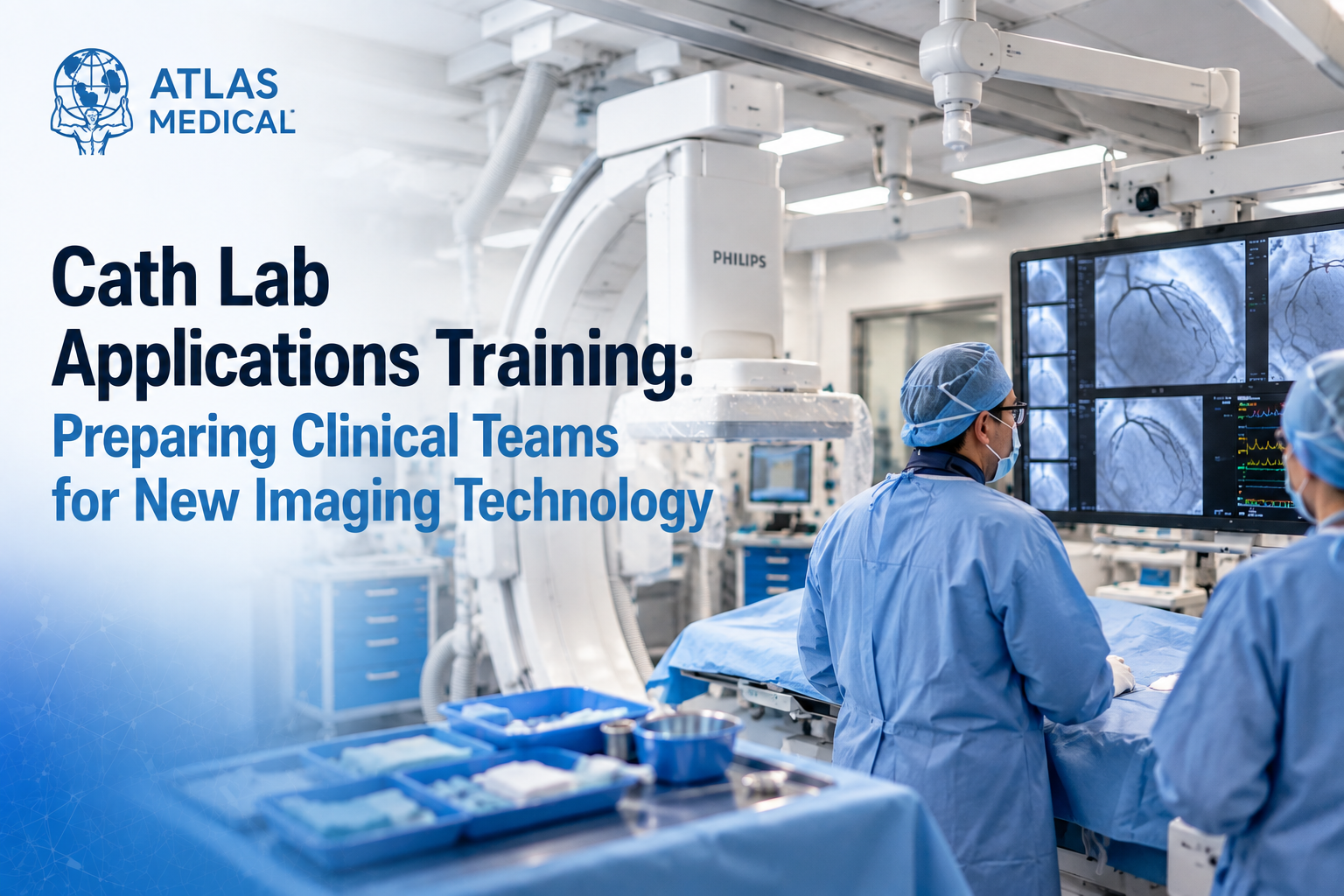
Installing or gaining access to a cath lab imaging system is only part of getting the room ready for clinical use.  The people operating the technology also need to understand how that particular system fits into their daily workflow. A clinical team may already have years of cath lab experience and still need time to become comfortable with a different interface, room controls, imaging modes, table and C-arm movements, image review tools, and system-specific workflows. That is where cath lab applications training becomes valuable. Rather than teaching cath lab fundamentals, applications training focuses on helping experienced clinical teams understand and effectively use the imaging technology available to them. Hospitals that need project-based support can explore Atlas Medical's imaging applications training and temporary technologist staffing .
By Jared Labtic September 8, 2026
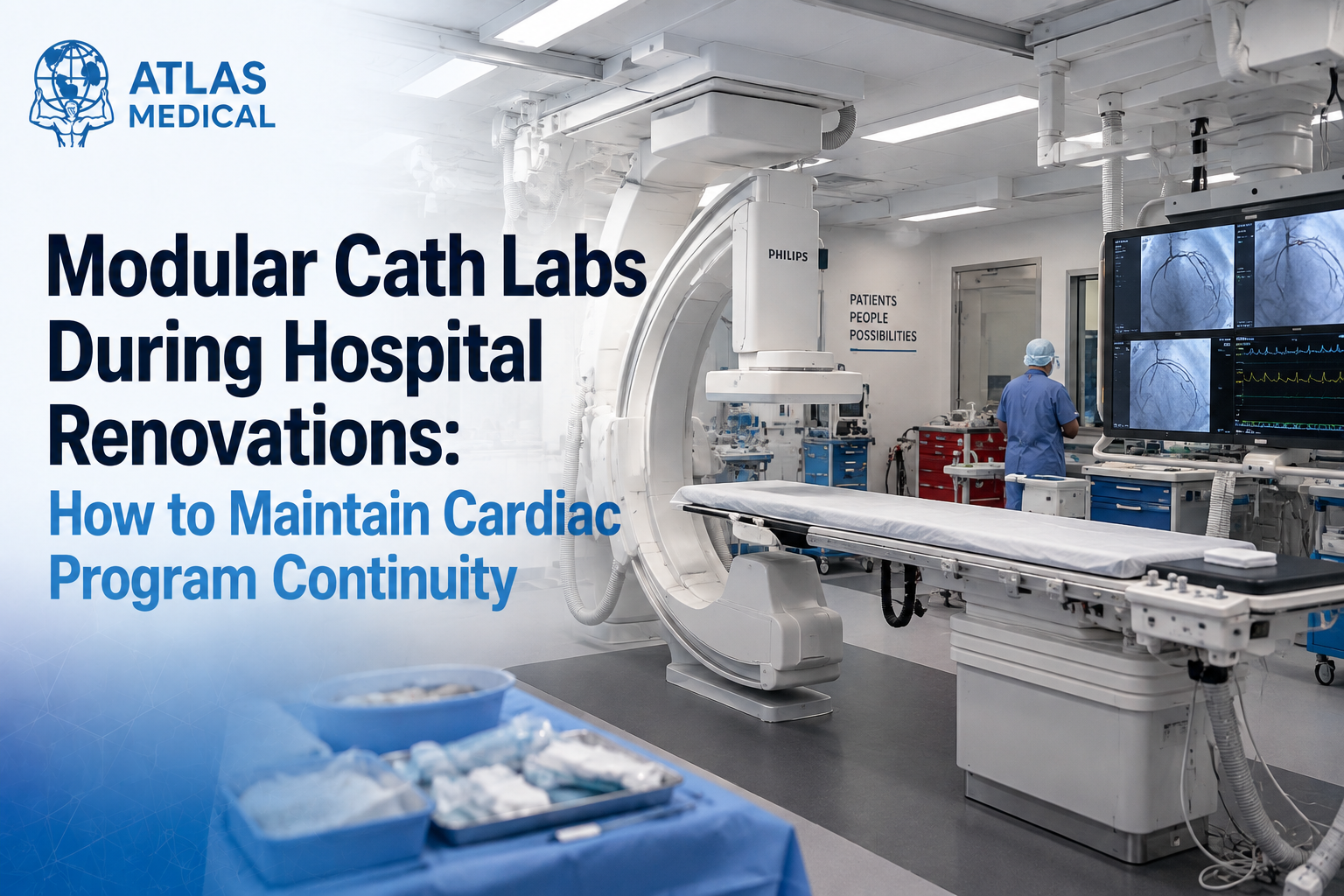
A cath lab renovation creates an unusual planning challenge for hospitals: the project is designed to improve cardiac services, but completing it may temporarily take critical procedural space out of operation. The construction schedule is only part of the problem.  Hospital leaders also have to decide what happens to procedures, physicians, staff, patients, and workflows while the permanent lab is unavailable. A modular cath lab for hospital renovation can provide temporary procedural capacity on-site while work progresses inside the permanent facility. Atlas Medical specifically positions its modular cath lab rentals for renovations, temporary capacity, and projects where hospitals need to keep cases running. The key is to treat the modular lab as part of the renovation strategy—not as equipment that gets added after the construction plan is already finished.
By Jared Labtic September 1, 2026
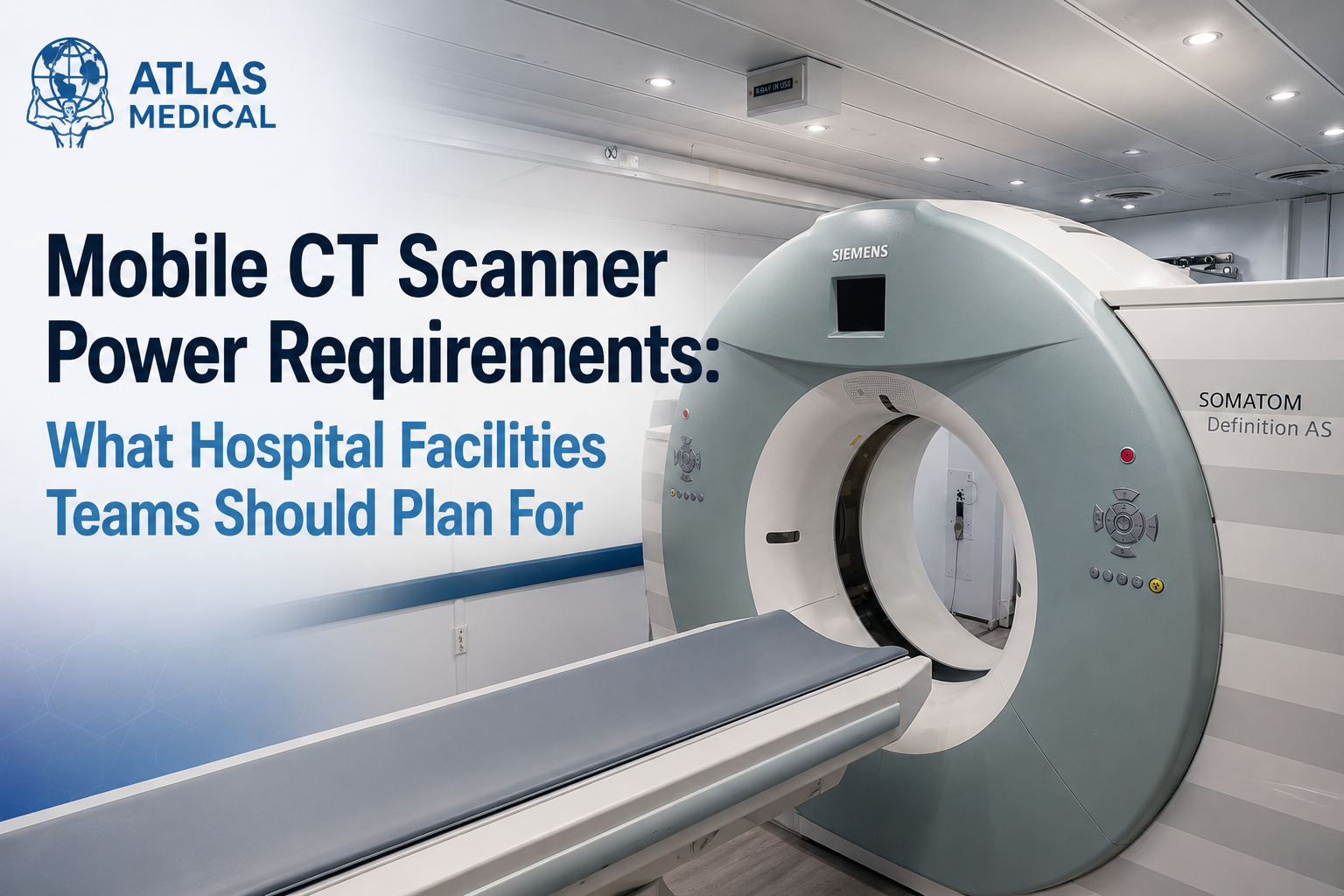
A mobile CT scanner may arrive on a trailer, but it still needs the electrical infrastructure required to operate advanced diagnostic imaging equipment. For hospital facilities and engineering teams, that makes power one of the first technical questions to resolve before delivery. Atlas Medical notes that a typical mobile CT unit requires 480V, 3-phase power . However, hospitals should not treat that figure as a universal specification for every trailer or scanner. The electrical requirements should always be confirmed for the specific mobile CT unit assigned to the project. Getting that information early gives facilities teams time to evaluate the site's existing electrical capacity, determine whether electrical work is necessary, coordinate responsibilities, and have the connection ready before the mobile unit arrives.
By Jared Labtic August 30, 2026
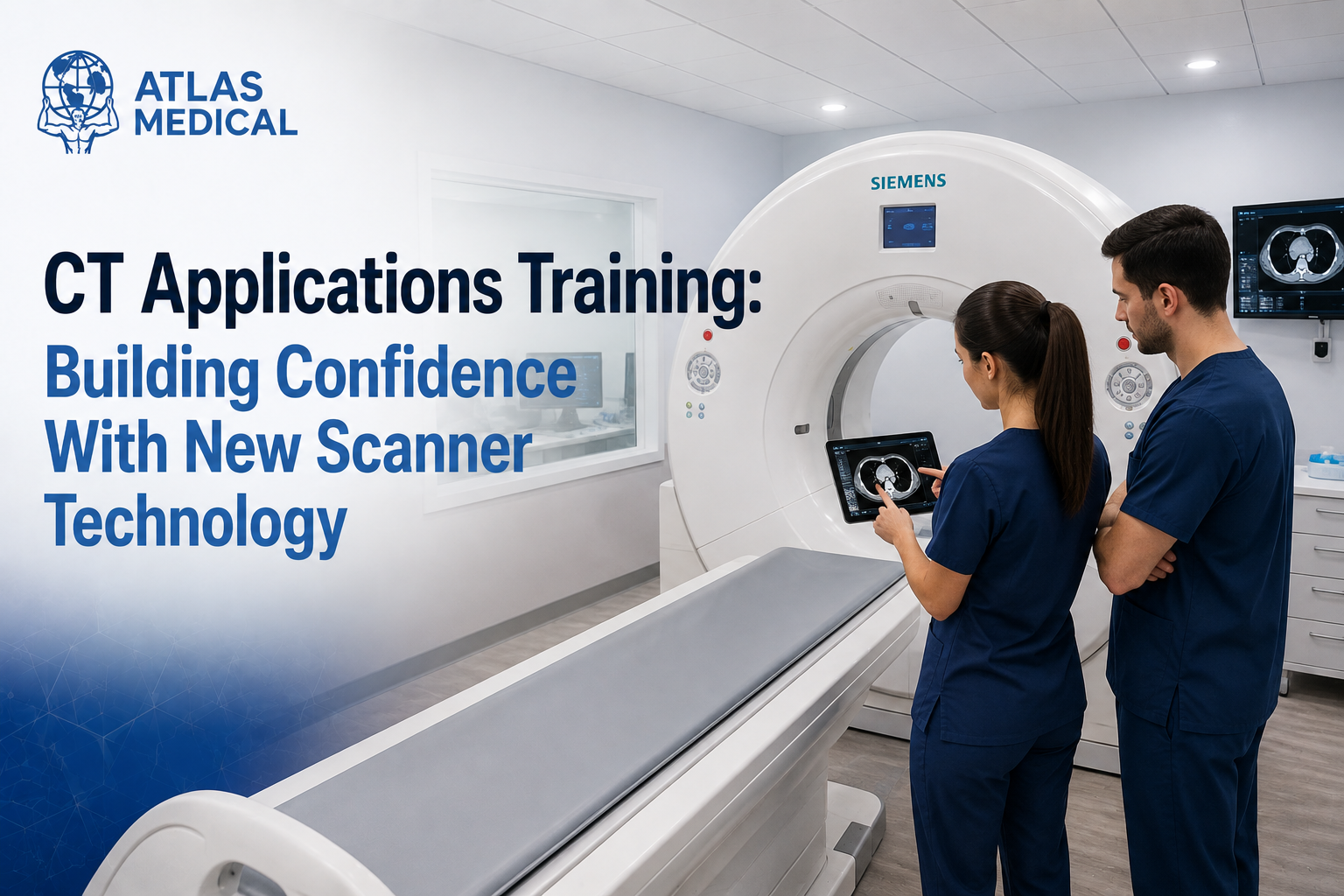
An experienced CT technologist already understands patient care, positioning, scan preparation, and the clinical demands of a busy imaging department. What changes when the scanner changes is the technology used to perform that work. A new interface, different protocol structure, unfamiliar reconstruction tools, or a change in manufacturer can create a learning curve even for an experienced team. CT applications training gives technologists hands-on, system-specific support so they can understand how the scanner fits into their department's clinical workflow. Hospitals may need this support when installing a scanner, replacing older equipment, changing OEM platforms, introducing advanced applications, opening a temporary imaging location, or onboarding additional staff. Atlas Medical provides imaging applications training and temporary technologist staffing for hospitals and imaging providers with project-based clinical support needs.
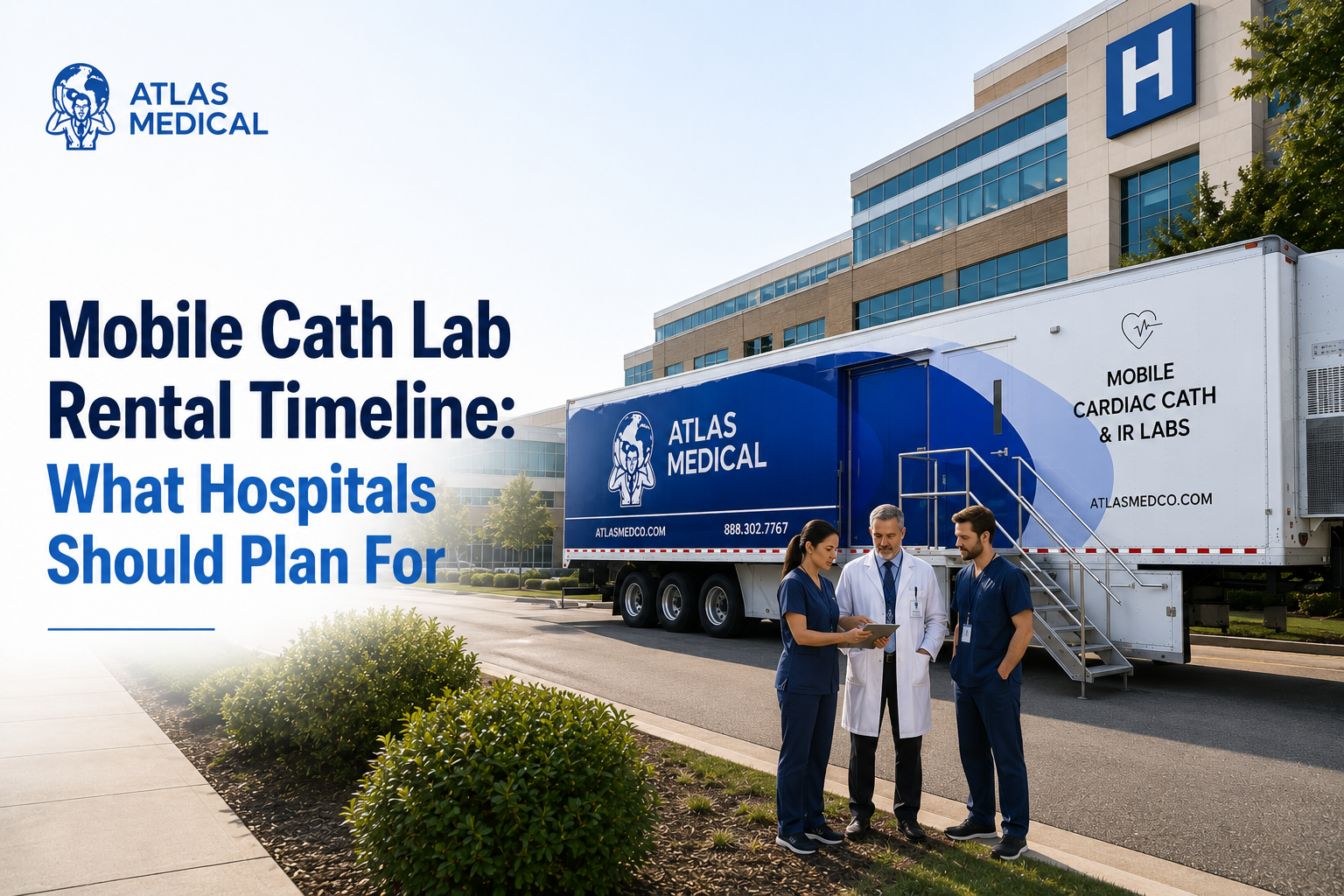
Mobile cath lab rental unit outside a hospital with healthcare professionals planning temporary cath
By Jared Labtic August 20, 2026
Planning a mobile cath lab rental? Learn the key stages hospitals should prepare for, from project assessment and site readiness to delivery and go-live.
June 15, 2026
Comparing Philips Allura vs Azurion? Learn about each systems's workflow,dose management, 3D guidance, and long-term value for modern interventional labs.