
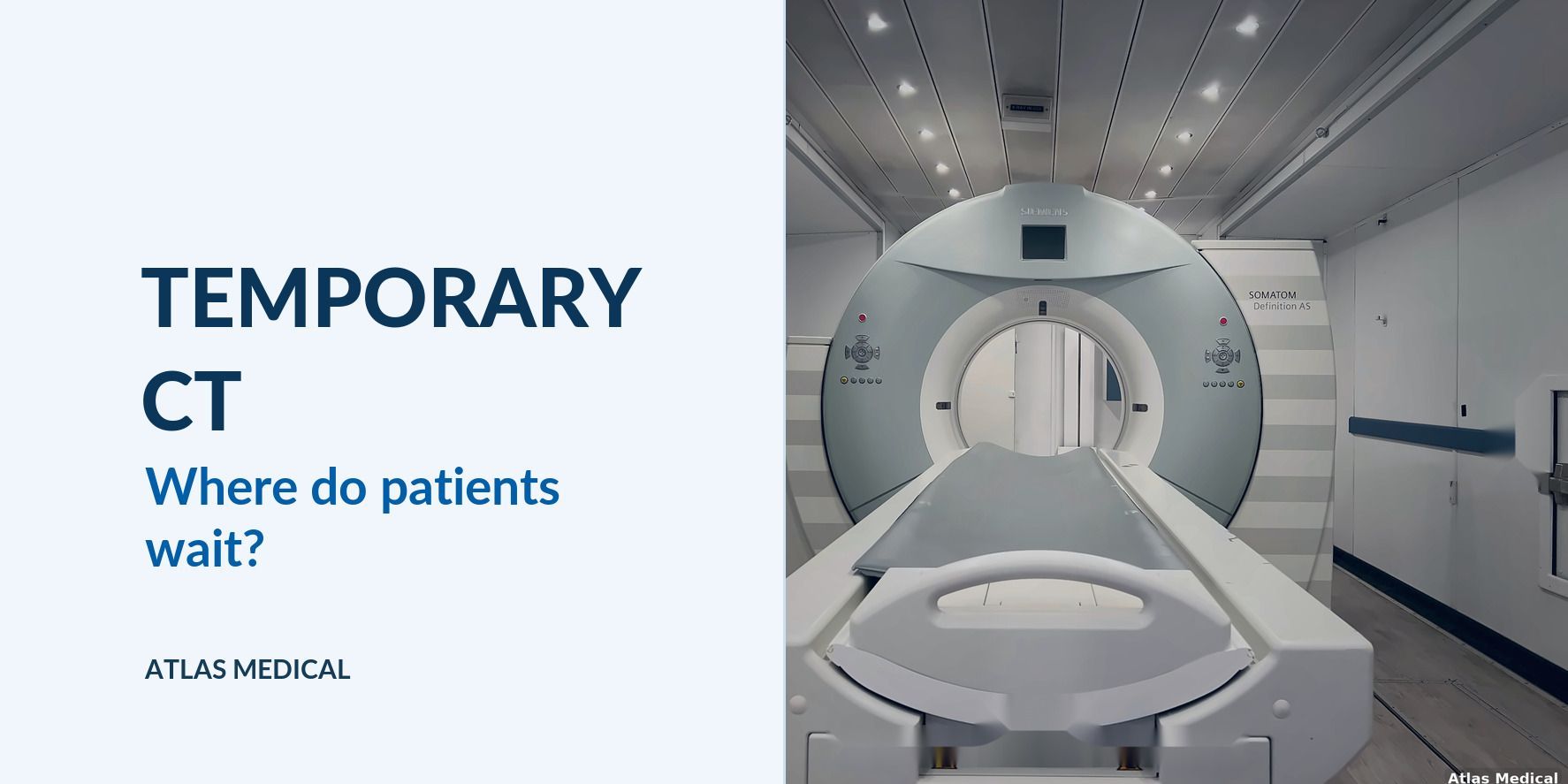
A temporary CT scanner can be ready for use while the next patient’s arrival is still hard to coordinate. During a renovation or scanner replacement, the usual waiting room may be farther from the scanner, a familiar corridor may be closed, or an inpatient transport team may arrive before CT can receive the patient. The useful planning question is specific: where does each patient wait until CT is ready to receive them, and who tells them or their escort to move?
Give each arrival route a clear stopping point
Start with two routes: an outpatient who checks in and an inpatient who arrives with hospital transport. On a simple site map, trace each route from its starting point to the person who receives the patient. Mark where the patient or escort stops if CT hasn’t called for them yet. The two routes can share a destination if the hospital chooses one that works for both. They can also have separate waiting locations; the important thing is that the instructions are clear to the people using them.
For an outpatient, the hospital might keep waiting near the existing radiology check-in and have staff direct the patient onward. For an inpatient, the sending unit and CT might agree that transport starts only after CT confirms it can receive the patient. These are examples to compare against the actual site. Walk each proposed route with radiology, registration, transport and facilities. Ask who will know that someone has arrived, whether the planned route will stay open during construction, and whether the person giving directions can describe the waiting location without referring to a scanner or entrance the patient has never seen.
Agree on what releases the next patient to move
An appointment time tells people when they’re expected. A call from CT tells them when the department is ready for the next handoff. Decide which CT role sends that call, who receives it for each route, and what the receiver does when the message hasn’t arrived. Use the hospital’s approved communication channel. Include the destination and next action in the message so registration or transport can act without filling in the blanks.
One practical way to check the handoff is to ask what happens if the first contact is unavailable. For outpatients, should registration continue to direct people to the agreed waiting area? For an inpatient departure, who should transport or the sending unit contact if the estimated receive time has passed? The team should be able to explain the next step without relying on one person’s memory or one phone number that may go unanswered. The project map needs roles and locations; use established hospital systems for any patient-specific information.
Rehearse one early arrival and one delay
Try the plan with two ordinary situations before the schedule moves. First, an outpatient arrives early and checks in while CT is still finishing another appointment. Have registration explain where the patient goes, who will call them and how staff will give an update if the wait changes. Next, an inpatient transport team is already en route when CT tells the sending team it needs more time. Have the hospital’s staff decide who takes that message, how it reaches the escort and what agreed alternate location or return process applies. Patient-specific care decisions stay with the responsible hospital team.
Run both examples using the proposed construction routing and the actual people or roles involved. If the rehearsal ends at an unlabeled door, an unattended desk or a general instruction to “wait by the trailer,” revise the directions and replay the example. That small test can catch a problem that a floor plan alone won’t show: the route makes sense on paper, but the person who receives the patient doesn’t know they’re coming.
Put the instructions where the handoff happens
Make a short version for registration, transport dispatch and the CT receiving team. Give each group the waiting location it uses, who signals that it is time to move, who receives the patient and what to do if timing or routing changes. Use the same location names on maps and in staff messages. When a renovation phase changes an entrance, update the directions shared by both the sending and receiving teams.
If you’re planning temporary CT for a scanner replacement, bring your proposed placement and the two patient routes to the first site discussion. Contact Atlas Medical to discuss the temporary placement, then use that location to work through the handoff with your hospital’s radiology, transport and facilities teams.