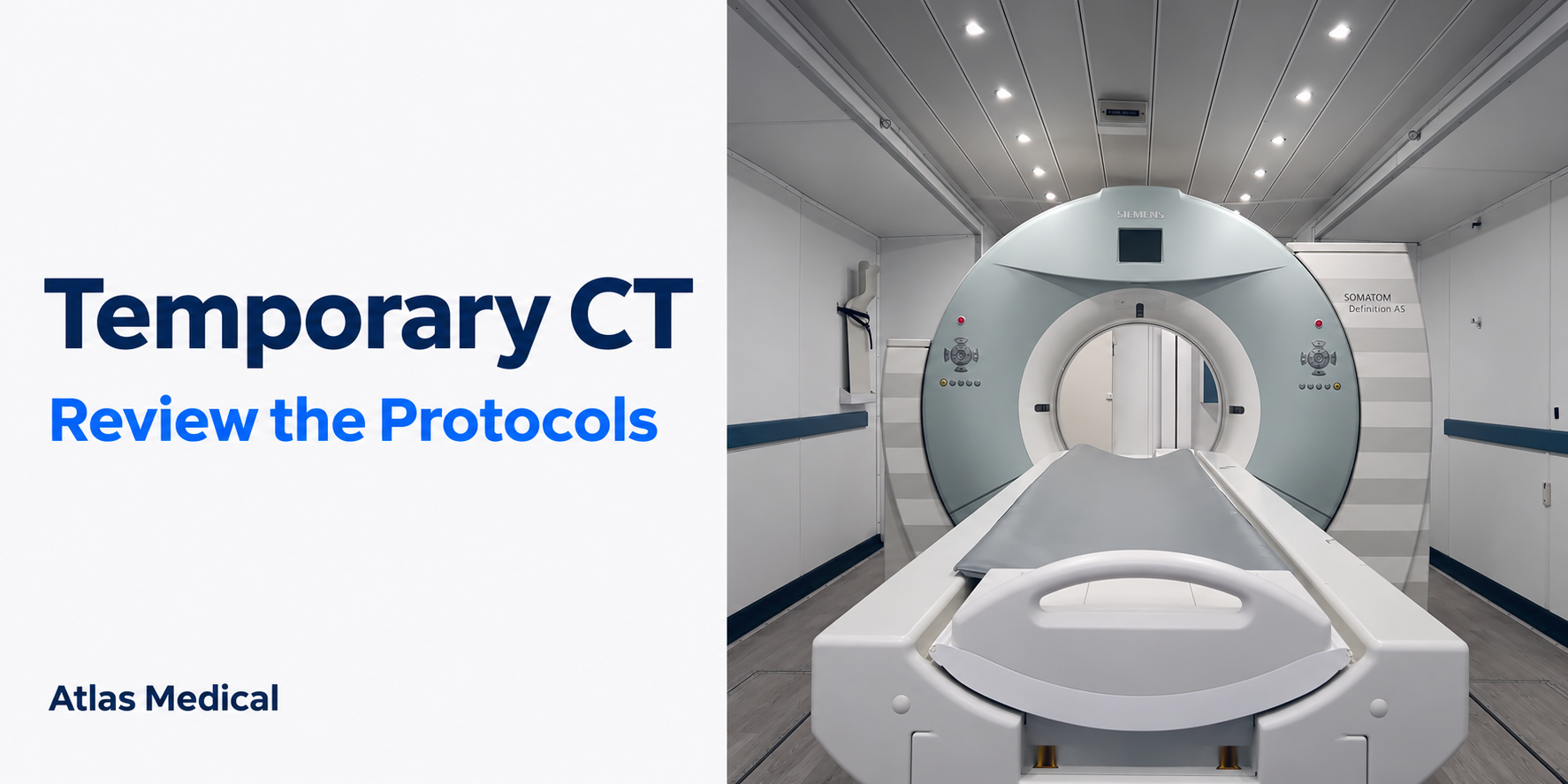

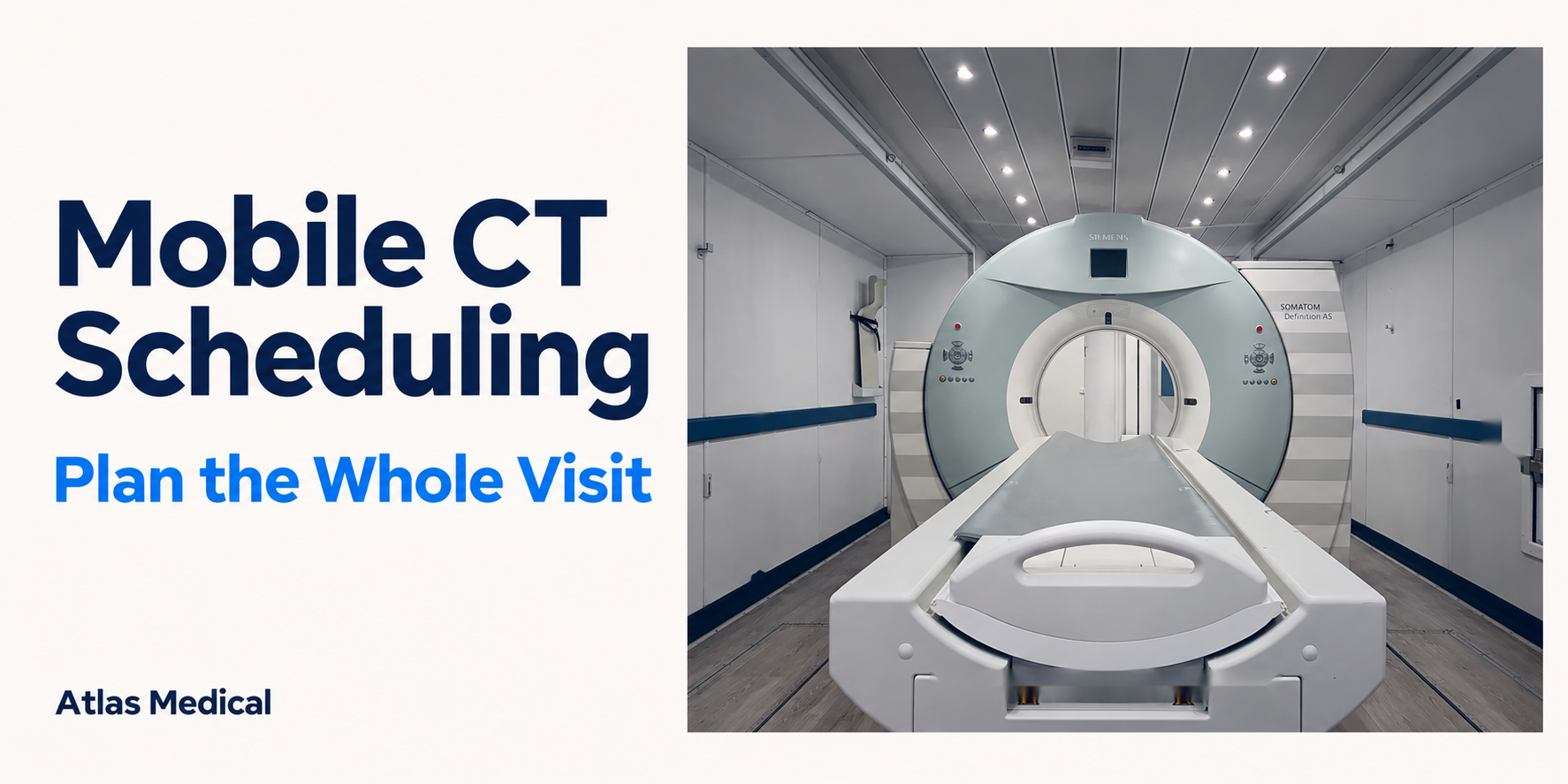
When a hospital moves CT exams into a temporary scanner during replacement or renovation, copying the permanent department’s appointment template can hide an important change. The imaging system may be familiar, but the places where patients check in, prepare, wait and return to their department may be different. A schedule needs to account for that complete path.
The practical question is: what must be ready before each patient enters the temporary CT room, and what must happen before the room can receive the next patient? Answering it gives the hospital a better basis for opening appointment slots than scanner acquisition speed alone.
Separate three different clocks
Start by distinguishing the patient’s visit, the time the patient occupies the CT room and the time used to acquire images. These intervals overlap, but they describe different demands on the service.
RadiologyInfo’s CT preparation guide, produced by the American College of Radiology and Radiological Society of North America, describes positioning, possible contrast administration and image-quality checks around the scan itself. Its explanation illustrates why image acquisition is only one part of an examination. It is patient information, not a capacity specification for an assigned temporary scanner.
For planning, identify which activities use the scanner room and which use another space or team. A patient may be ready to leave the scanner while transport is still needed. Another may have arrived at the hospital without yet completing the hospital’s required preparation. Neither situation is resolved by quoting a faster acquisition time.
Build the template around the intended exam mix
Ask CT leadership to identify the examinations the temporary service is expected and authorized to perform. Use the assigned scanner configuration and the hospital’s approved implementation as the starting point. An examination that is still under clinical or technical review should not quietly become an assumed bookable slot.
Then compare the operational needs of the proposed appointment groups. Consider arrival arrangements, preparation location, assistance requirements, staffing and any additional steps identified by the clinical team. Keep the review at the level needed to plan resources; patient-specific instructions and decisions remain with the hospital’s qualified clinicians.
The result may be several scheduling patterns rather than a single interval for every examination. Do not take a duration from a brochure, another hospital or a public patient guide and apply it across the temporary service. UConn Health’s CT patient information, for example, distinguishes arrival and appointment arrangements according to the examination and preparation involved. Those are that institution’s instructions, not a proposed Atlas scheduling standard.
Locate the work that happens outside the scanner
A useful planning exercise follows one representative appointment from arrival to departure without using a real patient. Bring the proposed route, available rooms and staff responsibilities into the same discussion.
Where does the patient report? Where will the hospital complete its required preparation? Who tells the CT team that the patient is ready? Where does the patient go afterward, and who arranges that movement? Consider these questions for the actual patient groups the temporary service will support.
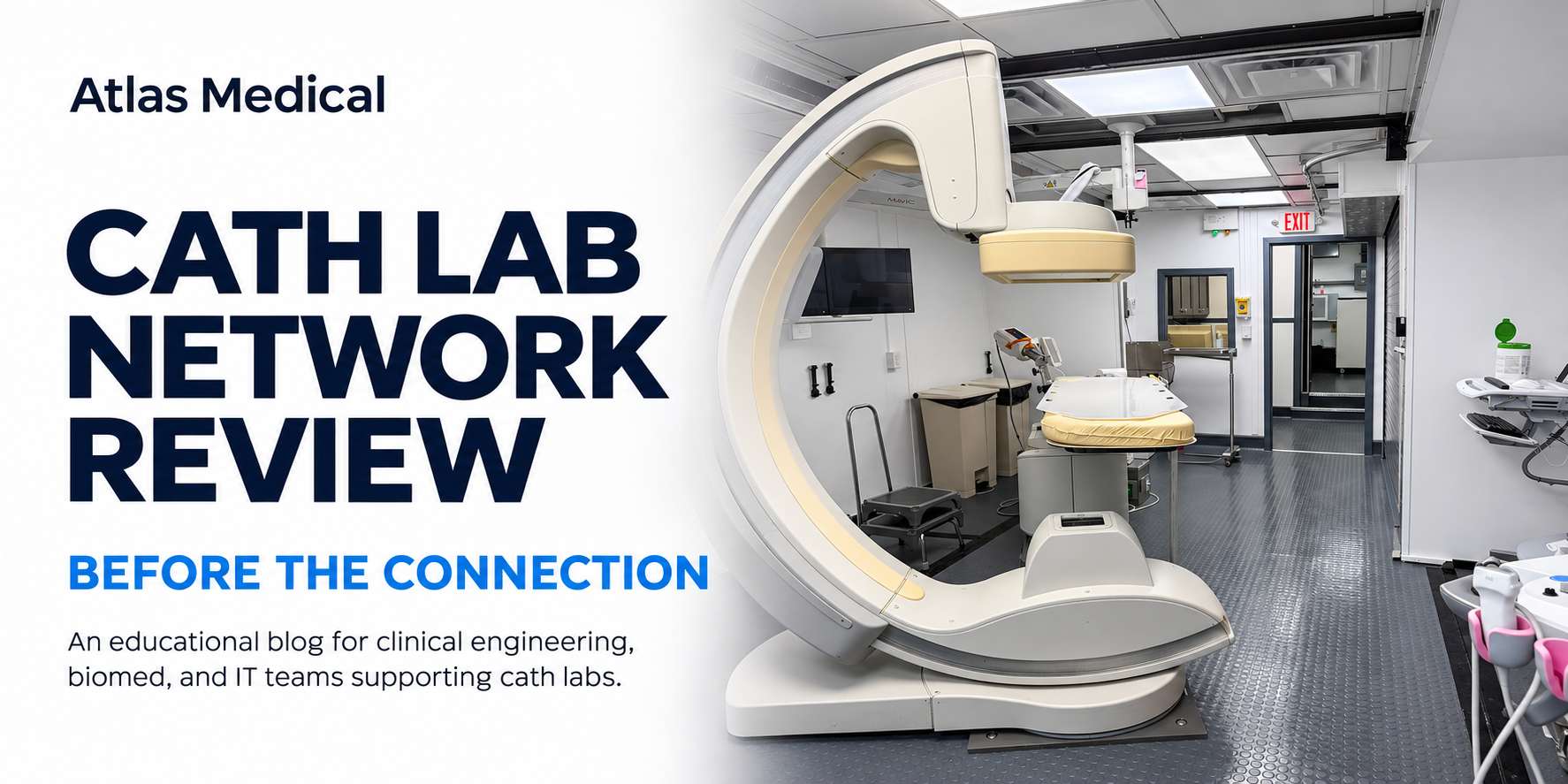
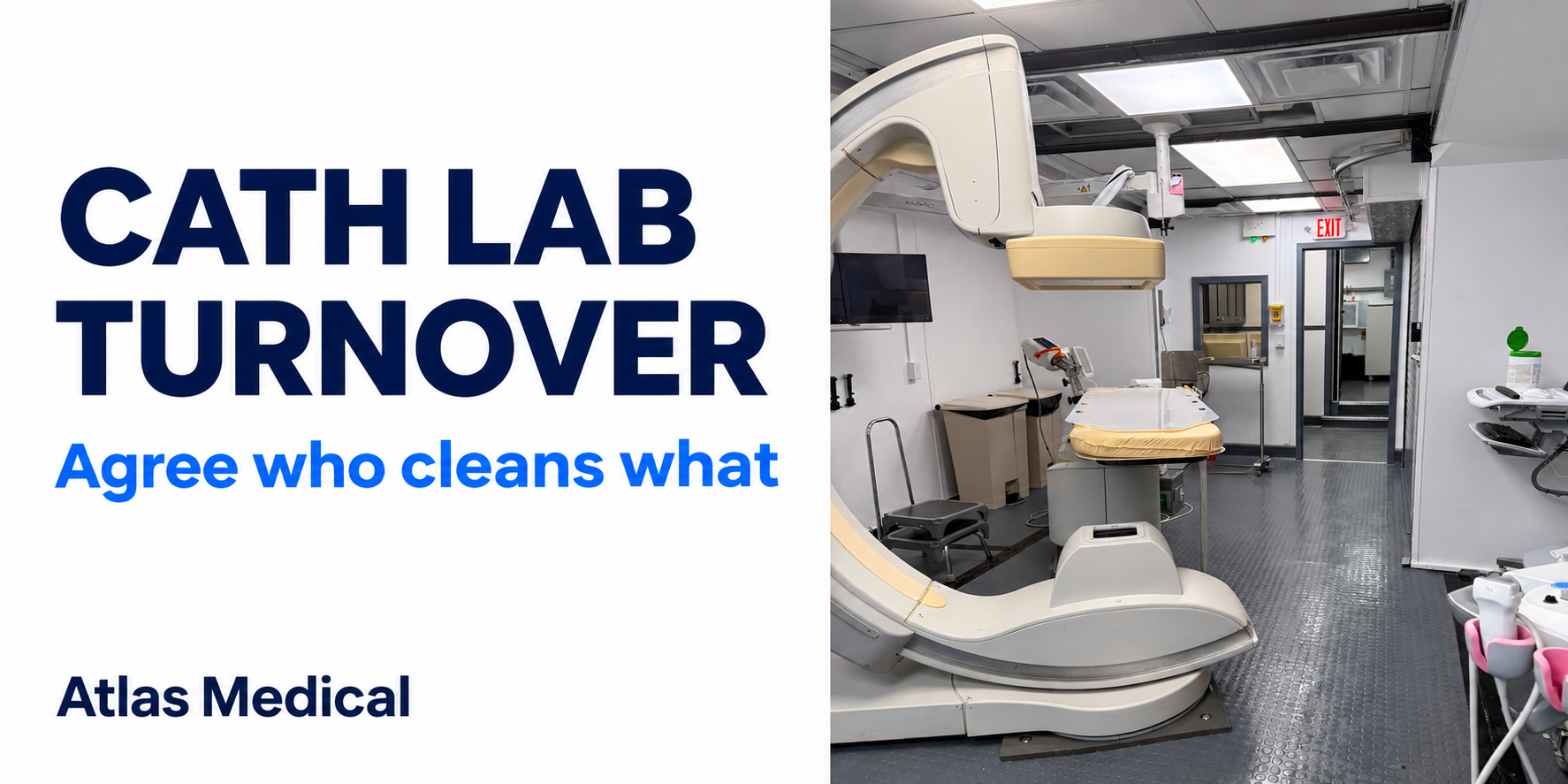
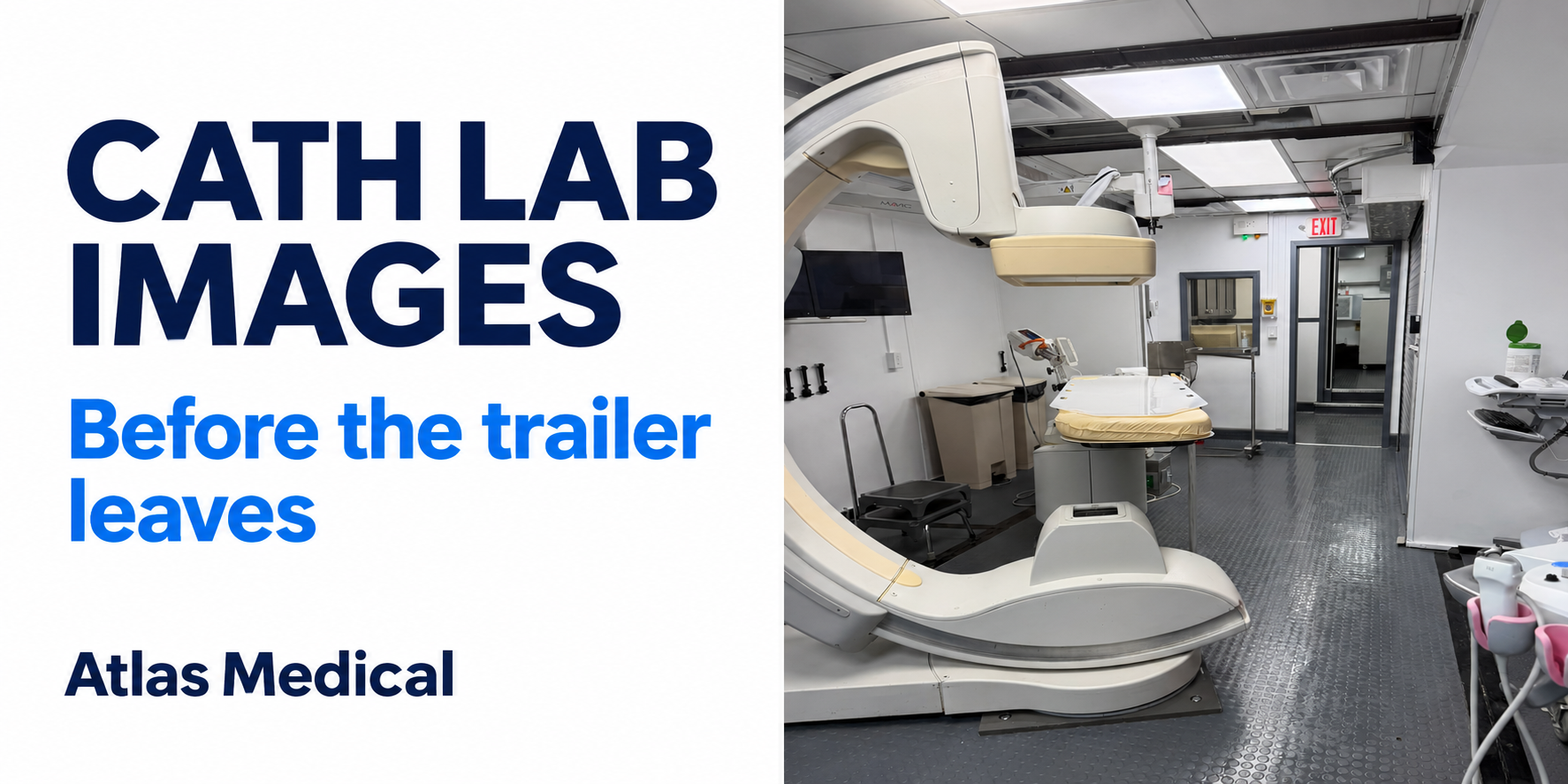
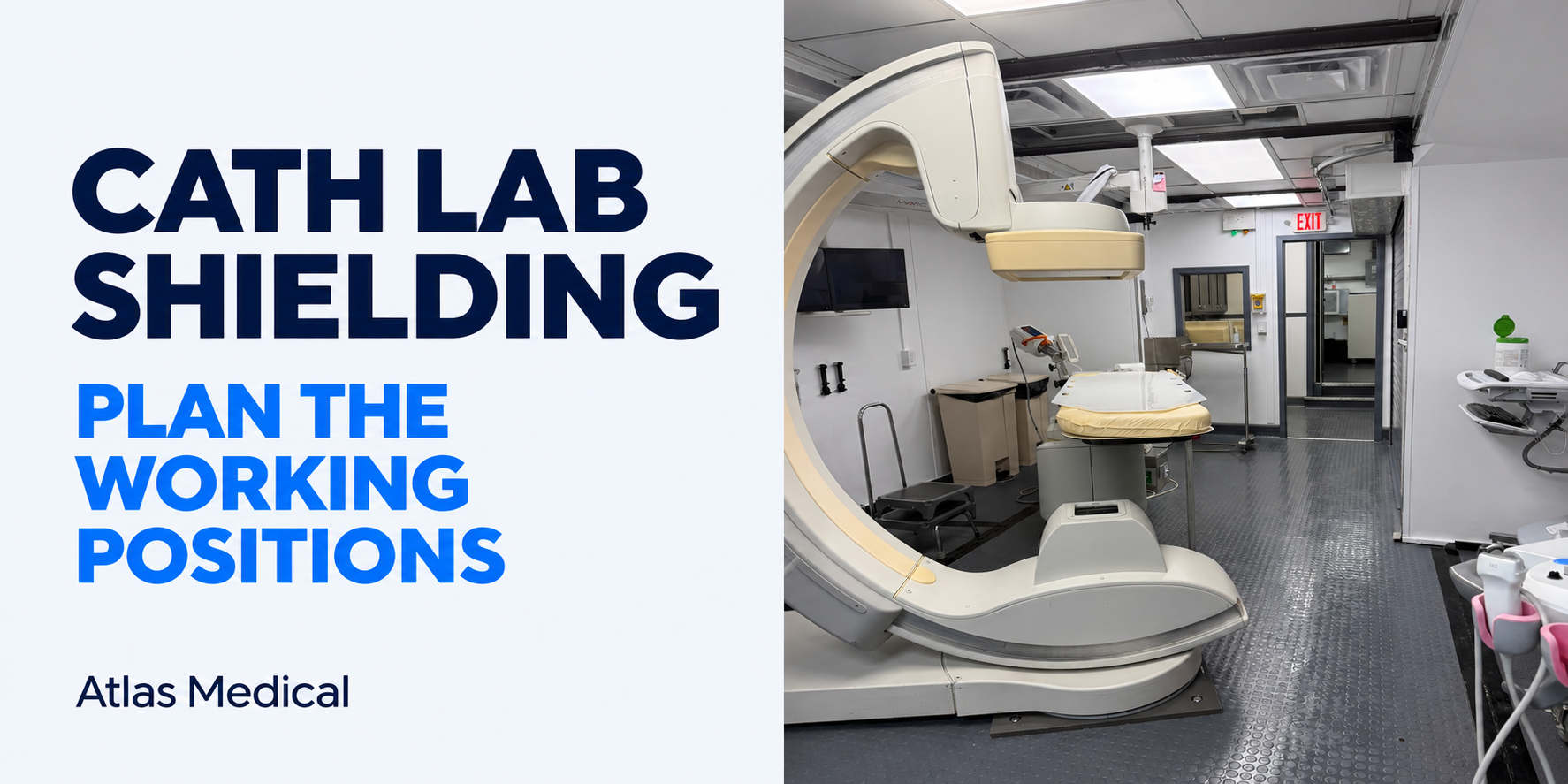
For example, a planning team might place preparation inside the hospital and scanning in a trailer. If the appointment template assumes the patient is already at the scanner at the booked time, it needs a workable process for the intervening movement. That is a hypothetical planning example, not a description of a customer project or a recommendation for a particular clinical arrangement.
Also check whether the same staff member or space is being counted in two places at once. Moving an activity outside the scanner room does not remove its demand on people, rooms or transport. Confirm those resources before treating the activity as something that can run in parallel.
Define when the next slot can start
Agree on the operational meaning of “ready for the next patient.” It should reflect the hospital’s applicable workflow, including required room preparation, equipment checks and completion of responsibilities from the previous examination. The schedule should accommodate those requirements rather than pressure staff to shorten them.
Keep room availability separate from the patient’s remaining visit. If a patient needs another hospital-directed step after leaving the scanner, confirm where it occurs and who takes responsibility. Conversely, an open scanner room does not mean the next patient has completed the required preparation.
Ask the appropriate hospital leads to review the proposed sequence together. CT operations can explain the room workflow; scheduling and patient transport can test whether the arrival and movement assumptions are workable. Other clinical, facilities or support teams should participate where the proposed service depends on them.
Test the schedule against ordinary disruption
Before releasing the full appointment template, walk through realistic operational variations: a late arrival, a delayed transfer, an examination needing more time than expected or competing requests for the same staff resource. Clinical prioritization and emergency arrangements must follow hospital policy; the planning exercise should clarify how the schedule receives and communicates those decisions.
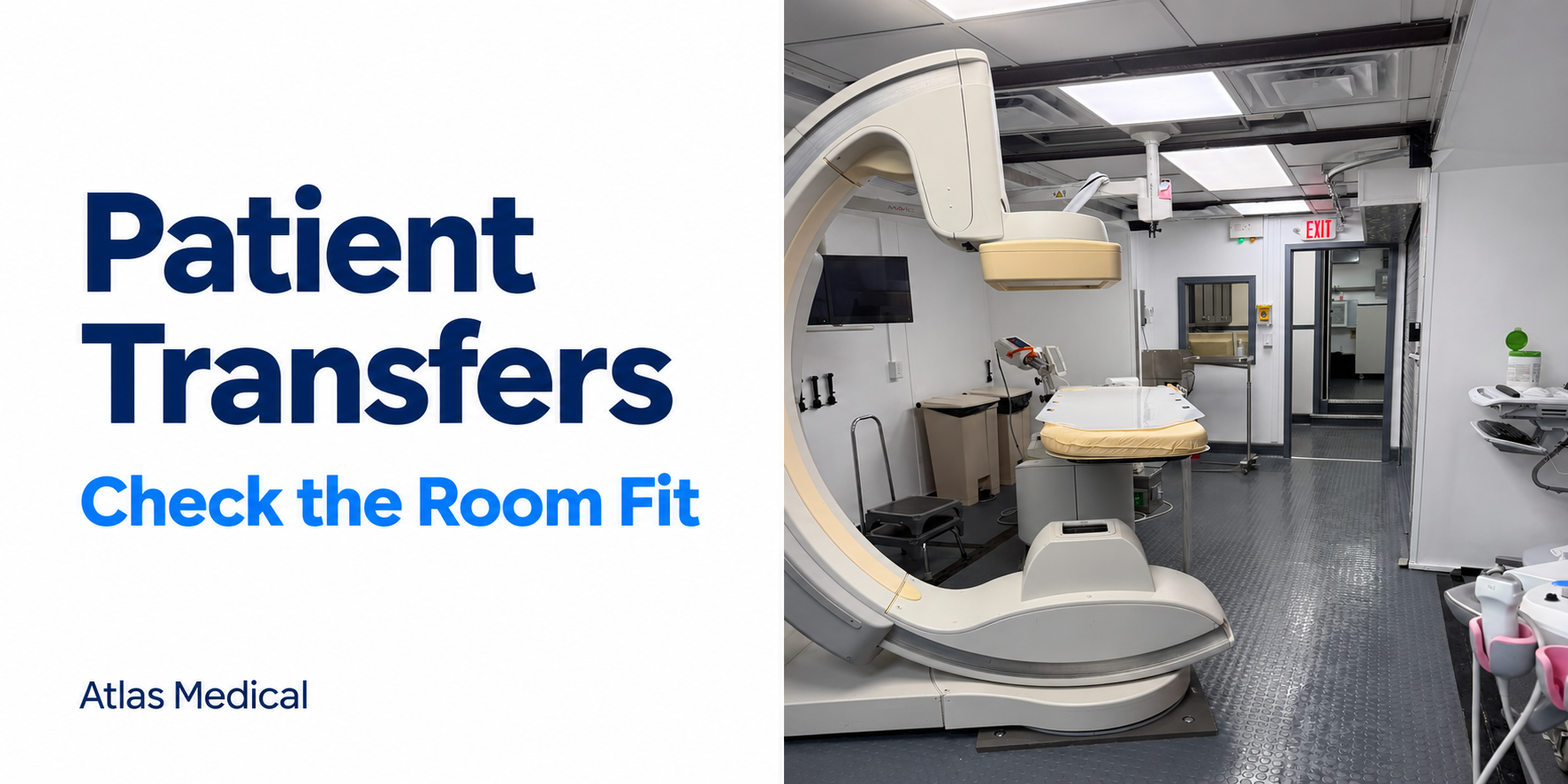
Avoid filling every apparent gap on the assumption that all activities will proceed at their shortest possible duration. Instead, have hospital leadership decide how to accommodate variation using the intended exam mix and available resources. There is no universal buffer or daily examination count established by a room photograph or scanner model name.
After the service begins under the hospital’s readiness process, compare the planning assumptions with actual operations. Use hospital-approved reporting and protect patient information. If delays repeatedly occur before patients reach the room, review that part of the path before changing the scanner booking interval. If the room sequence takes longer than planned, revisit the template with the responsible team.
Bring a service plan to the temporary CT discussion
A productive project discussion includes more than a target number of scans per day. Bring the intended examination mix, operating hours, proposed preparation and waiting locations, patient movement arrangements and the hospital’s approach to reviewing the opening schedule.
Atlas’s hospital renovation planning guide addresses the broader continuity timeline. Within that timeline, appointment planning needs its own practical review of the people and spaces surrounding the scanner.
Planning temporary CT coverage during renovation or replacement? Contact Atlas Medical with the service you need to maintain and the workflow questions your hospital is resolving. Confirm the assigned equipment and project arrangements before turning a capacity goal into a patient schedule.