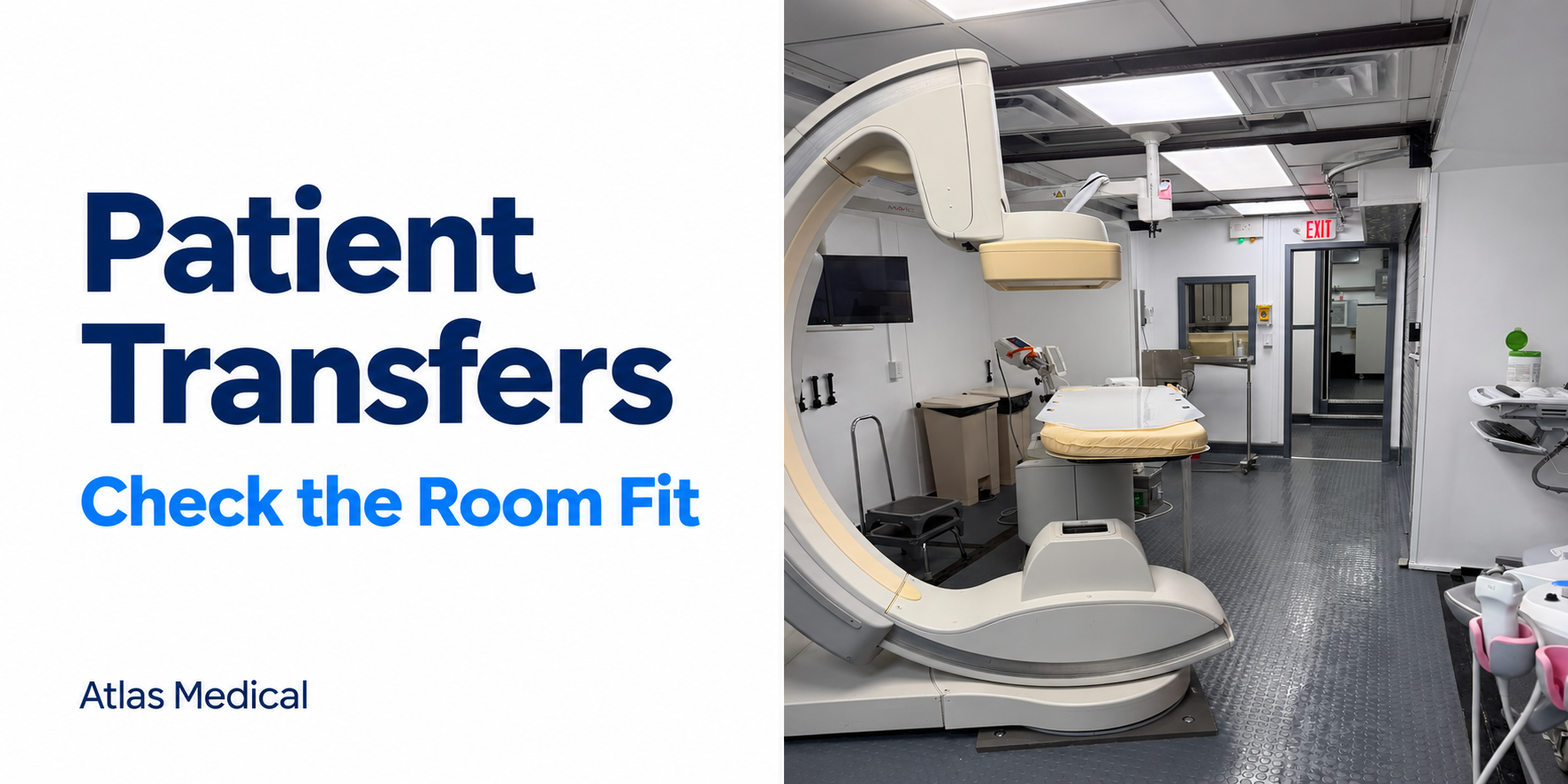

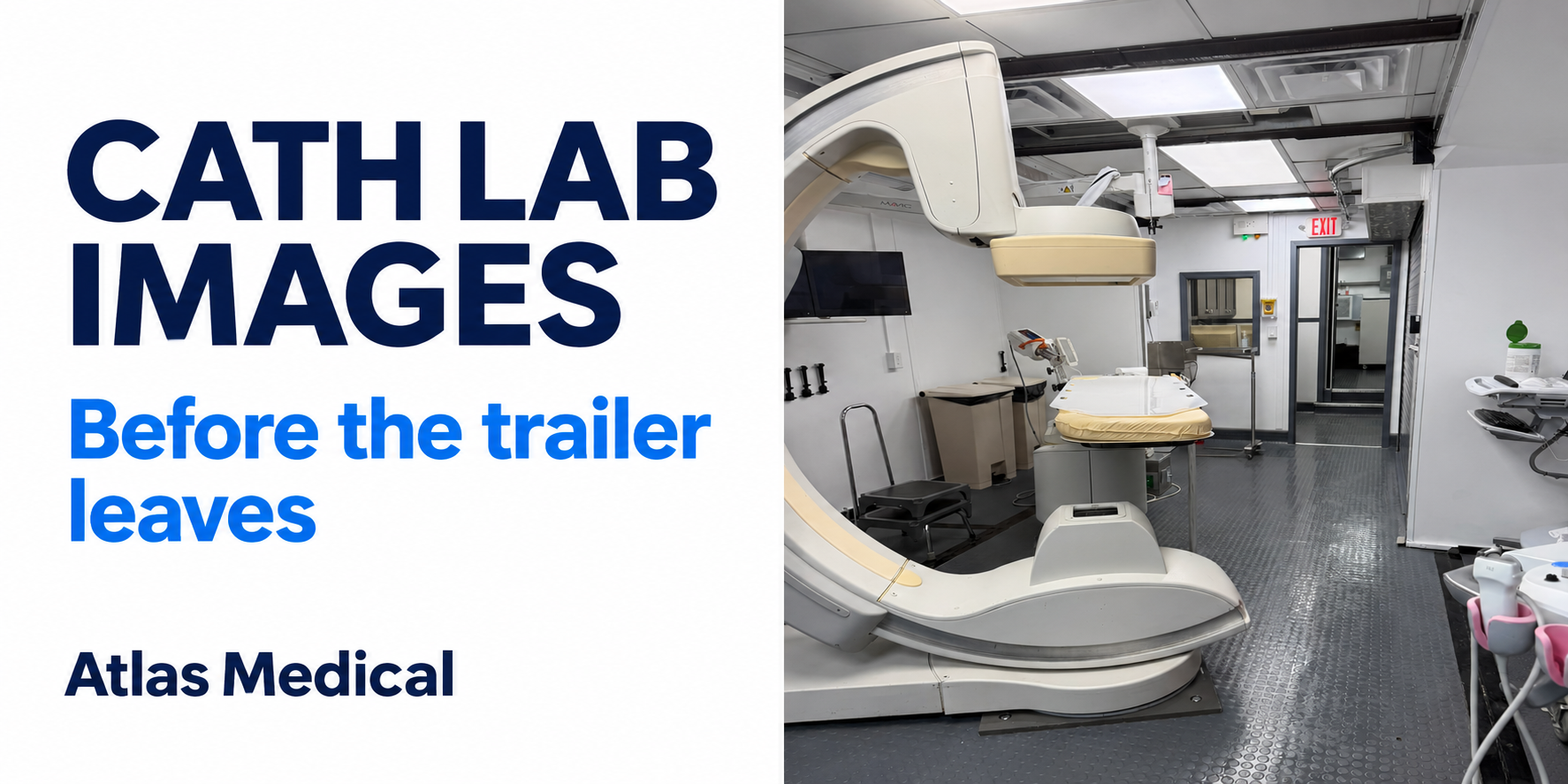
A hospital may be ready to move procedures back into its renovated cath lab while one part of the temporary project is still unfinished: access to the images acquired during the rental. Before the trailer is disconnected, the hospital needs a clear answer to a practical question. Where will authorized staff find those studies after the temporary imaging system is gone?
Build that answer into the project early. The return date should follow an agreed image handoff, with time to resolve exceptions. Equipment removal, image availability and removal of remaining local data are separate decisions with different evidence and responsible people.
Decide where the lasting record will live
Start with the hospital's intended archive and the people who will use it. The cath team may need to review prior angiographic studies after the replacement project ends. Identify the hospital system and authorized viewing workflow that will support that work, rather than treating continued access to the rental unit as the plan.
Ask the hospital's imaging informatics or PACS lead to define what belongs in the handoff. Images, related reports and records produced by separate systems may follow different paths. Do not assume that successfully sending the imaging study also transfers every report or other record associated with the procedure. Have the owners of those systems confirm their own arrangements.
The hospital should also name who can accept the completed handoff and who will handle a later question about a missing study. A departure plan is more useful when it identifies a continuing hospital contact, not just the person who disconnects the equipment.
Separate “sent” from “available later”
A transfer indicator is useful evidence, but its meaning needs to be understood. DICOM's Storage Commitment specification distinguishes accepting transmitted images from taking responsibility for their safekeeping. Storage Commitment provides a way to request that responsibility; the receiving implementation documents the nature and duration of its commitment and retrieval capabilities.
For the project team, the practical question is what confirmation the actual systems provide. Ask the technical owners to explain which transfer and archive evidence they will retain. If Storage Commitment is part of the assigned configuration, confirm how its results are reviewed. If it is not, have the hospital define the appropriate alternative verification process. Do not assume a service is installed or configured because it exists in the standard.
Manufacturer documentation should match the actual equipment and software release. Philips' interventional X-ray documentation lists multiple Allura releases, illustrating why a product-family name alone is insufficient to select a conformance statement. The applicable documents and technical review must come from the assigned configuration.
Reconcile the full temporary-service period
Plan a reconciliation that covers the rental period through the final study, including any work completed after an earlier review. The responsible hospital teams should decide which records to compare, how to investigate exceptions and what evidence is sufficient to close them. Keep identifiable study information inside approved hospital systems.
Consider a hypothetical closeout: an earlier transfer review passed, but the trailer stayed in service for another week. A sign-off based only on that earlier review would leave the additional period outside its scope. The final reconciliation needs a clear cutoff and a way to account for work performed after it.
Give unresolved items an explicit disposition. A missing study, an incomplete transfer or a record associated with the wrong identifier requires investigation through the hospital's approved process. An aggregate count or an empty transfer queue should not be the sole explanation for closing every exception. Leave enough time before disconnection for the technical team to investigate and repeat the relevant checks.
Confirm access from the workflow that will remain
The useful demonstration takes place where staff will work after the rental ends. Have authorized reviewers confirm that the agreed studies can be located and opened through the intended hospital workflow. For angiographic material, the team should determine whether the required sequences and viewing functions are available for its intended use.
Keep the scope clear: a project manager can coordinate the demonstration and capture its outcome, while qualified clinical and technical reviewers determine whether the result meets the hospital's requirements. Use hospital-approved test methods and access controls. Do not send patient screenshots through ordinary project emails, social messages or a public contact form.
Agree on remaining data before releasing the unit
Retaining the hospital's records and addressing data remaining on equipment are related, but one does not automatically complete the other. Before any local data is removed, the hospital and responsible equipment representatives should agree on authorization, the applicable manufacturer process, evidence of completion and any unresolved exceptions. This article is not an instruction to erase a system.
The hospital's records and privacy teams should establish the applicable retention requirements. HHS explains that the HIPAA Privacy Rule itself does not set medical-record retention periods and that safeguards continue through disposal. Avoid choosing a generic retention period from a rental timetable. NIST's media-sanitization guidance provides a framework for organizations to establish appropriate processes; it does not establish a method for a particular cath system.
Put the image handoff ahead of disconnection
Work backward from the planned removal date: allow time for the final reconciliation, hospital access review, exception resolution and authorized handling of remaining data. Confirm who can release each step. If an issue remains open, resolve the plan with the responsible hospital and equipment teams before treating departure as settled.
Planning a cath lab replacement or renovation? Contact Atlas Medical with the project timeline and the hospital teams responsible for imaging and IT coordination. Include the image handoff in the initial planning discussion so continued access has a defined path beyond the temporary room.