
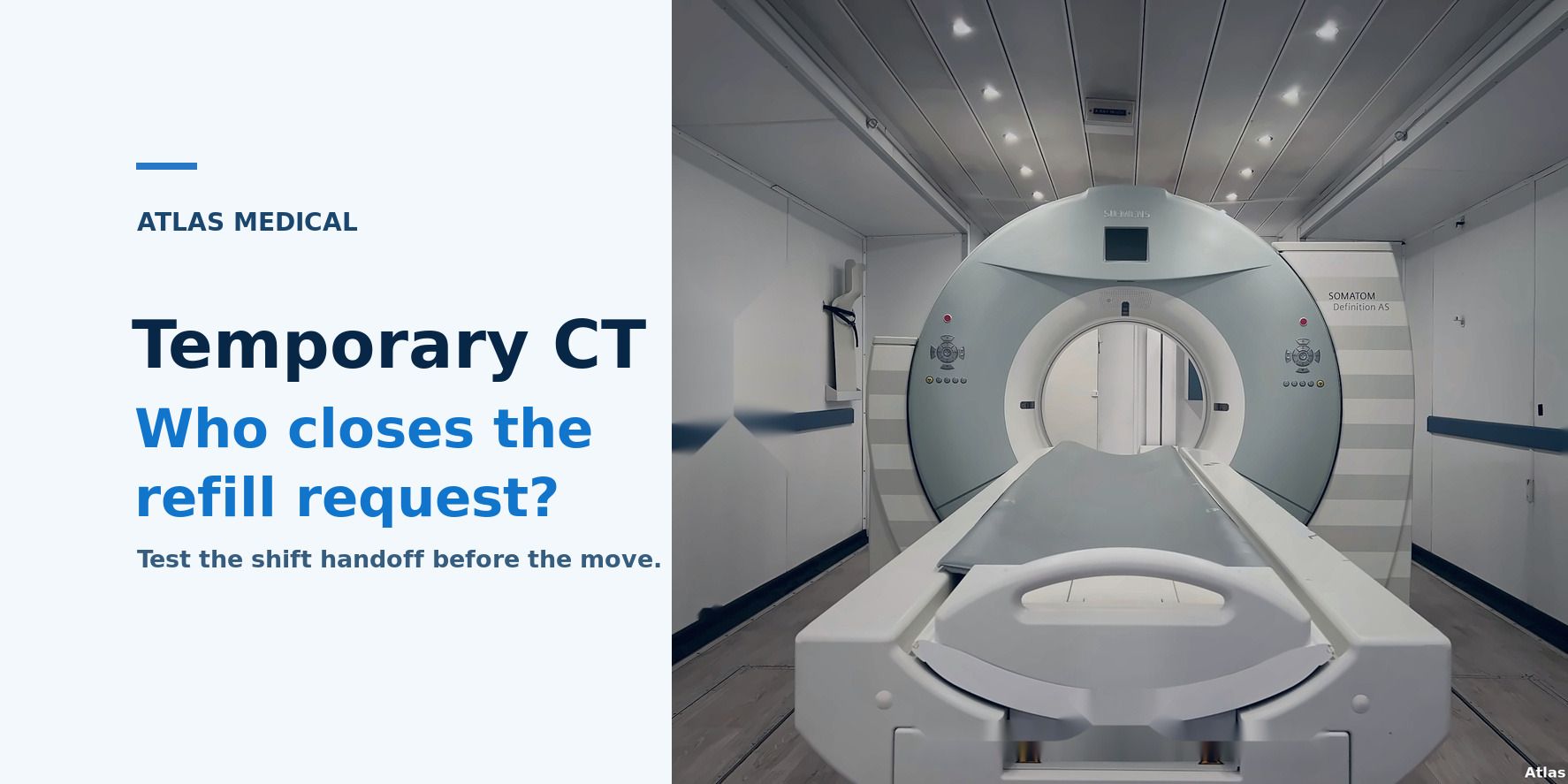
At the end of a shift in a temporary CT room, a technologist notices that one of the room’s routine supplies is below its usual refill point. They send a message to the same team they’d contact in the permanent department. By the next shift, the message has been read. Has someone accepted the request? Does the runner know where to deliver it? Can the new shift tell whether the refill arrived?
Those are questions a walkthrough can answer before the first day of temporary service. Once the hospital has agreed who supplies and stores each item, try following a single routine refill from the signal in the room through delivery and acknowledgment. Run it once with the people who cover evenings or weekends.
Start with the signal the room will actually use
Pick one routine item from the hospital’s approved supply list. Use its existing refill signal if that signal can move with the team: a marked bin, a stock check in the worklist, or a request in the hospital’s supply system. Have the hospital team confirm when staff are expected to send the request and how often stock is checked. Avoid introducing a second signal that someone needs to remember to monitor.
Test what happens when the signal appears after the last normal supply run. The person in the room should be able to tell whether to use a different approved contact or record the open request for the next shift. Use the hospital’s established process to handle any shortage that could affect operations.
Give the runner an endpoint they can find
The regular supply route may stop at the permanent department. Ask the person who would make this delivery to start from the actual supply pickup point. Give them the delivery instructions the team plans to use, then have them find the temporary room or approved handoff point without directions from the project team.
Check where a delivery would go if the normal access point is locked or no one can receive it. Agree on an approved alternate handoff point and who can receive the delivery there. If the regular supply run can’t reach either point after hours, decide who will cover the gap before the move. Keep the same location name in the supply request, access instructions and shift notes.
Let the next shift see whether it’s closed
A request can be sent, accepted and still waiting for delivery. The receiving shift needs to know which of those things has happened and who will follow up. Use the hospital’s existing worklist or handoff record to keep the request visible until someone has confirmed receipt at the agreed location.
A short handoff is enough: “Routine room refill requested; supply team accepted it; delivery is still open; next shift lead to check at the start of shift.” If it arrives between shifts, update the original request so the new team doesn’t place a second one. Use the unit’s established escalation path if nobody accepts the request or the agreed handoff fails.
Run one dry test before the cutover
Have one person in the temporary-room role raise a mock request, one person on the supply route find the delivery point, and an incoming shift lead check the handoff without a verbal briefing. Keep the drill separate from real orders. Stop where someone needs to guess, fix the instruction or ownership at that point, then run that part again.
A useful result is simple: the person in the room knows how to ask, the runner knows where to go, and the next shift knows whether action is still needed. If you’re planning temporary CT during a renovation or scanner replacement, contact Atlas Medical to discuss the layout and locations your team should account for when it walks its supply route.