Mobile Siemens Biplane Cath Lab: Seamless Neurointerventional Coverage

Siemens Artis Zee and Artis Q Biplane Modular Rentals from Atlas Medical
When you're responsible for critical neurointerventional care, every second matters. So when your hospital’s biplane lab goes down — or you're planning a new install — you can't afford to cancel cases or shift teams off-site. That’s where Atlas Medical’s Mobile Siemens Biplane Modular Lab steps in.


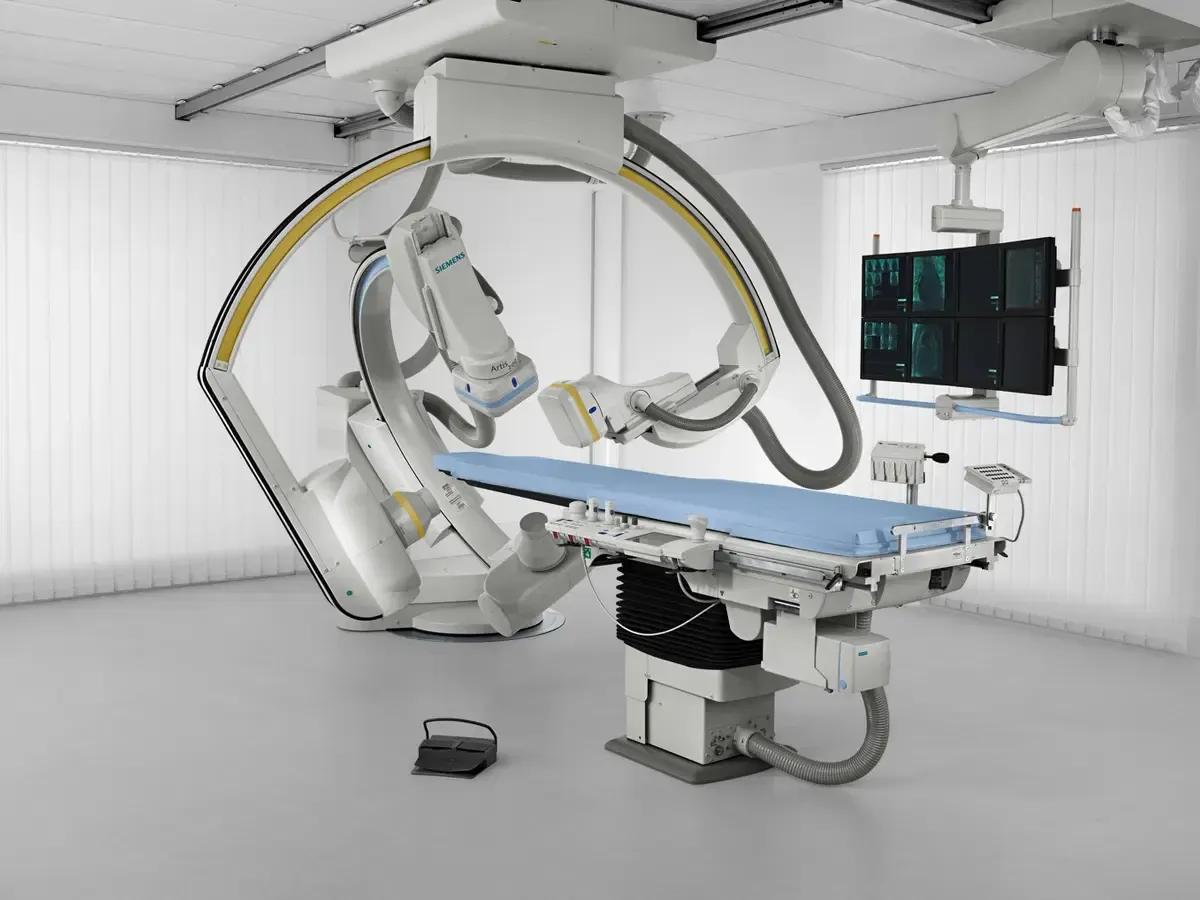
This isn’t a band-aid fix. It’s a fully functional, surgical-grade environment — featuring the Siemens Artis Q or Artis Zee Biplane system — delivered to your parking lot.


Siemens Biplane Imaging. Without Compromise.

Biplane systems exist for one reason: precision. In stroke care, aneurysm coiling, or other complex neurosurgical procedures, you need the simultaneous orthogonal views that only a true biplane cath lab can deliver.


We’ve outfitted our mobile Siemens biplane units with the same high-performance Artis Q and Artis Zee systems found in major academic hospitals — including flat-panel detectors, advanced 3D imaging, and exceptional low-dose clarity. Your interventionalists don’t have to adapt. They just walk in and go.


Built for Neuro. Built for Urgency.

Neurointerventional programs are among the most time-sensitive departments in any hospital. Whether your current lab is undergoing renovations, being replaced, or unexpectedly offline, Atlas Medical helps you stay operational without missing a single case.


Our mobile Siemens biplane systems are installed in a spacious 16' x 50' modular suite, the largest in the country. It’s designed to mirror a traditional neuro suite — with ample working room, dedicated control area, climate control, and easy access.


What to Expect from Delivery to Go-Live

Atlas handles it all — logistics, delivery, setup, integration, and support.


We’ve done this for stroke centers, Level 1 trauma hospitals, and teaching facilities. We know how to work fast and within your compliance framework. Our team can interface directly with facilities and biomed to ensure power, PACS, and network integrations are squared away before day one.


And if your team needs help adjusting to a modular setup, we provide clinical applications support to ease the transition.


Why Hospitals Choose Atlas for Modular Biplane Lab Rentals

  • Hospital-grade Siemens Artis Q or Artis Zee Biplane system
  • Spacious modular layout that doesn’t limit surgical movement
  • True continuity of care during upgrades, repairs, or expansions
  • Clinical confidence — we only deploy interventional systems your physicians already trust


When patient outcomes depend on biplane imaging, there’s no room for compromise. That’s why hospitals across the country choose Atlas.


As we like to say:

No, we’re not changing the world. But we help the healthcare providers that are.


Need a Siemens Biplane mobile lab rental — fast?

Let’s talk. Our mobile Artis Q and Artis Zee Biplane units are available now.


Close-up portrait of a man with short gray hair and a neutral expression against a blurred background

Sean Schneider

Mobile Project Manager · Atlas Medical


About the Author

Say hello to Sean Schneider - our Mobile Project Manager at Atlas Medical. Sean has worked in the medical imaging industry for over 20 years, including 10 years with Atlas Medical. 


Sean has a knack for making complicated projects simple to understand. Around here, Sean's the man who keeps things moving smoothly.


When Sean isn't helping launch our mobile imaging units at new sites he enjoys spending time with his family, golf, and hockey.

Request a Mobile Imaging Solution

Our Services Include:
Medical lab category buttons

By Jared Labtic • September 29, 2026
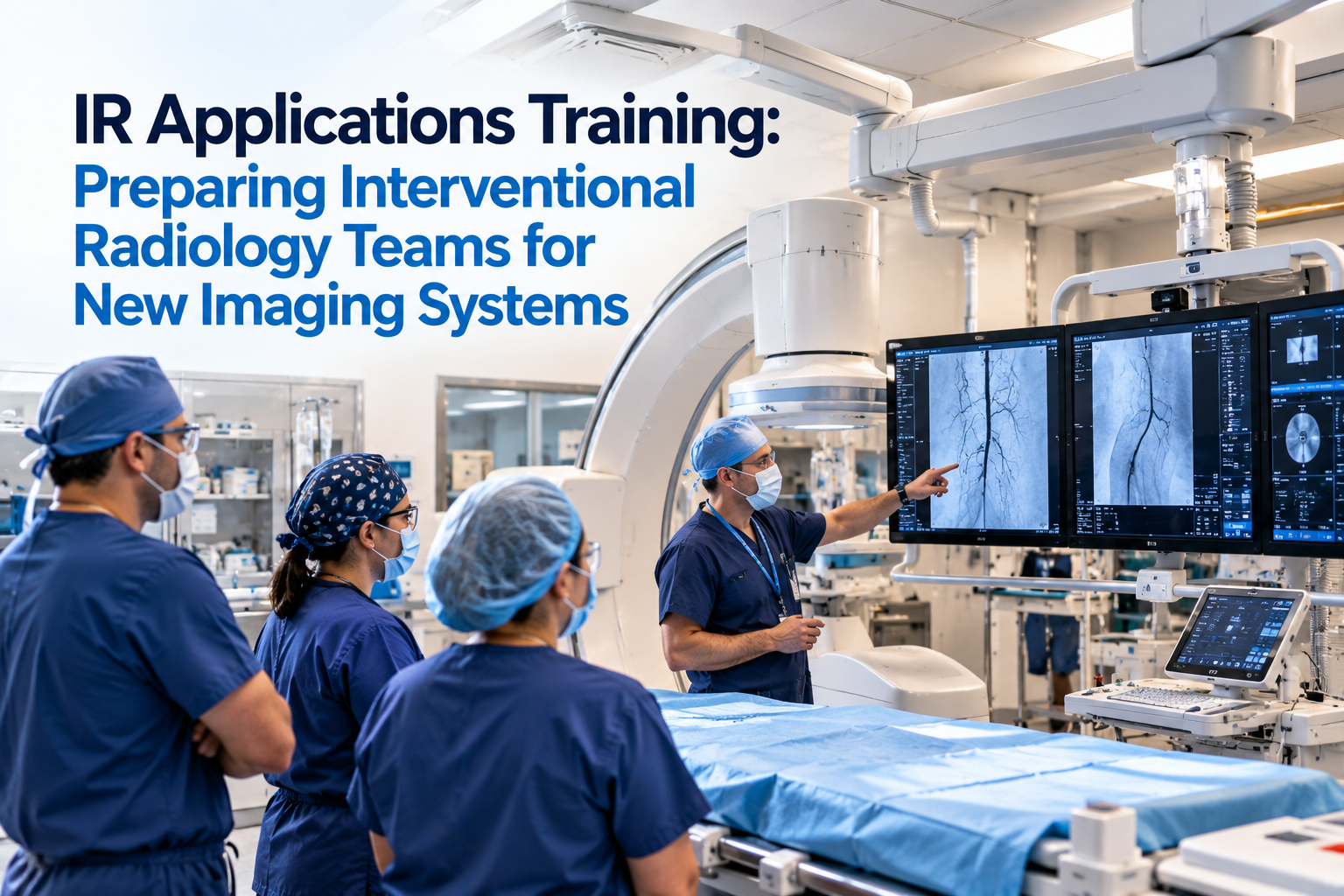
Interventional radiology teams rely on imaging technology throughout nearly every stage of a procedure. When that technology changes, experienced technologists may still need time to become comfortable with the new system.  A different angiography platform can change how staff navigate the interface, position the C-arm and detector, select fluoroscopy and acquisition modes, use roadmapping, review images, manage advanced imaging functions, and move through the room during a procedure. IR applications training helps bridge that gap. Rather than providing generic interventional education, system-specific applications training focuses on helping the hospital's team understand the equipment and workflows they will actually use. Atlas Medical provides imaging applications training and temporary technologist staffing for hospitals and imaging providers with project-based clinical support needs.
By Jared Labtic • September 24, 2026
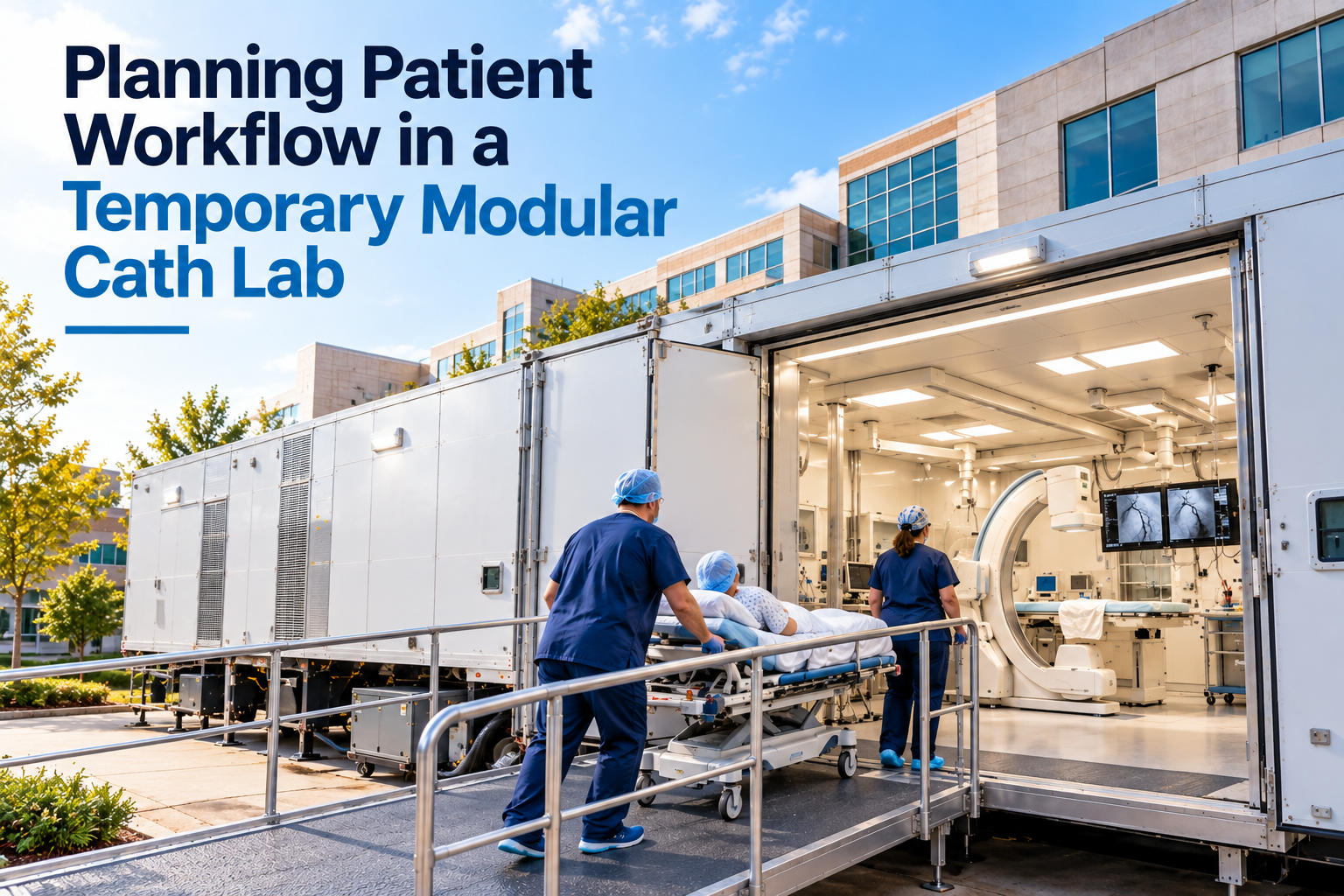
A temporary modular cath lab can help a hospital maintain procedural capacity during renovations, equipment replacement, program expansion, or other periods when the permanent cath lab is unavailable. But installing the temporary lab is only part of the project. Hospitals also need to answer a practical question: How will patients move safely and efficiently between the hospital and the temporary cath lab? Patient workflow can change when procedures move outside the permanent department. Distances may increase. Prep and recovery may remain inside the hospital. Staff may need to move supplies between locations. Stretcher and wheelchair routes may change. Construction activity may also affect access. Planning the modular cath lab patient workflow before go-live helps the hospital identify these operational issues while there is still time to address them. Atlas Medical's Modular Cath Labs are designed to provide temporary hospital-grade procedural environments during renovations, overflow, new programs, and other temporary-capacity needs. The modular lab provides the procedure environment. The hospital still needs to design the patient journey around it.
Mobile CT scanner installation at a hospital showing delivery, utility setup, and preparation for cl
By Jared Labtic • September 13, 2026
By the time a mobile CT scanner arrives at a hospital, much of the planning should already be complete. The site has been selected. Facilities has reviewed the proposed location. Power and connectivity requirements have been discussed. The hospital knows when temporary CT capacity needs to become available. But delivery is not the same as go-live. A mobile CT scanner installation still involves positioning the unit, connecting infrastructure, integrating the scanner with hospital systems, verifying equipment readiness, preparing technologists, and completing the hospital's own pre-clinical requirements. Understanding that sequence helps project teams avoid treating the arrival date as the same thing as the clinical start date. Hospitals evaluating temporary CT capacity can review Atlas Medical's mobile CT scanner solutions before building their deployment schedule. Atlas currently offers mobile CT systems from major OEMs and includes applications training and integration support as part of its turnkey approach.
Mobile cath lab unit showing the type of equipment and facility setup hospitals should consider when
By Jared Labtic • September 13, 2026
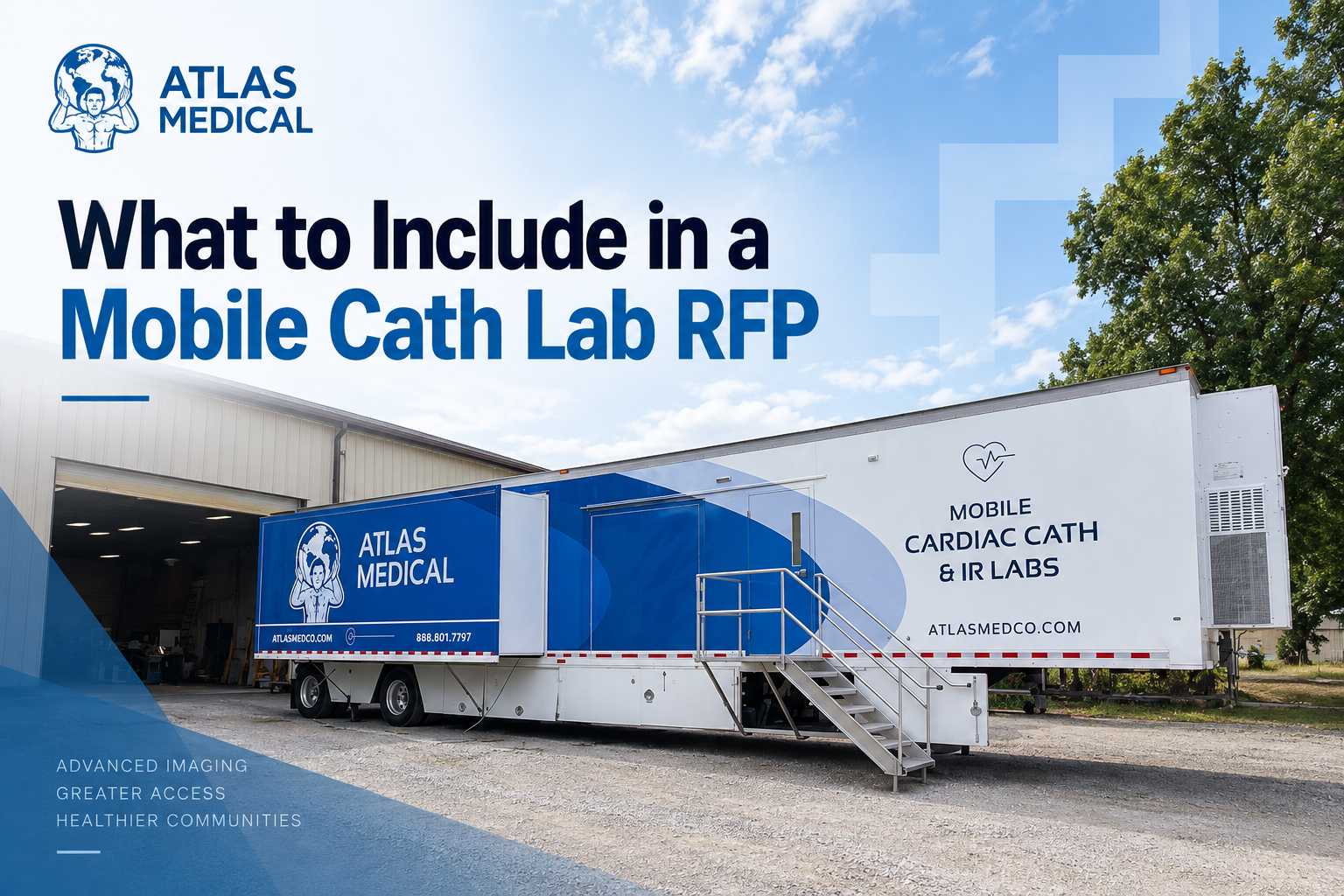
A hospital preparing to rent a mobile cath lab needs more than a price and an available trailer.  The hospital needs to know whether the temporary lab can support its procedures, fit the site, integrate with existing systems, arrive on schedule, support staff workflow, and remain available for the full project period. A well-written mobile cath lab RFP helps procurement teams compare vendors against the same requirements instead of evaluating proposals that describe completely different solutions. The RFP should therefore be developed with input from more than procurement alone. Cath lab leadership, facilities, IT, clinical engineering, project management, infection prevention, finance, and other appropriate hospital stakeholders may all have requirements that affect the temporary lab. Hospitals still defining the type of temporary solution they need can review Atlas Medical's mobile cath lab rental solutions before developing the RFP.
By Jared Labtic • September 9, 2026
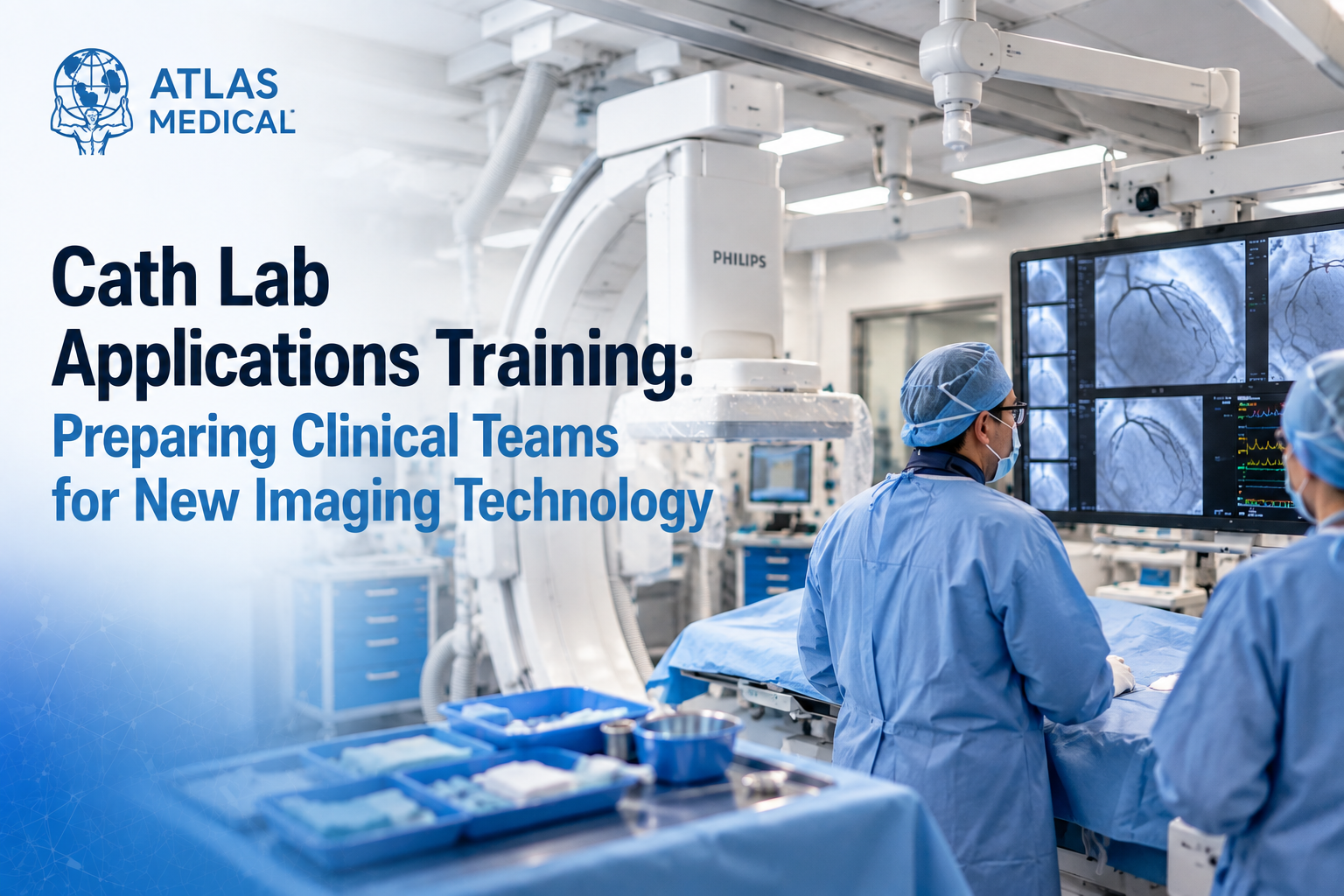
Installing or gaining access to a cath lab imaging system is only part of getting the room ready for clinical use.  The people operating the technology also need to understand how that particular system fits into their daily workflow. A clinical team may already have years of cath lab experience and still need time to become comfortable with a different interface, room controls, imaging modes, table and C-arm movements, image review tools, and system-specific workflows. That is where cath lab applications training becomes valuable. Rather than teaching cath lab fundamentals, applications training focuses on helping experienced clinical teams understand and effectively use the imaging technology available to them. Hospitals that need project-based support can explore Atlas Medical's imaging applications training and temporary technologist staffing .
By Jared Labtic • September 8, 2026
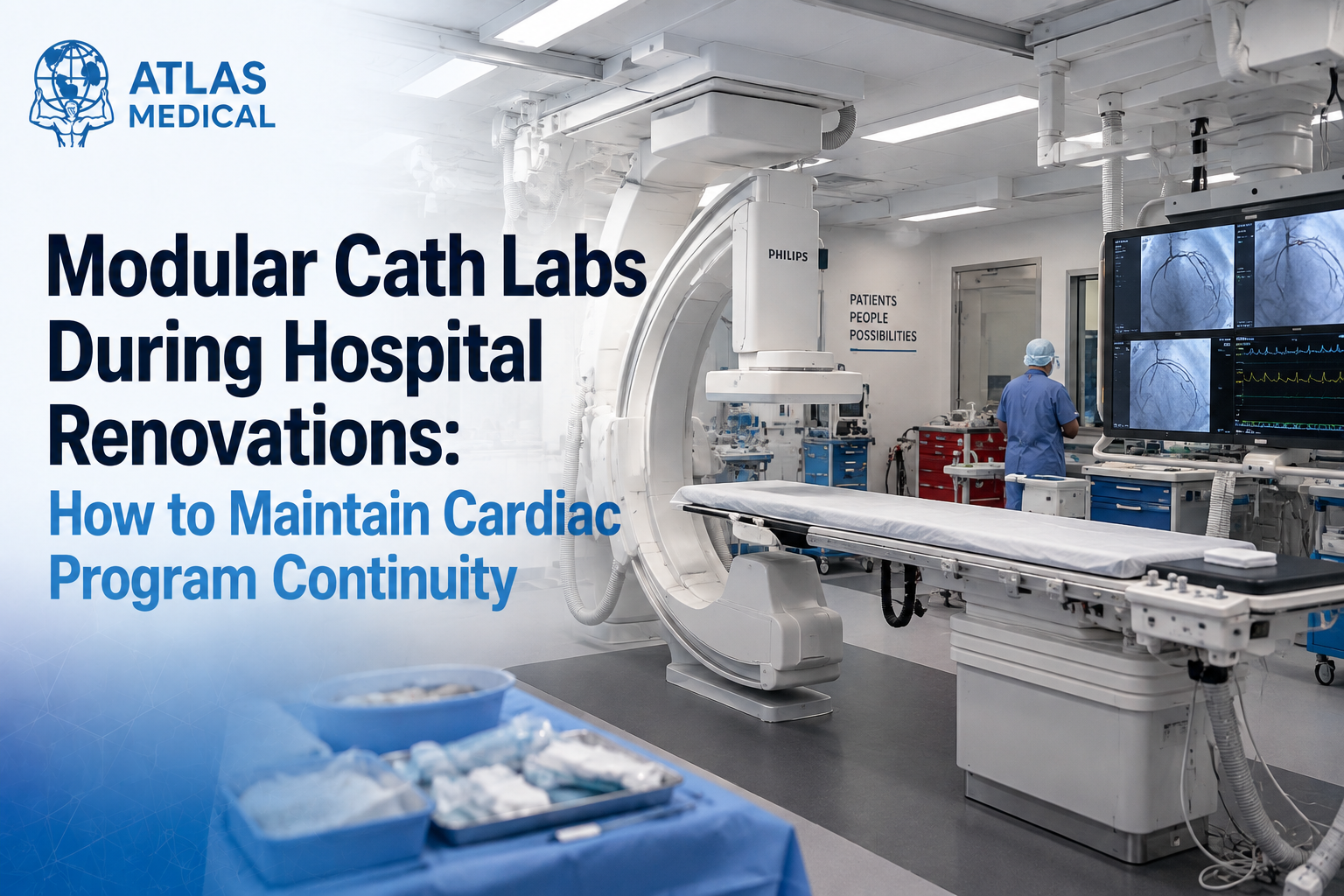
A cath lab renovation creates an unusual planning challenge for hospitals: the project is designed to improve cardiac services, but completing it may temporarily take critical procedural space out of operation. The construction schedule is only part of the problem.  Hospital leaders also have to decide what happens to procedures, physicians, staff, patients, and workflows while the permanent lab is unavailable. A modular cath lab for hospital renovation can provide temporary procedural capacity on-site while work progresses inside the permanent facility. Atlas Medical specifically positions its modular cath lab rentals for renovations, temporary capacity, and projects where hospitals need to keep cases running. The key is to treat the modular lab as part of the renovation strategy—not as equipment that gets added after the construction plan is already finished.