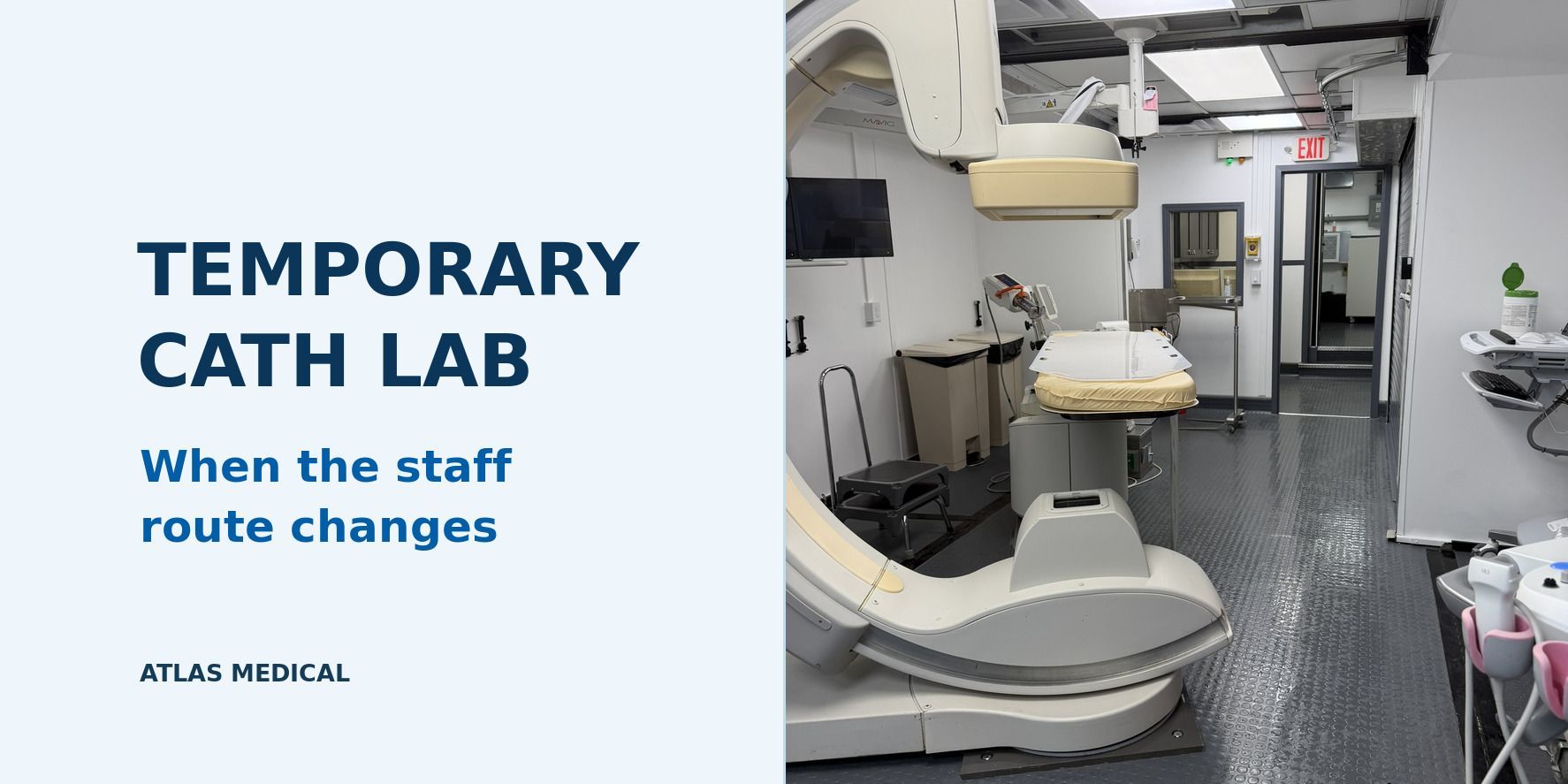

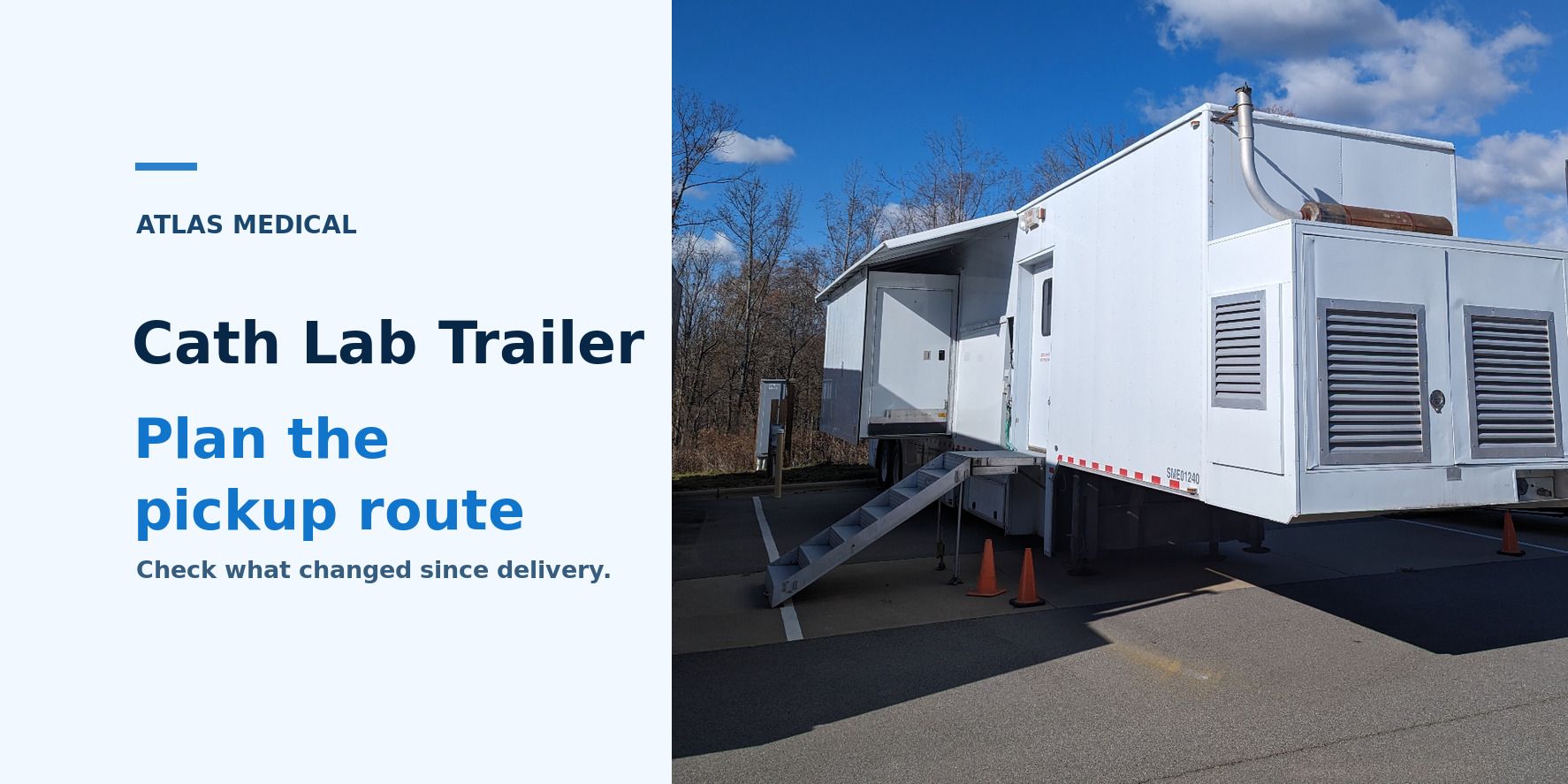
The truck that delivered a temporary cath lab trailer may need a different path when it comes back to collect it. During a renovation, a fence can move, a staging lot can fill with materials, or the hospital can open a new pedestrian entrance. A site that worked on delivery day may no longer give the carrier room to reach the trailer, turn, and leave.
Use the original delivery plan to start a conversation about pickup. Then check it against the site as it will exist at the end of the project. A return date tells people when to expect the truck. A pickup plan tells them which route will actually be available.
Walk the entire exit route with the carrier
Start at the gate the carrier will use to enter. Follow the approach to the trailer, identify the space the carrier needs to work, then walk the intended exit all the way back to the road. Have the carrier confirm that the route and space work for the actual vehicle and trailer. An annotated site plan and current photos can help the carrier flag questions before the walk.
Look for changes since delivery. A temporary ramp, relocated fence, material laydown area, or set of bollards might have narrowed the route or blocked a turn. Note which features can be temporarily moved, who controls them and when they can be cleared. If a feature can’t move, ask the carrier and facilities team to review another route before committing to a pickup time.
Check who else needs the same space
The only usable exit might cross a construction gate, a loading area or a busy entrance. Review the likely pickup window with facilities, construction and security, along with any hospital team that controls traffic along the route. If two operations need the same stretch of pavement, agree on which one moves or choose a different window. Keep any temporary access changes under the hospital’s own routing process.
Write the agreed route on the same plan security and the carrier will receive. Use the gate name staff actually recognize. A useful instruction identifies the entry point, where the driver should wait if the route is not yet clear, and who can confirm it is ready. A street address alone will not distinguish two entrances to the same campus.
Keep service cutover and pickup as separate decisions
The hospital decides when temporary service can end. Facilities and the carrier still need to agree when the trailer can leave. Put both decisions on the project timeline and name the person who can confirm the prerequisites for each. For instance, ending service on Thursday doesn’t establish that construction can clear the exit or that the transport crew can collect the trailer on Friday.
Before release, ask the responsible teams to confirm the site is ready for collection and that project closeout items affecting pickup have been resolved. This includes arrangements for temporary access features and any provider or hospital work still needed at the trailer. For the separate question of records, Atlas’s cath lab image handoff guide explains what to resolve before unit removal.
Make the last check useful to the driver
Agree on a final route check before dispatch and name who will make it. Ask that person to confirm the gate, path, working space and exit against the current drawing, and tell the carrier promptly if something changed. If the route can’t be confirmed, use the agreed waiting point or revise the pickup window with the carrier, rather than sending a truck into a blocked area.
If you’re planning temporary cath capacity during construction, contact Atlas Medical to discuss the assigned trailer and the site information needed for both ends of the project. The most useful time to reserve a way out is while you still have a say in where the fences and staging areas will go.