
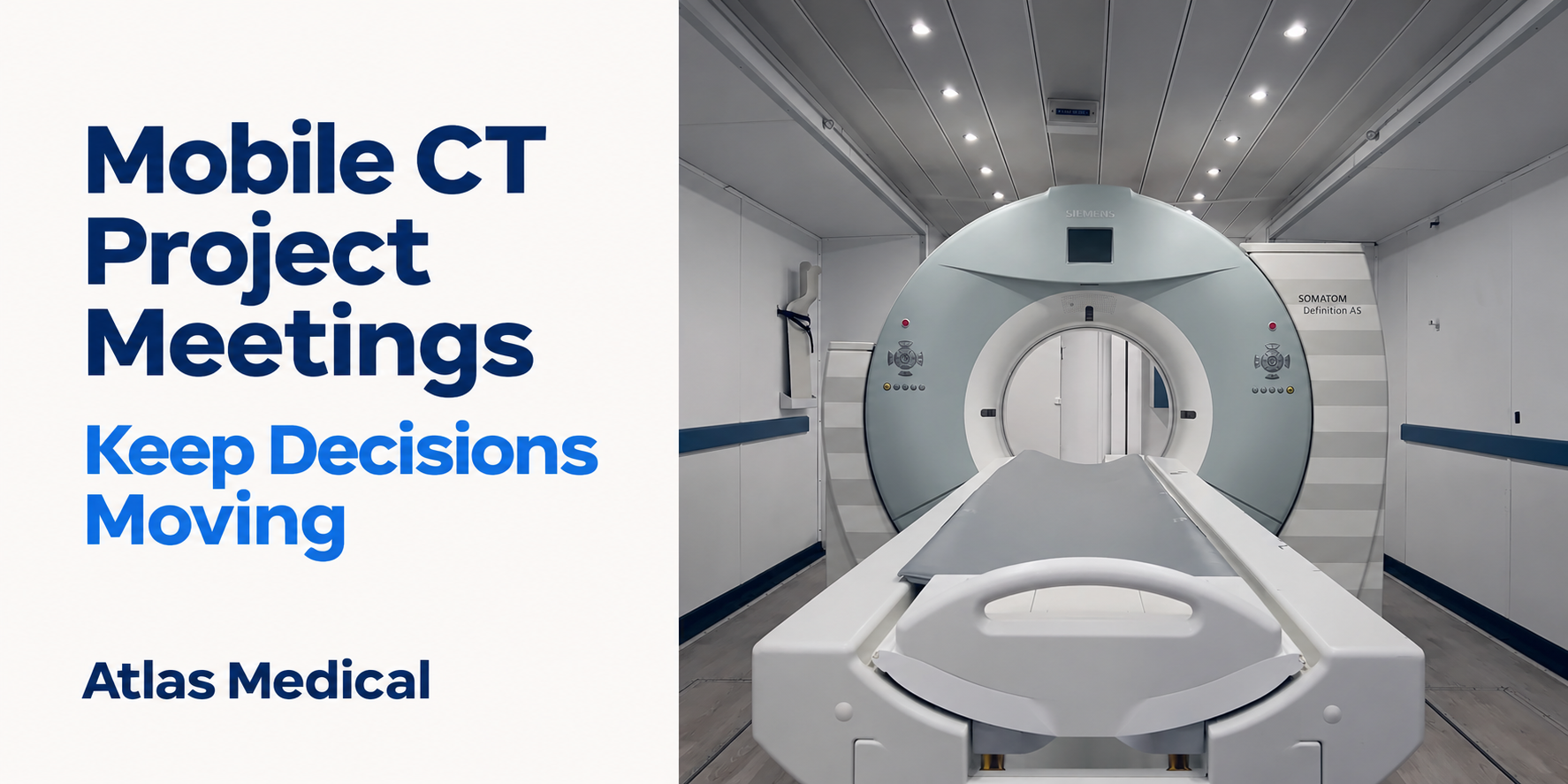
A temporary mobile CT project can involve radiology, facilities, information technology, clinical engineering, security, transport, infection prevention, procurement and the temporary-imaging provider. Each group may own a different part of the plan. A recurring status meeting helps those owners compare the current schedule, surface changes and record decisions without turning every open question into a long email chain.
The meeting is a coordination tool, not a substitute for the hospital's clinical, technical or regulatory review. Its value comes from keeping project information current: which facts are confirmed, which questions remain open, who owns the next response and when the team will revisit the item.
Hospitals considering temporary mobile CT capacity can use the agenda below as a starting point and adapt it to their existing project-management process.
Begin with the current plan and the date it was updated
Open the meeting with a short statement of the current project objective and the schedule source being used. Identify the latest approved or working version of the timeline rather than reading dates from an old email or an unmarked copy.
The first few minutes should answer:
- What is the current temporary-service target?
- Which document or system contains the working schedule?
- What changed since the previous review?
- Which milestones are confirmed, and which are still forecasts?
- Does any new information require a separate technical or leadership decision?
Atlas's mobile CT installation overview distinguishes delivery from the broader work required before clinical use. A status meeting should preserve that distinction. An arrival date should not silently become evidence that every hospital readiness activity is complete.
Use one agenda for five types of information
A compact agenda keeps the discussion centered on decisions and handoffs:
- Schedule and dependencies. Review the current dates, the source for each date and the dependencies that could change it.
- Open questions. List unresolved site, equipment, workflow, IT, training and administrative questions. Route each one to the responsible reviewer.
- Changes since the last meeting. Record new documents, revised assumptions, delayed inputs and decisions that affect other teams.
- Decisions needed. State the exact question, the person or group authorized to decide, the information still required and the decision date.
- Next actions. Name one owner and one due date for every follow-up. If responsibility is shared, identify the person coordinating the response.
Keep patient information and other sensitive material in the hospital's approved systems. The status record should contain only the project information needed for coordination.
Maintain a short status register
Use a register that can be reviewed quickly during the meeting:
| Field | What to record |
|---|---|
| Item | A specific question, dependency or decision |
| Category | Schedule, site, equipment, IT, workflow, training or administration |
| Current status | Confirmed, in review, blocked or another agreed project term |
| Evidence source | Current document, written response or system record |
| Owner | Person responsible for the next response or action |
| Due date | Date the response is needed |
| Effect if unresolved | The milestone, decision or team that may be affected |
Avoid vague entries such as “IT issue” or “facilities to review.” Write the question so another reviewer can understand what information is missing. Close an item only when the agreed evidence has been recorded or linked.
Match the meeting type to the situation
AHRQ's TeamSTEPPS materials distinguish among a brief, a huddle and a debrief. A brief shares the plan and roles; a huddle is used when a current plan needs adjustment; a debrief reviews what happened and what should change next time.
A mobile CT project can borrow that structure without treating every meeting as the same event. Use the regular status meeting to share the current plan. Convene a focused huddle when a schedule or dependency changes and the affected teams need to realign. Use a debrief after a major milestone to capture lessons and formal changes to the plan.
This separation prevents urgent changes from waiting for the next routine meeting and prevents the weekly agenda from becoming a substitute for an after-action review.
Publish a decision record after the meeting
End by reading back the decisions, owners and dates that changed. Send or post one controlled record through the hospital's established project channel. Mark replaced documents and superseded assumptions clearly so an older version is not mistaken for the current plan.
A useful meeting record shows:
- Decisions made and the evidence used.
- Questions that remain open.
- Actions, owners and due dates.
- Schedule changes and affected milestones.
- Items escalated to another qualified reviewer.
- The date of the next review.
If a team member did not attend, the record should still make the next action understandable. If a statement is unconfirmed, label it as an open item rather than presenting it as a settled fact.
Keep the meeting tied to decisions
The purpose of the meeting is not to report activity for its own sake. It is to help the hospital and provider teams work from the same current plan, identify changes early and preserve responsibility for the next decision.
A practical agenda, a short status register and a controlled follow-up record can keep a temporary mobile CT project moving while leaving clinical, engineering and approval decisions with the people responsible for them.