Mobile Cath Lab Rental Timeline: What Hospitals Should Plan For
When a hospital knows its cath lab will be unavailable during a renovation, replacement, or expansion project, planning temporary capacity early can make the transition easier.
A mobile cath lab rental timeline involves much more than choosing a unit and selecting a delivery date. Facilities, clinical teams, IT, procurement, project management, and the rental provider may all need to coordinate before the temporary lab can support patient procedures.
The exact timeline will vary by hospital, equipment, site, project scope, regulatory requirements, and unit availability.
Instead of relying on a universal number of weeks, hospitals should understand the major stages that typically need to happen between identifying the need and beginning clinical use.
Here is a practical way to plan that process.
Why Mobile Cath Lab Rental
Planning Should Start Early
Hospitals often consider temporary cath lab capacity when they are preparing for:
- Cath lab renovations
- Equipment replacement
- Planned construction
- Technology upgrades
- Temporary capacity constraints
- Expansion projects
- Delays before a permanent suite becomes operational
The temporary lab may only be needed for a defined period, but deploying it requires coordination across several hospital departments.
Starting early gives teams more time to identify site limitations, determine technology requirements, prepare infrastructure, coordinate internal approvals, and address issues before the permanent cath lab goes offline.
Hospitals beginning this process can also review
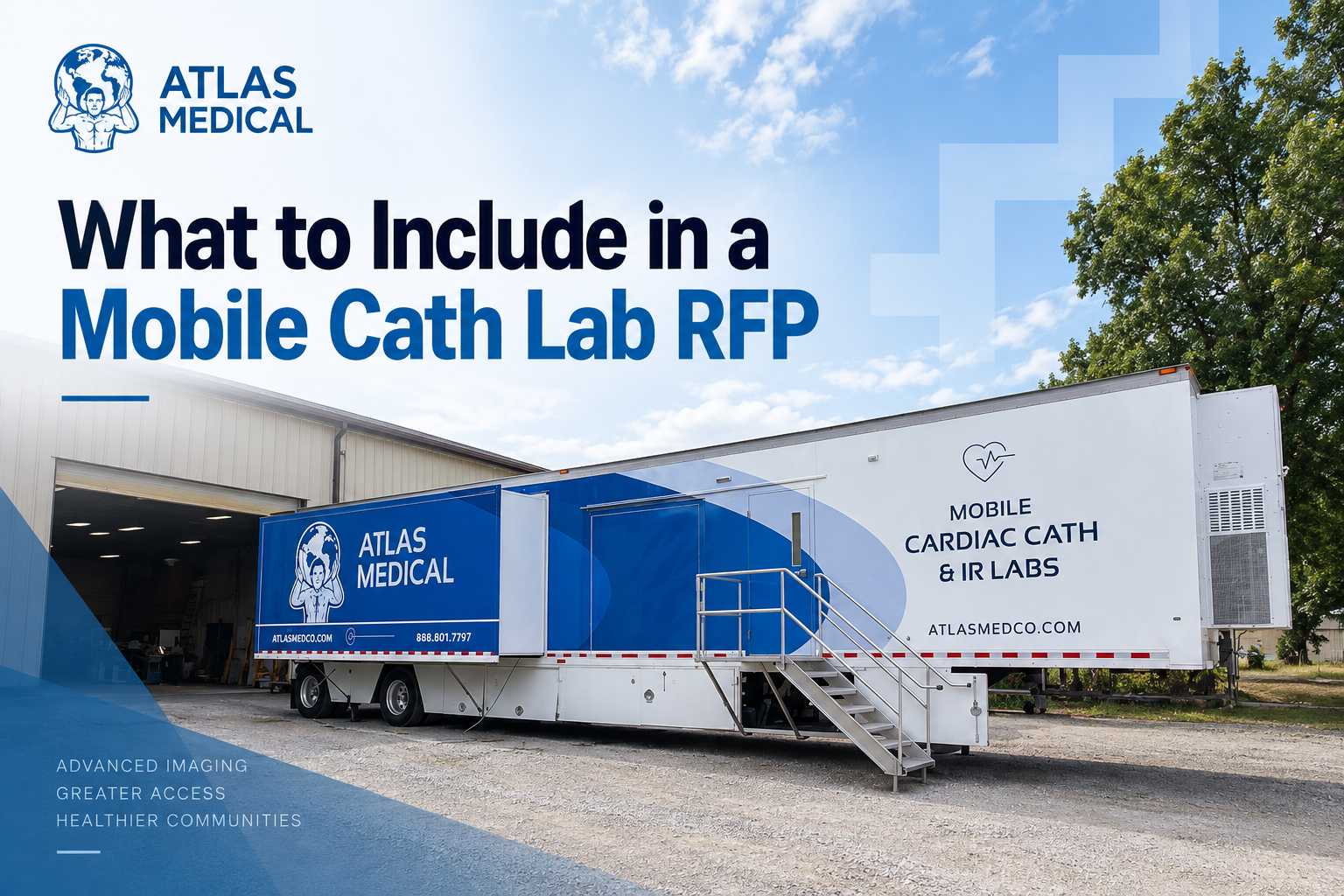
Atlas Medical's mobile cath lab rental solutions to understand available configurations and common applications.
Stage 1: Define Why and When You Need the Mobile Cath Lab
The first stage is establishing the project requirements.
Before requesting a rental proposal, the hospital should have a reasonable understanding of:
- Why temporary capacity is needed
- When the existing cath lab will become unavailable
- When temporary operations need to begin
- How long the permanent project is expected to take
- What procedures need to continue
- Whether additional time should be built into the rental period
For a renovation or replacement project, work backward from the expected shutdown date.
- For a renovation or replacement project, work backward from the expected shutdown date.
- The goal is to avoid reaching the point where the permanent lab is ready to close but the temporary solution is still being planned.
Build Contingency Time Into the Plan
Permanent projects don't always finish according to their original schedule.
Construction, equipment installation, testing, inspections, internal approvals, or other project dependencies may affect the completion date.
When discussing a mobile cath lab rental, hospitals should therefore ask about extension options early.
The temporary capacity plan should support the realistic project schedule, not only the best-case schedule.
Stage 2: Establish Clinical and Technology Requirements
Once the general dates are understood, determine what the temporary cath lab actually needs to support.
Include relevant clinical stakeholders in this discussion.
Questions may include:
- Which procedures will continue during the project?
- What imaging system is preferred?
- What technology is the team currently using?
- What equipment configuration is required?
- Are there specific workflow requirements?
- What supporting equipment will be needed?
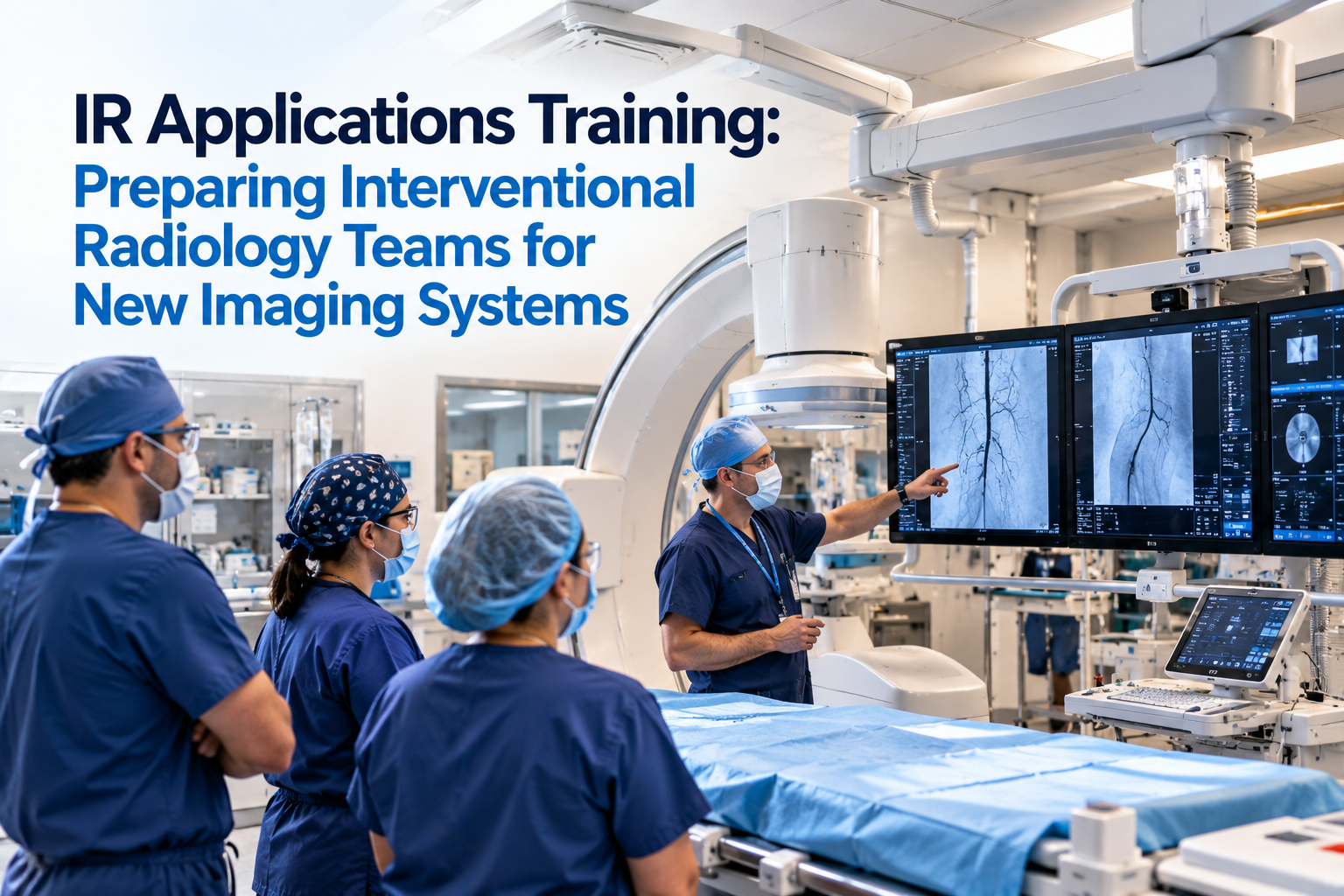
- Will applications training be required?
This stage helps prevent the hospital from evaluating units that are available but aren't appropriate for the intended clinical workflow.
Atlas Medical's fleet includes technology from major OEMs including Philips, Siemens, GE, and Canon. Hospitals can review the
Atlas Medical mobile cath lab options while defining their requirements.
Stage 3: Evaluate Mobile Cath Lab Availability
After defining the clinical requirements and approximate project dates, the hospital can begin evaluating available rental options.
Availability matters because hospitals aren't simply renting an empty trailer. They may require a specific technology platform or configuration.
Provide prospective rental partners with as much useful information as possible, including:
- Expected start date
- Estimated rental duration
- Preferred technology
- Clinical requirements
- Hospital location
- Proposed mobile unit location
- Known site restrictions
This gives the provider a clearer picture of the project and which available solution may be appropriate.
Stage 4: Conduct Site Planning
Site planning is a critical part of the mobile cath lab rental timeline.
The hospital needs an appropriate location for the temporary facility, and the site must be evaluated against the requirements of the specific unit.
Depending on the project, teams may need to consider:
- Available footprint
- Ground conditions
- Level positioning area
- Delivery access
- Electrical service
- Network connectivity
- Patient access
- Staff access
- Distance from existing clinical departments
- Connection between the hospital and mobile facility
- Other site-specific infrastructure
Facilities and engineering teams should participate early.
Atlas Medical's existing mobile cath lab content notes that requirements can differ based on the solution being deployed, making it important to confirm specifications for the actual unit rather than relying on assumptions from a previous project.
Stage 5: Determine Site Preparation Responsibilities
Once the location has been evaluated, create a clear list of what must happen before delivery.
Separate responsibilities between:
Hospital responsibilities and Rental provider responsibilities
Depending on the project, hospital responsibilities may include certain site preparation, utility work, network preparation, access planning, or other infrastructure.
Provider responsibilities may include transportation, positioning, setup, equipment support, and other services defined by the rental agreement.
The exact responsibilities should be documented for the individual project.
This is also the point where project teams should establish target completion dates for each requirement.
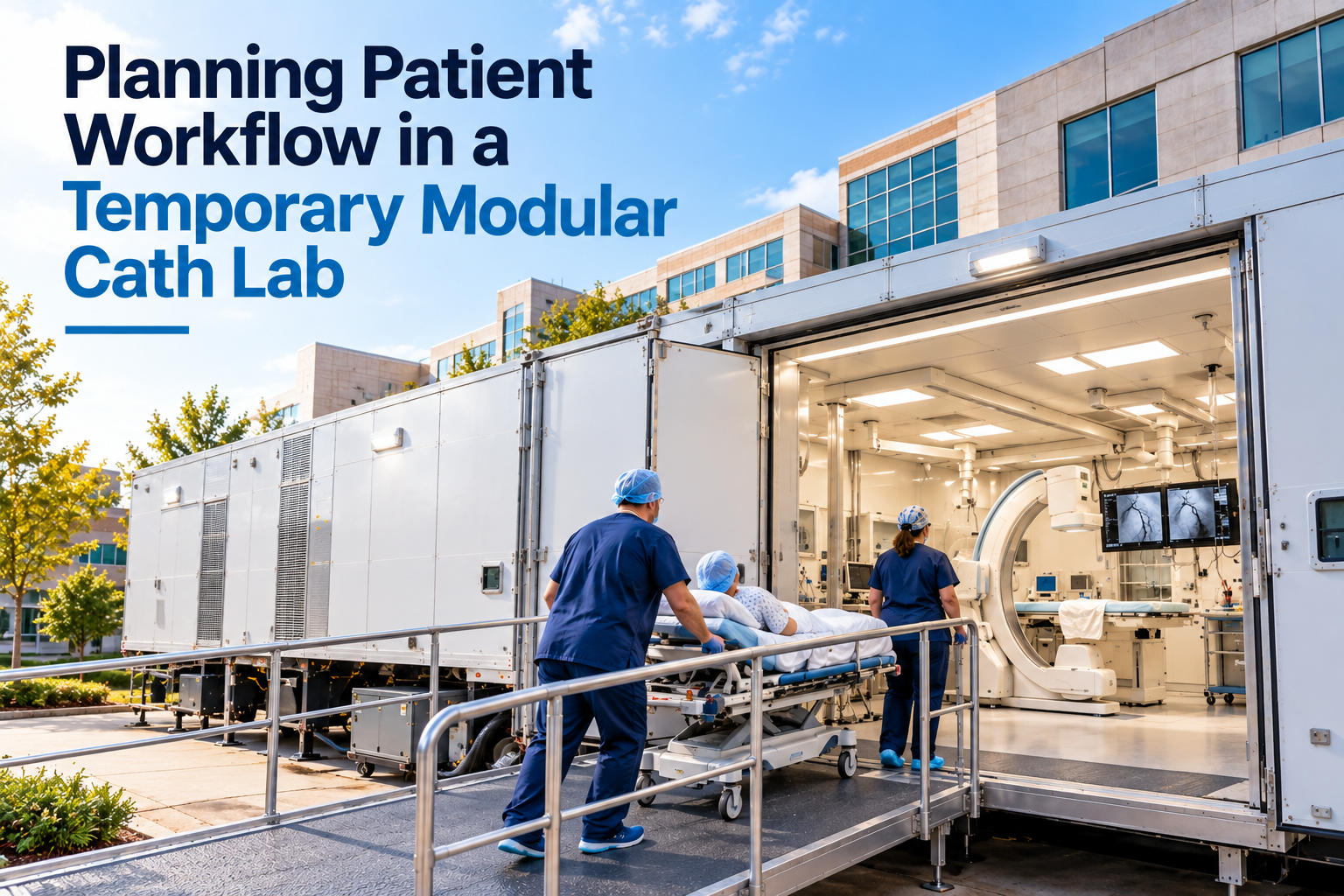
Stage 6: Plan Patient and Staff Access
A temporary cath lab needs to fit into the hospital's operational workflow.
Before the unit arrives, walk through how patients and staff will use the temporary facility.
Consider:
- How patients will reach the lab
- How staff will enter and exit
- How supplies will be transported
- Where patients will be prepared
- Where recovery will occur
- How emergencies will be handled
- How the temporary workflow connects with existing departments
- The mobile facility may be temporary, but the patient and staff workflow needs to be practical for the entire rental period.
- For projects where a mobile configuration doesn't provide the right fit, hospitals can also evaluate
Atlas Medical's modular cath lab solutions.
Stage 7: Coordinate IT, PACS, EHR, and Network Planning
IT requirements should not be left until delivery day.
Atlas Medical states that its mobile cath labs can connect with existing PACS/EHR environments.
Hospital IT teams should still work with the project team to understand the specific connectivity requirements and prepare the necessary infrastructure.
Planning may involve:
- Network access
- PACS connectivity
- EHR connectivity
- Data connections
- Security requirements
- System testing
- Other hospital-specific integrations
Completing as much preparation as possible before arrival can help reduce last-minute issues.
Stage 8: Finalize the Rental Agreement and Project Scope
Before deployment, make sure everyone understands what the rental agreement includes.
Review:
- Rental start and end dates
- Equipment configuration
- Transportation
- Setup
- Service coverage
- Applications training
- Site responsibilities
- Supporting equipment
- Extension terms
- Removal
- Additional project-specific costs
Do not evaluate the project solely on monthly rental price.
A clear scope makes it easier for procurement, facilities, clinical teams, and the provider to understand their responsibilities throughout the project.
Stage 9: Prepare for Delivery
Before the scheduled delivery date, confirm that the site is ready for the unit.
A pre-delivery review should verify items such as:
- Site work completed
- Access route available
- Required utilities prepared
- Network requirements addressed
- Internal departments notified
- Patient access plan established
- Staff workflow communicated
- Required hospital approvals coordinated
- Training schedule established
If something isn't ready, identify it before the unit is already on its way to the facility.
Stage 10: Delivery, Setup, and Integration
Once the mobile cath lab arrives, the deployment moves into physical setup and integration.
The exact process depends on the unit and hospital site.
Activities may include:
- Positioning the mobile facility
- Leveling and securing the unit as applicable
- Connecting required utilities
- Establishing network connections
- Connecting hospital systems
- Verifying equipment operation
- Completing applicable facility or project checks
- Preparing the clinical environment
Atlas Medical describes its mobile imaging offering as a turnkey solution that includes technical support, service coverage, applications training, and installation support. Hospitals should confirm the exact scope for their individual rental project.
Stage 11: Applications Training and Workflow Preparation
Before beginning normal clinical operations, staff need to be comfortable working in the temporary environment.
Even when the imaging technology is familiar, the room layout and workflow may differ from the hospital's permanent cath lab.
Applications training can help teams become familiar with the specific system being provided.
Atlas Medical includes applications training as part of its broader mobile imaging offering.
Hospital teams should also perform their own workflow preparation so everyone understands how patients, supplies, staff, and information will move through the temporary environment.
Stage 12: Prepare for Clinical Go-Live
The final stage is transitioning the temporary facility into clinical operation.
Before go-live, the hospital should verify that its required clinical, operational, technical, facility, and regulatory steps have been completed.
This may involve different departments depending on the hospital and jurisdiction.
The goal is simple:
When the permanent cath lab becomes unavailable, the temporary capacity plan should already be ready to support the hospital's transition.
A Practical Mobile Cath Lab Rental Timeline Checklist
Use this checklist when building your project schedule:
Initial Planning
- Identify why temporary cath lab capacity is needed
- Determine expected permanent lab shutdown date
- Estimate rental duration
- Add contingency for potential project delays
- Identify required procedures
Solution Selection
- Determine preferred technology
- Define equipment requirements
- Review available mobile cath lab configurations
- Request proposals
- Compare service and support
Site Planning
- Select proposed location
- Review unit footprint
- Confirm delivery access
- Determine site preparation requirements
- Review electrical requirements
- Review network requirements
- Plan patient access
- Plan staff access
Pre-Deployment
- Complete required site preparation
- Coordinate IT/PACS/EHR requirements
- Finalize rental scope
- Confirm delivery date
- Confirm applications training
- Communicate workflow changes internally
Deployment
- Receive and position the unit
- Complete utility connections
- Complete network/system integration
- Verify equipment readiness
- Complete required hospital checks
- Train staff
- Prepare for clinical use
During the Rental
- Identify why temporary cath lab capacity is needed
- Determine expected permanent lab shutdown date
- Estimate rental duration
- Add contingency for potential project delays
- Identify required procedures
What Can Delay a Mobile Cath Lab Project?
Hospitals should also understand the factors that can affect their planned timeline.
Potential issues can include:
- Unit or equipment availability
- Site preparation delays
- Utility work
- Construction coordination
- Internal approvals
- Network or IT preparation
- Transportation logistics
- Changes to the permanent project schedule
- Facility-specific requirements
- Regulatory requirements
Not every factor will apply to every project.
That's why hospitals should avoid assuming that every mobile cath lab rental follows an identical deployment schedule.
How Far in Advance Should You Reserve a Mobile Cath Lab?
There isn't one universal reservation window that applies to every hospital.
A project involving a specific equipment platform, complicated site preparation, or major renovation may require more planning than a relatively straightforward temporary-capacity project.
The better approach is to contact potential providers once the hospital has a reasonably defined project schedule rather than waiting until the permanent cath lab is about to become unavailable.
Early planning
gives the hospital and provider time to evaluate availability, site requirements, clinical needs, and potential project constraints.
Mobile Cath Lab Timeline vs. Permanent Project Timeline
These two schedules should be planned together.
For example, the temporary lab shouldn't be scheduled only around the permanent project's anticipated completion date.
Instead, hospital teams should consider:
Permanent lab shutdown → Temporary lab readiness → Renovation/replacement → Permanent lab readiness → Transition from temporary lab
This creates an overlap between the temporary and permanent plans rather than treating them as separate projects.
It also provides a clearer opportunity to identify potential gaps in procedural capacity.
Planning Your Mobile Cath Lab Rental With Atlas Medical
Atlas Medical provides mobile cath lab rental solutions for hospitals managing renovations, upgrades, temporary expansion, and other capacity needs.
Its mobile cath lab offering includes systems from major OEMs, PACS/EHR connectivity, applications training, service support, and configurations designed for temporary hospital operations.
Hospitals requiring a different type of temporary environment can also explore modular cath lab solutions.
For additional educational information about mobile imaging and interventional projects, visit the Atlas Medical Resources library.
When discussing an upcoming project with Atlas Medical, having your expected dates, clinical requirements, preferred technology, proposed location, and anticipated rental duration available can make the initial planning conversation more productive.
Frequently
Asked Questions
When should a hospital start planning a mobile cath lab rental?
Planning should begin once the hospital has a reasonably defined renovation, replacement, expansion, or shutdown schedule. Starting earlier gives clinical, facilities, IT, procurement, and the rental provider more time to coordinate requirements.
What information is needed to build a mobile cath lab rental timeline?
Important starting information includes the expected shutdown date, required clinical start date, estimated rental duration, intended procedures, technology requirements, proposed location, and known site limitations.
Does site preparation happen before the mobile cath lab is delivered?
Required site preparation should generally be coordinated before delivery. The exact work depends on the unit and hospital site, so facilities teams should review project-specific requirements with the provider.
When should hospital IT become involved in a mobile cath lab project?
IT should be involved during the planning stage rather than waiting until installation. Early coordination helps teams prepare for PACS, EHR, network, security, and other hospital-specific connectivity requirements.
Should the rental end date match the planned completion date of the permanent cath lab?
Hospitals should consider the possibility that permanent projects can experience delays. Rental extension terms and contingency planning should therefore be discussed before deployment rather than after the original rental period is nearly complete.
What happens after the mobile cath lab arrives?
Delivery is only one stage. Depending on the project, positioning, utility connections, system integration, equipment verification, training, workflow preparation, and hospital-specific readiness steps may still need to occur before clinical use.
Mobile CT Scanner Price
Curious what you’ll pay for a mobile ct scanner truck or trailer? Pricing depends on several key factors:
- Scanner Model & Slice Count: Cutting-edge, higher-slice scanners demand higher monthly fees.
- Length of Rental: Longer commitments often reduce monthly costs.
- Service & Maintenance Packages: Opting for a full-service plan can raise costs but remove the burden of repairs.
- Geographic Location: Transport fees and regulatory requirements may bump up the final price.
Our typical Mobile CT rentals range from $20k to $40k per month.
Learn more about what goes into Mobile CT Rental Pricing HERE.
Turnkey Mobile CT Scanner
A “turnkey” mobile CT unit means all in one, no guesswork necessary. From power hookups and specialized staff training to compliance with local regulations, Atlas Medical delivers a seamless experience. Roll in, plug in, and start scanning—it’s that straightforward.
We offer Mobile CT rentals featuring all the major OEMs:
GE
Siemens
Philips
Canon




Why Choose Atlas Medical
Extensive Inventory
Whether you’re after a 16-slice workhorse or a high-slice advanced system, we have the mobile ct scanner trailer or truck to match your needs. We offer mobile CT scanner from major OEMs such as GE, Siemens, Canon, and Philips.
Flexible Agreements
From short-term mobile ct rental options to purchase and long-term leases, we tailor solutions that fit your budget and strategic goals.
Dedicated Support
Our expert team isn’t just about dropping off a trailer. We handle setup, maintenance, and regulatory compliance so you can focus on patient care. To get started we can help you
choose the best mobile CT scanner for YOU and guide you through
site prep requirements.
Proven Reputation
Hundreds of clinics, hospitals, and imaging centers nationwide trust Atlas Medical to expand their diagnostic services. We'll even guide you through
Mobile CT legal regulations and requirements.
Ready to elevate your imaging capabilities?
Let us help you bring advanced diagnostic services directly to your patients—without the cost and wait of permanent construction. When you need to rent, lease, or buy a mobile ct unit, trust Atlas Medical to deliver modern solutions for modern healthcare.

Sean Schneider
Mobile Project Manager · Atlas Medical
About the Author
Say hello to Sean Schneider - our Mobile Project Manager at Atlas Medical. Sean has worked in the medical imaging industry for over 20 years, including 10 years with Atlas Medical.
Sean has a knack for making complicated projects simple to understand. Around here, Sean's the man who keeps things moving smoothly.
When Sean isn't helping launch our mobile imaging units at new sites he enjoys spending time with his family, golf, and hockey.
Request a Mobile Imaging Solution
Our Services Include: