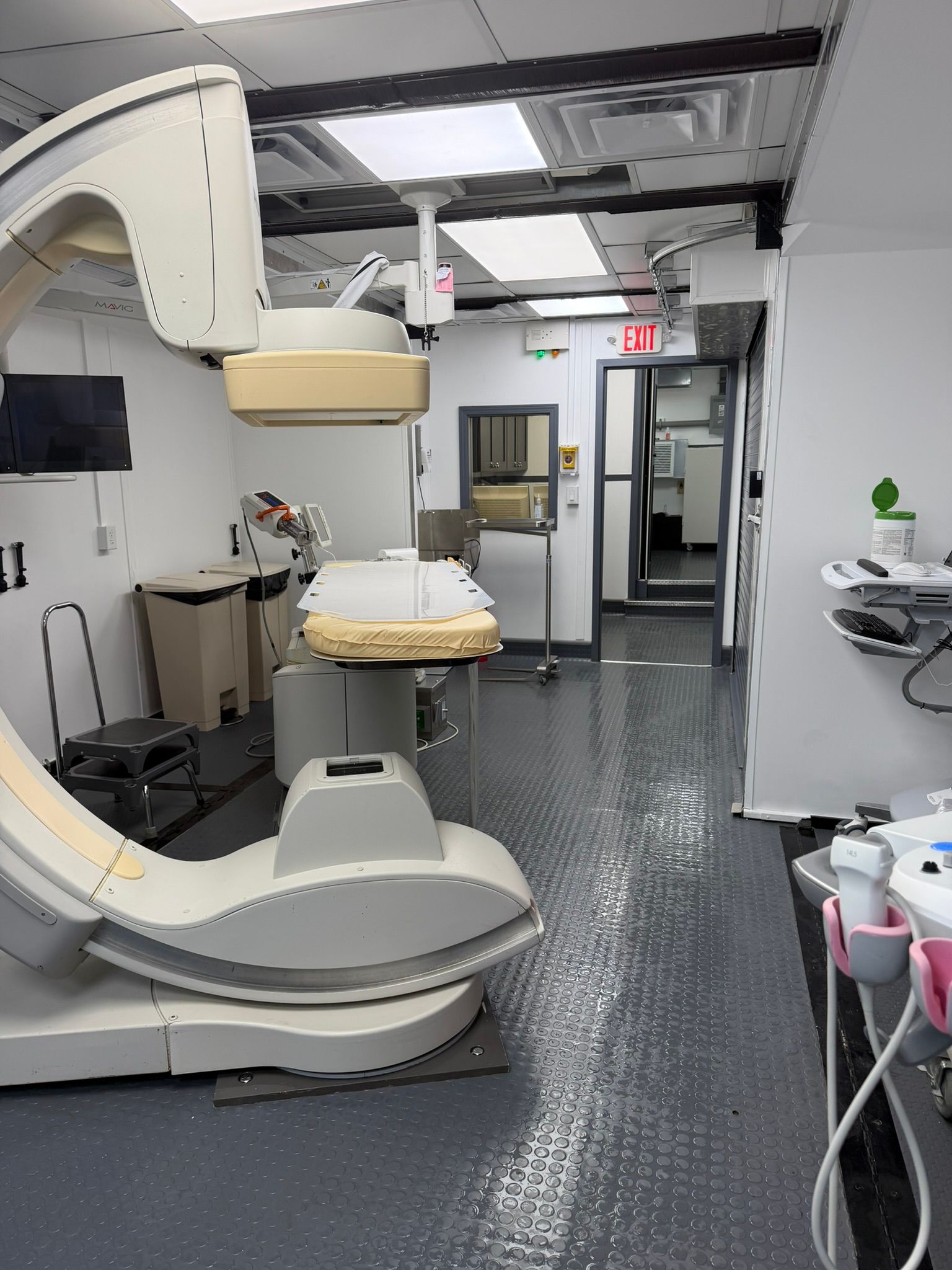

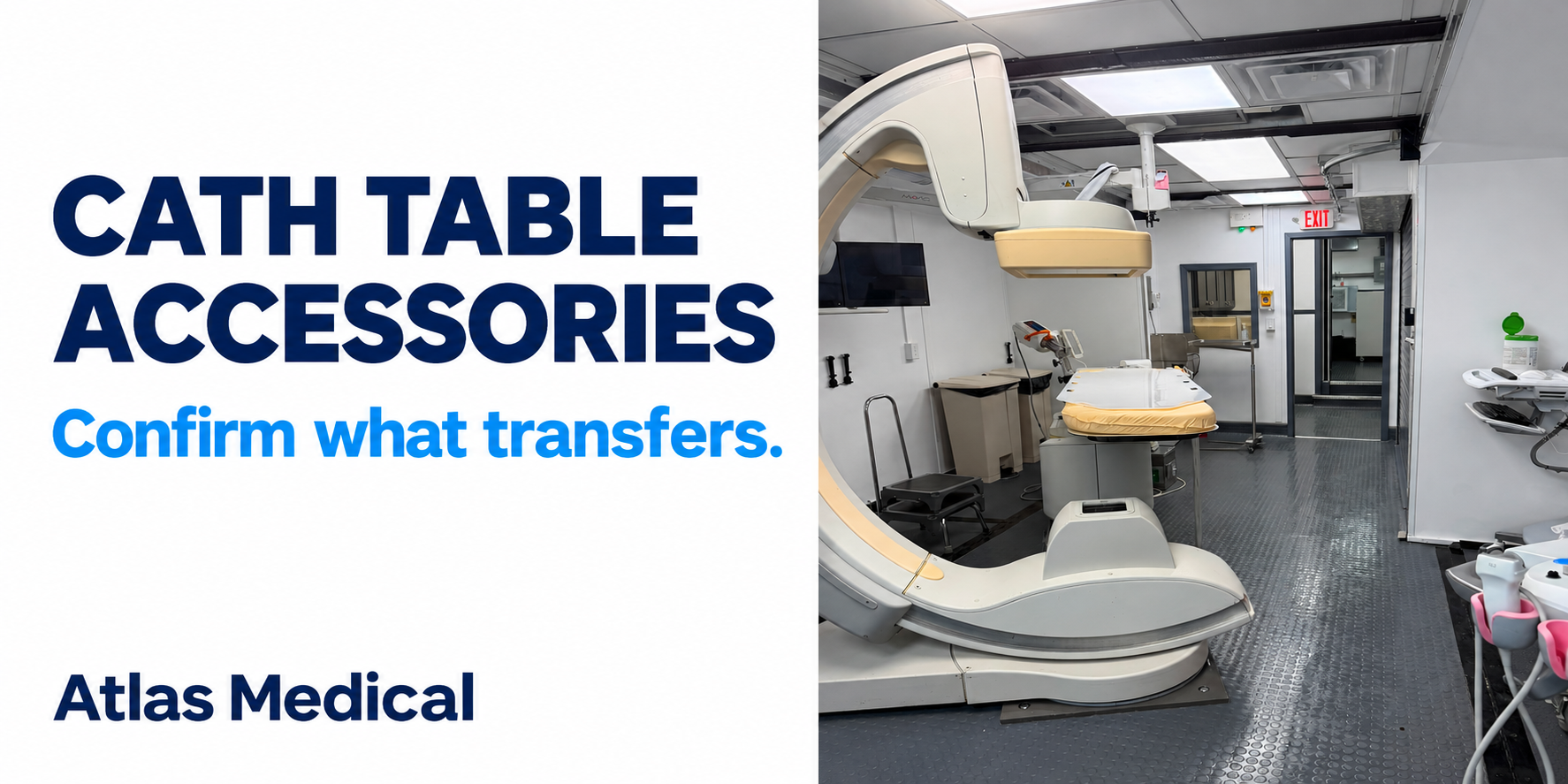
A hospital replacing its cath lab may focus first on the imaging system. Then, closer to the move, the team starts asking about the smaller items used around the patient table: supports, pads, rail-mounted components and other procedure-specific accessories. Those items deserve an earlier conversation. A familiar imaging-system name does not settle whether a particular accessory belongs on the assigned temporary table.
The useful planning question is not simply, “Can we bring our accessories?” It is, “Which exact items will the interim workflow require, who supplies them, and what evidence supports their use with the assigned equipment?” Answering that question before packing helps the hospital separate a transport decision from a compatibility decision.
Start with the work the temporary lab will support
Ask clinical leaders to identify the intended procedure scope and the accessories their teams expect to use. Keep the discussion specific enough to distinguish an item used regularly from one kept for a service that will remain elsewhere during construction. The hospital determines the clinical requirements; the rental discussion then identifies how those requirements will be evaluated for the proposed configuration.
A useful first meeting can use photographs and existing product labels rather than a list of informal names. “The arm support from room two” may be clear to one technologist but ambiguous to the receiving team. Manufacturer, model and part number give clinical engineering and equipment representatives a better starting point. Include the associated clamp, adapter or mounting component when identifying the item, rather than treating it as an unrelated piece of hardware.
This is not an instruction to transfer every item in the permanent room. It is a way to decide what needs an answer before the hospital finalizes the move.
Check the assigned table, not just the imaging platform
Obtain the actual table and accessory information for the temporary unit. Compare that information with the hospital's proposed items and the relevant manufacturer documentation. A product-family brochure can help frame questions, but it should not substitute for the documentation applicable to the equipment that will arrive.
For example, Philips' Azurion Release 3.1 instructions discuss compatible accessories for accessory rails and distinguish interfaces for third-party equipment. That is a useful illustration of why compatibility belongs in the review. It is not permission to apply Azurion instructions to an Allura table, or to assume a particular hospital accessory is supported on either system. Use the correct documentation and qualified manufacturer or clinical-engineering review for the actual combination.
Keep unresolved items visibly unresolved. A photo showing an attachment in another lab is not the same as confirmation for the proposed configuration. Likewise, the fact that an item can be transported into the trailer does not answer whether it should be attached to the table.
Separate what is included from what the hospital brings
The planning conversation should produce three clear groups: items confirmed as part of the assigned unit, hospital items proposed for transfer, and requirements still awaiting a solution. This avoids discovering that both parties expected the other to supply an essential component.
For each proposed transfer, identify who will make the compatibility determination, what documentation that person needs, and when the answer is required. If an item will remain in use in the permanent department until the last day, include that timing in the transition plan. A confirmed item can still create a practical gap if it is not available when the temporary team needs it.
Purchasing and clinical engineering should also know who handles a missing component or an unsuitable item. Do not promise a substitute until its suitability and availability have been confirmed. Any change should return to the relevant clinical and technical reviewers rather than being treated as a packing adjustment.
A concrete example: a support with an unclear identity
Imagine the hospital expects to move a familiar positioning support, but the initial inventory gives only a nickname and a photograph. The temporary-unit information identifies a different table configuration. At this point the team has a question, not an approved transfer.
The next useful step is to identify the support and its mounting components, locate the applicable documentation, and ask the responsible reviewers about the exact proposed combination. If it is accepted, the move plan can name the item, its delivery owner and the receiving location. If it is not accepted, the team needs a reviewed alternative or a revised plan before treating the requirement as resolved.
This hypothetical example is deliberately about the decision process. It makes no claim about a specific support, mounting method or patient-positioning technique.
Bring the confirmed arrangement into preparation
Once the equipment decisions are settled, use the hospital's preparation and training process to review the confirmed arrangement with the people who will use it. Include the actual accessories and relevant instructions. Record any new question for the appropriate reviewer; do not let an informal demonstration replace required technical or clinical acceptance.
The goal is a clear transition: the team knows which items are included, which are moving, which are still open, and who owns the remaining decisions. That is more useful than a general assurance that the temporary system will feel familiar.
Planning a cath lab replacement or renovation? Contact Atlas Medical to discuss the proposed temporary unit and the equipment information your hospital needs for its review.