
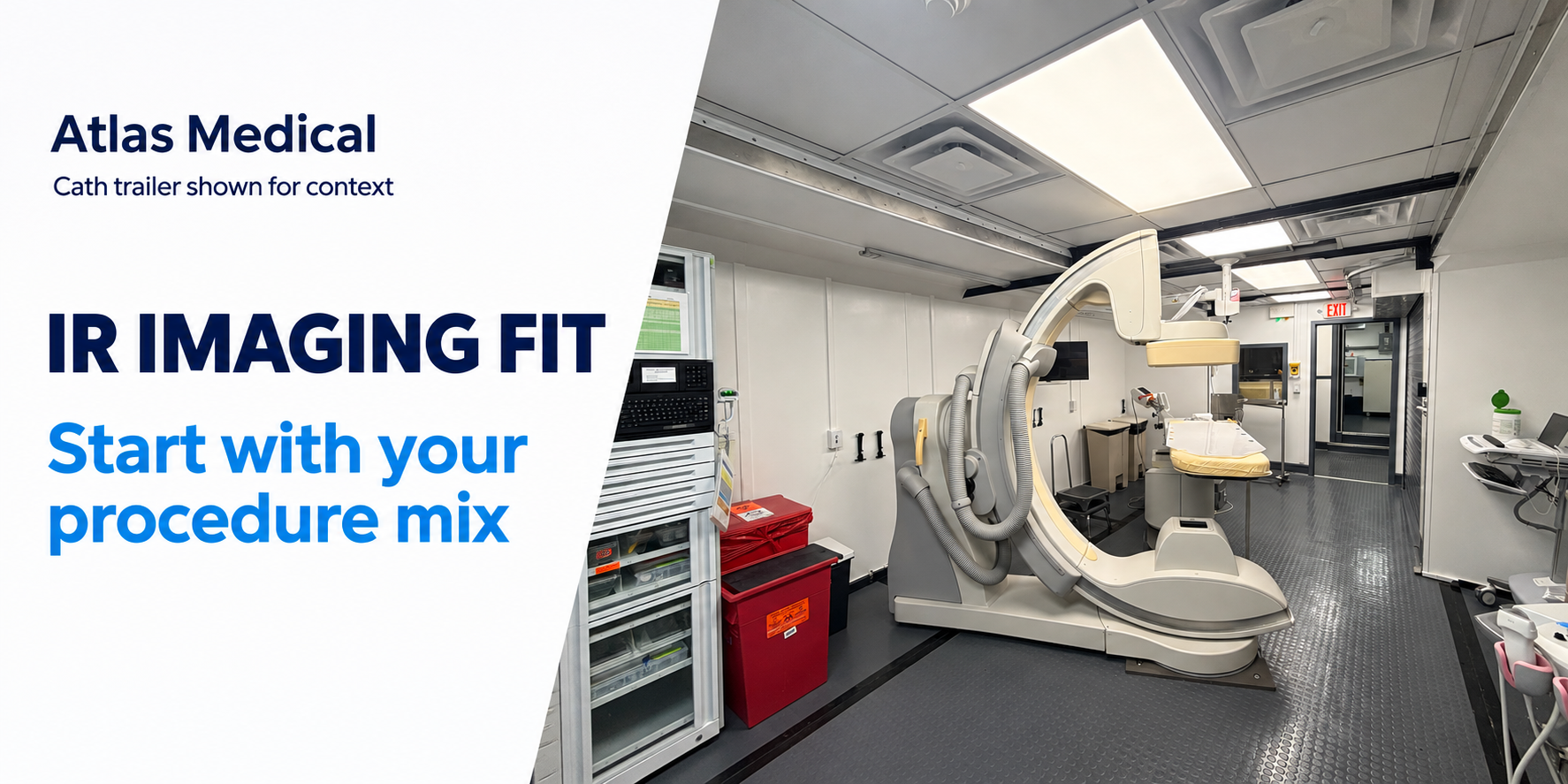
An interventional radiology room is going offline for renovation or equipment replacement. The first rental discussion may start with the imaging system's name. The more useful question is what the hospital needs that system to do during the temporary period.
Two proposed rooms can sound similar while supporting different imaging workflows. A familiar manufacturer or model family is a starting point for review, not a substitute for confirming the assigned configuration. Before committing the interim procedure schedule, connect the hospital's intended work with the functions, software and supporting equipment actually proposed.
Start with the temporary procedure mix
The interim service does not have to be described as a copy of the entire permanent department. Ask the IR clinical lead to define which procedure groups the hospital intends to accommodate, which will remain elsewhere and which require further review. This is a hospital clinical and operational decision; a rental proposal cannot make it on the hospital's behalf.
For each group, have the team describe the imaging workflow it relies on today. Does the work depend on live fluoroscopy, particular angiographic acquisition modes, roadmapping, rotational imaging or a specific three-dimensional application? Identify the function and its purpose in the existing workflow before asking whether a proposed system includes it.
This approach also exposes requirements that are easy to lose in a broad phrase such as “IR capable.” A function used infrequently may still matter to a procedure the hospital intends to retain. Conversely, a feature in a brochure may have no role in the temporary service plan.
Separate imaging functions that sound interchangeable
Fluoroscopy provides moving X-ray images that can show instruments or contrast moving through the body. The FDA describes its use across a range of diagnostic and interventional procedures. That broad description does not establish which additional applications an individual installation contains.
Roadmapping deserves a more specific conversation. For example, Philips' Dynamic 3D Roadmap documentation describes combining live two-dimensional fluoroscopy with a three-dimensional reconstruction. It is a description of a particular application and its inputs, not evidence that every system bearing an Allura name has that workflow installed.
Ask the team to specify what it means by “roadmap” and what it needs to acquire, display, manipulate and save. The same discipline applies to requests for rotational imaging or three-dimensional guidance. Record the actual application name and version where relevant, along with any dependencies the manufacturer identifies. These are configuration questions to resolve with qualified applications and technical personnel, not instructions for performing a procedure.
Confirm the hardware configuration as well as the software
Single-plane and biplane systems are separate configuration choices. Philips, for example, describes its Allura Xper FD20/20 biplane system as having two large flat detectors. That manufacturer example explains why a similar product-family name should not be treated as an exact equipment match. It does not describe the equipment assigned to an Atlas project.
Have the clinical team determine whether its intended work requires a particular configuration. Then compare that requirement with the proposed system's exact model, detector arrangement, installed software and included applications. Ask for documentation tied to the assigned equipment, rather than accepting a product-family brochure as the final answer.
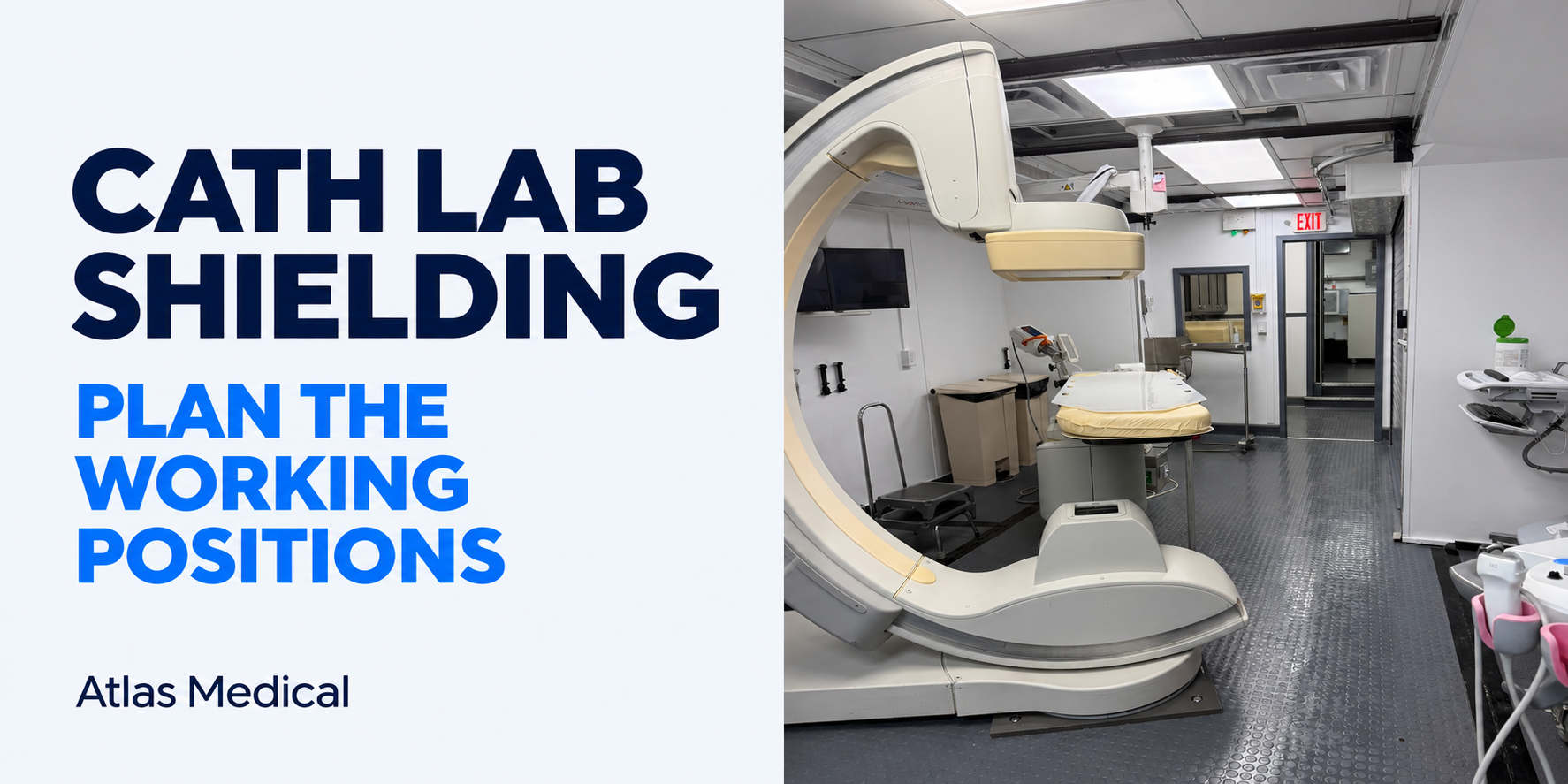
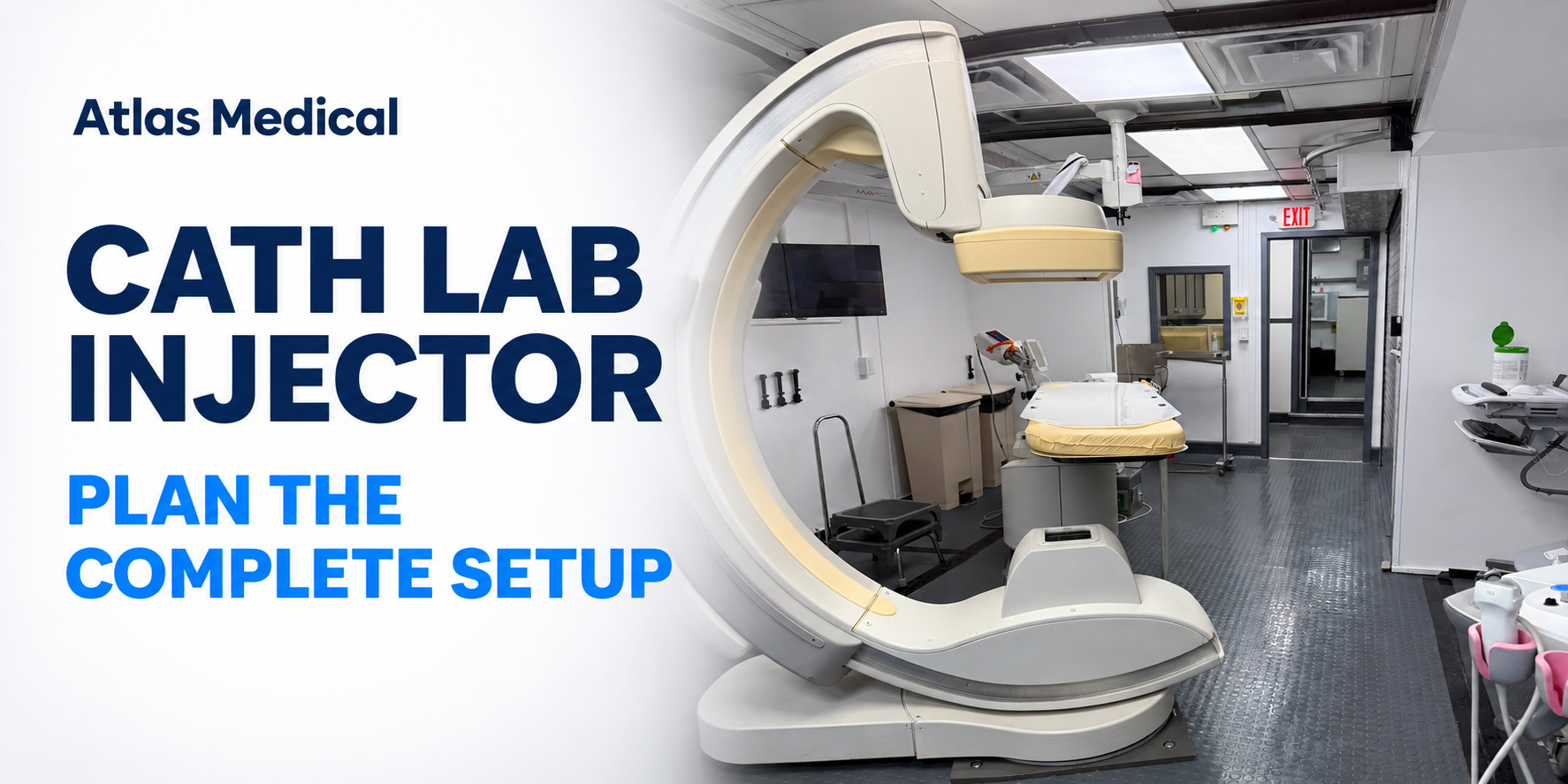
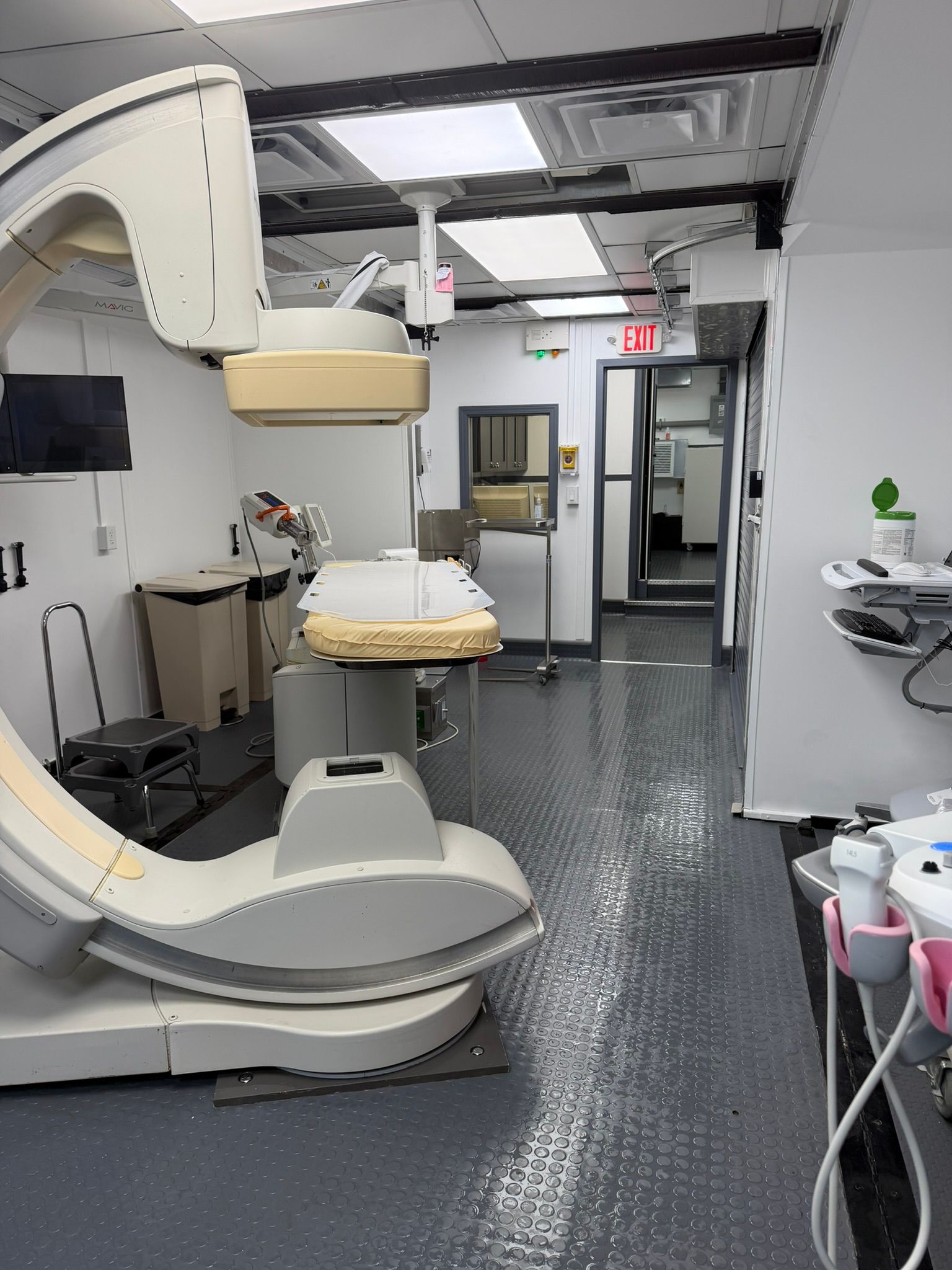
The physical room matters too. Review the positions and movements the team expects to use, the proposed table and accessories, and the working space needed by supporting equipment. A software function on a specification sheet does not answer whether the planned room arrangement supports the hospital's intended workflow.
Turn a proposed feature into a demonstrated workflow
A useful review follows one representative workflow from the hospital's plan. Identify the required acquisition and viewing functions, who operates them, any additional workstation or equipment involved, and what the team expects to retain afterward.
For example, if the team requires a particular three-dimensional application, ask which installed components support it and which application-specific familiarization is planned. If a required function is absent or uncertain, leave that procedure group's suitability unresolved until the responsible clinical and technical teams decide how to proceed. Do not silently substitute a different imaging method to close a project-planning gap.
Keep the discussion practical: what is included in the proposed package, what the hospital supplies, what remains to be confirmed and what evidence will settle the question. A demonstration or walkthrough should use an appropriate non-patient setting and the applicable manufacturer instructions.
Allow time for the hospital's acceptance process
A familiar interface can still require preparation when the installed release, options or room arrangement differs. FDA guidance emphasizes operator training, equipment quality control and radiation-management responsibilities for fluoroscopic imaging teams. The hospital's responsible clinicians, technologists, medical physicist and other relevant teams should determine the reviews and preparation needed for the assigned installation.
Resolve these requirements before treating the temporary schedule as committed capacity. Make time for configuration review, applicable acceptance activities and staff preparation, with clear ownership of remaining questions. Equipment delivery and a completed feature comparison alone do not establish clinical readiness.
For the first project discussion, bring the intended procedure groups and the imaging functions they depend on. That gives the hospital and provider a concrete basis for reviewing a proposed temporary lab during replacement downtime. Contact Atlas Medical to discuss your project.