Education
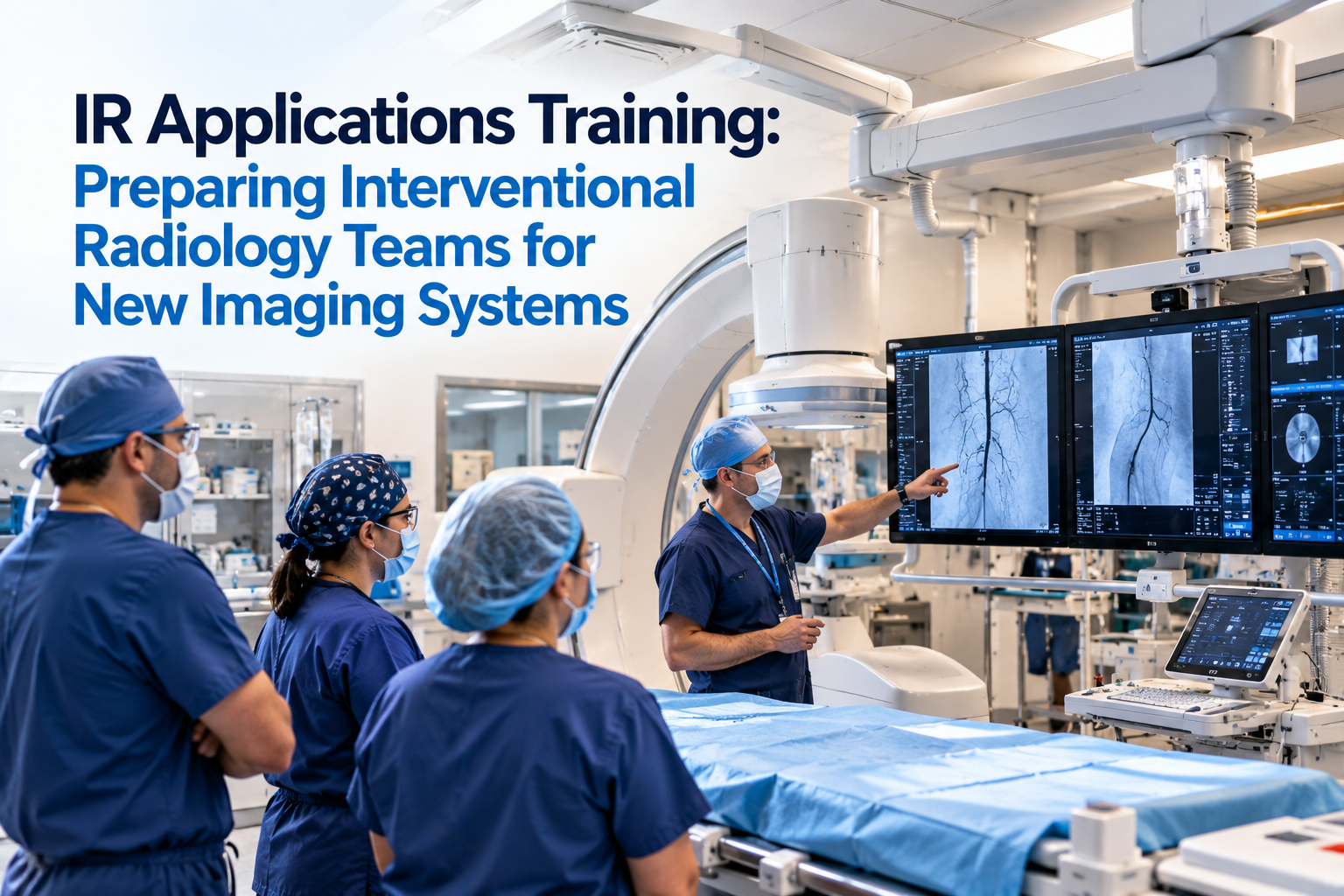
Interventional radiology teams rely on imaging technology throughout nearly every stage of a procedure. When that technology changes, experienced technologists may still need time to become comfortable with the new system. A different angiography platform can change how staff navigate the interface, position the C-arm and detector, select fluoroscopy and acquisition modes, use roadmapping, review images, manage advanced imaging functions, and move through the room during a procedure. IR applications training helps bridge that gap. Rather than providing generic interventional education, system-specific applications training focuses on helping the hospital's team understand the equipment and workflows they will actually use. Atlas Medical provides imaging applications training and temporary technologist staffing for hospitals and imaging providers with project-based clinical support needs.
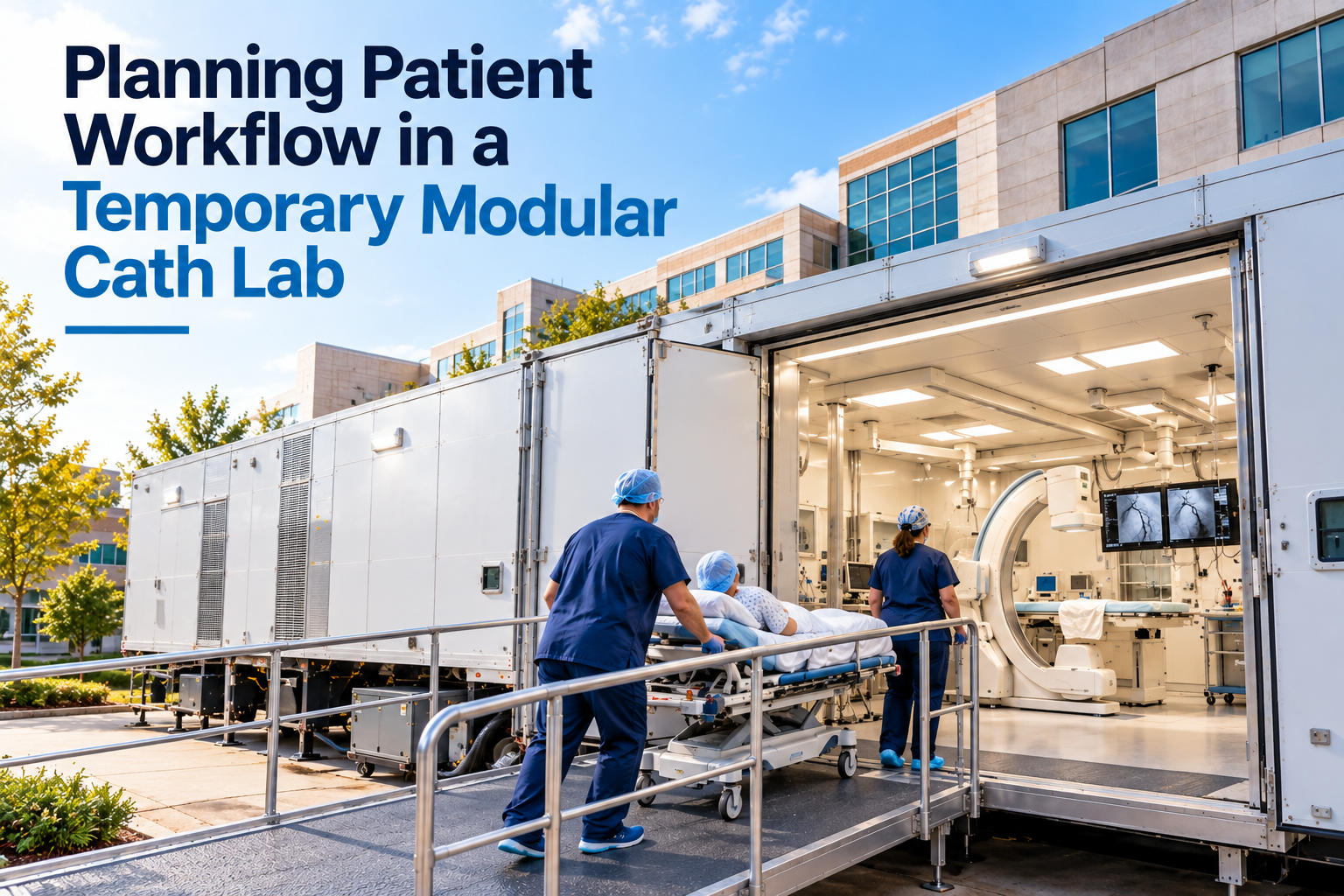
A temporary modular cath lab can help a hospital maintain procedural capacity during renovations, equipment replacement, program expansion, or other periods when the permanent cath lab is unavailable. But installing the temporary lab is only part of the project. Hospitals also need to answer a practical question: How will patients move safely and efficiently between the hospital and the temporary cath lab? Patient workflow can change when procedures move outside the permanent department. Distances may increase. Prep and recovery may remain inside the hospital. Staff may need to move supplies between locations. Stretcher and wheelchair routes may change. Construction activity may also affect access. Planning the modular cath lab patient workflow before go-live helps the hospital identify these operational issues while there is still time to address them. Atlas Medical's Modular Cath Labs are designed to provide temporary hospital-grade procedural environments during renovations, overflow, new programs, and other temporary-capacity needs. The modular lab provides the procedure environment. The hospital still needs to design the patient journey around it.

By the time a mobile CT scanner arrives at a hospital, much of the planning should already be complete. The site has been selected. Facilities has reviewed the proposed location. Power and connectivity requirements have been discussed. The hospital knows when temporary CT capacity needs to become available. But delivery is not the same as go-live. A mobile CT scanner installation still involves positioning the unit, connecting infrastructure, integrating the scanner with hospital systems, verifying equipment readiness, preparing technologists, and completing the hospital's own pre-clinical requirements. Understanding that sequence helps project teams avoid treating the arrival date as the same thing as the clinical start date. Hospitals evaluating temporary CT capacity can review Atlas Medical's mobile CT scanner solutions before building their deployment schedule. Atlas currently offers mobile CT systems from major OEMs and includes applications training and integration support as part of its turnkey approach.
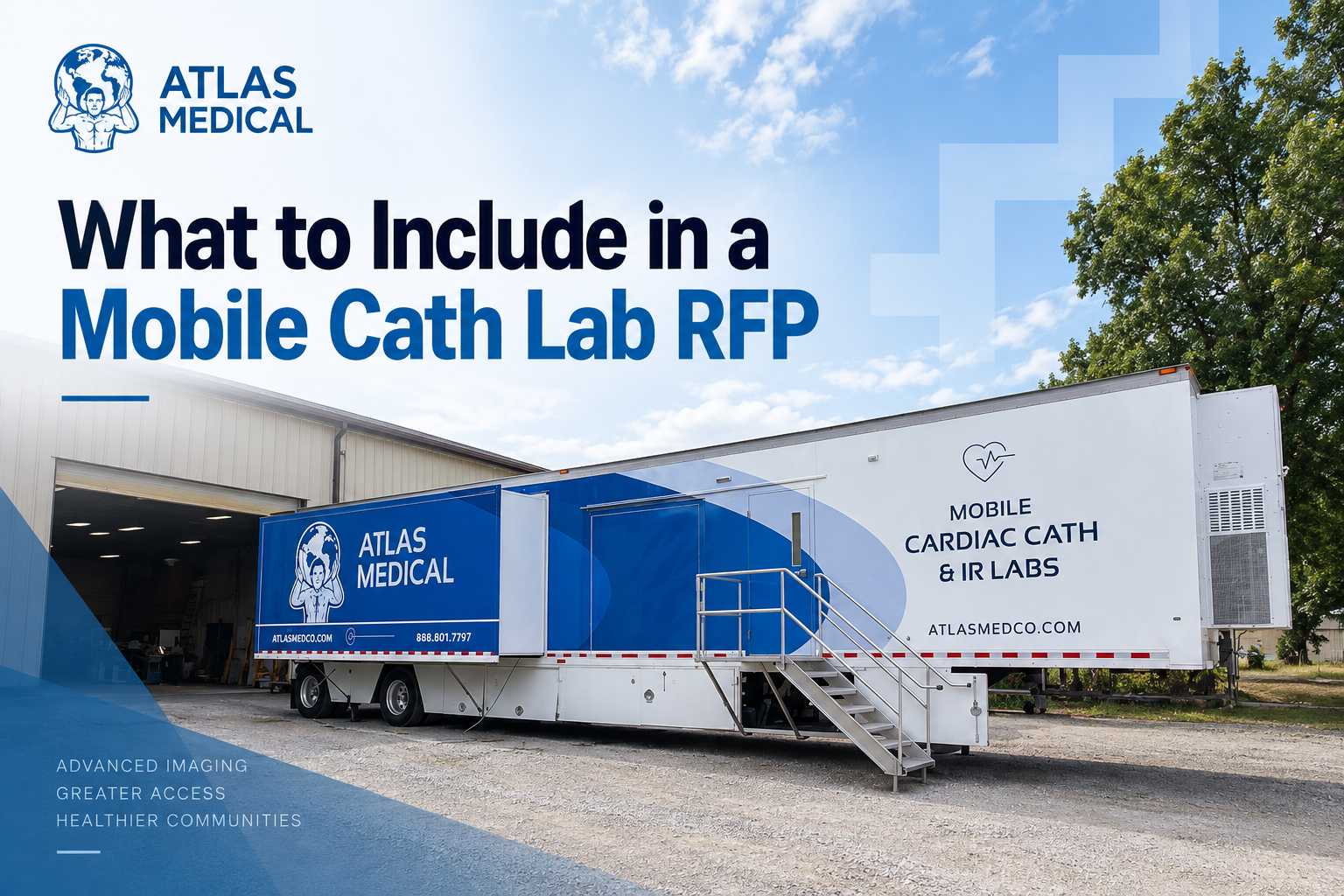
A hospital preparing to rent a mobile cath lab needs more than a price and an available trailer. The hospital needs to know whether the temporary lab can support its procedures, fit the site, integrate with existing systems, arrive on schedule, support staff workflow, and remain available for the full project period. A well-written mobile cath lab RFP helps procurement teams compare vendors against the same requirements instead of evaluating proposals that describe completely different solutions. The RFP should therefore be developed with input from more than procurement alone. Cath lab leadership, facilities, IT, clinical engineering, project management, infection prevention, finance, and other appropriate hospital stakeholders may all have requirements that affect the temporary lab. Hospitals still defining the type of temporary solution they need can review Atlas Medical's mobile cath lab rental solutions before developing the RFP.
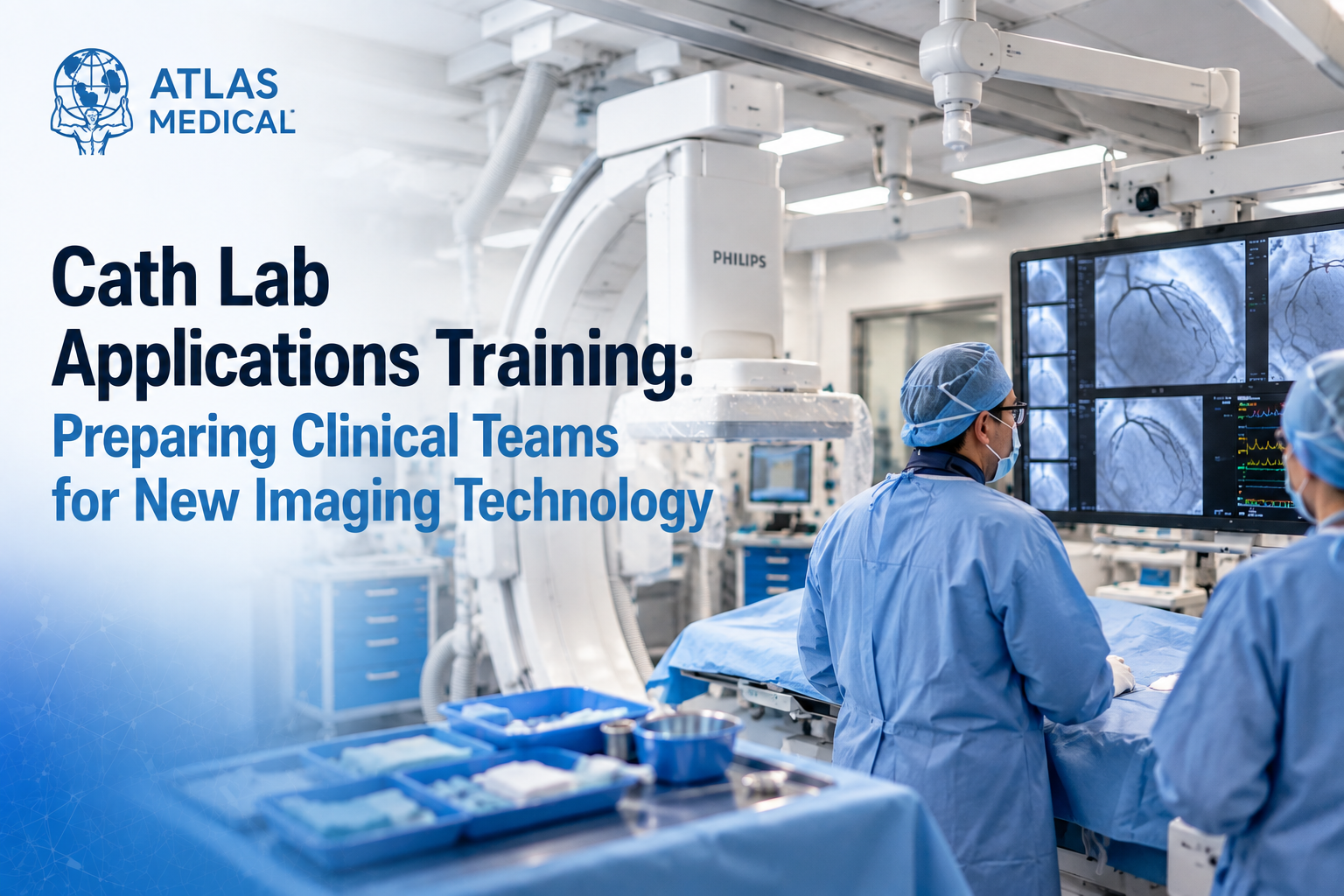
Installing or gaining access to a cath lab imaging system is only part of getting the room ready for clinical use. The people operating the technology also need to understand how that particular system fits into their daily workflow. A clinical team may already have years of cath lab experience and still need time to become comfortable with a different interface, room controls, imaging modes, table and C-arm movements, image review tools, and system-specific workflows. That is where cath lab applications training becomes valuable. Rather than teaching cath lab fundamentals, applications training focuses on helping experienced clinical teams understand and effectively use the imaging technology available to them. Hospitals that need project-based support can explore Atlas Medical's imaging applications training and temporary technologist staffing .
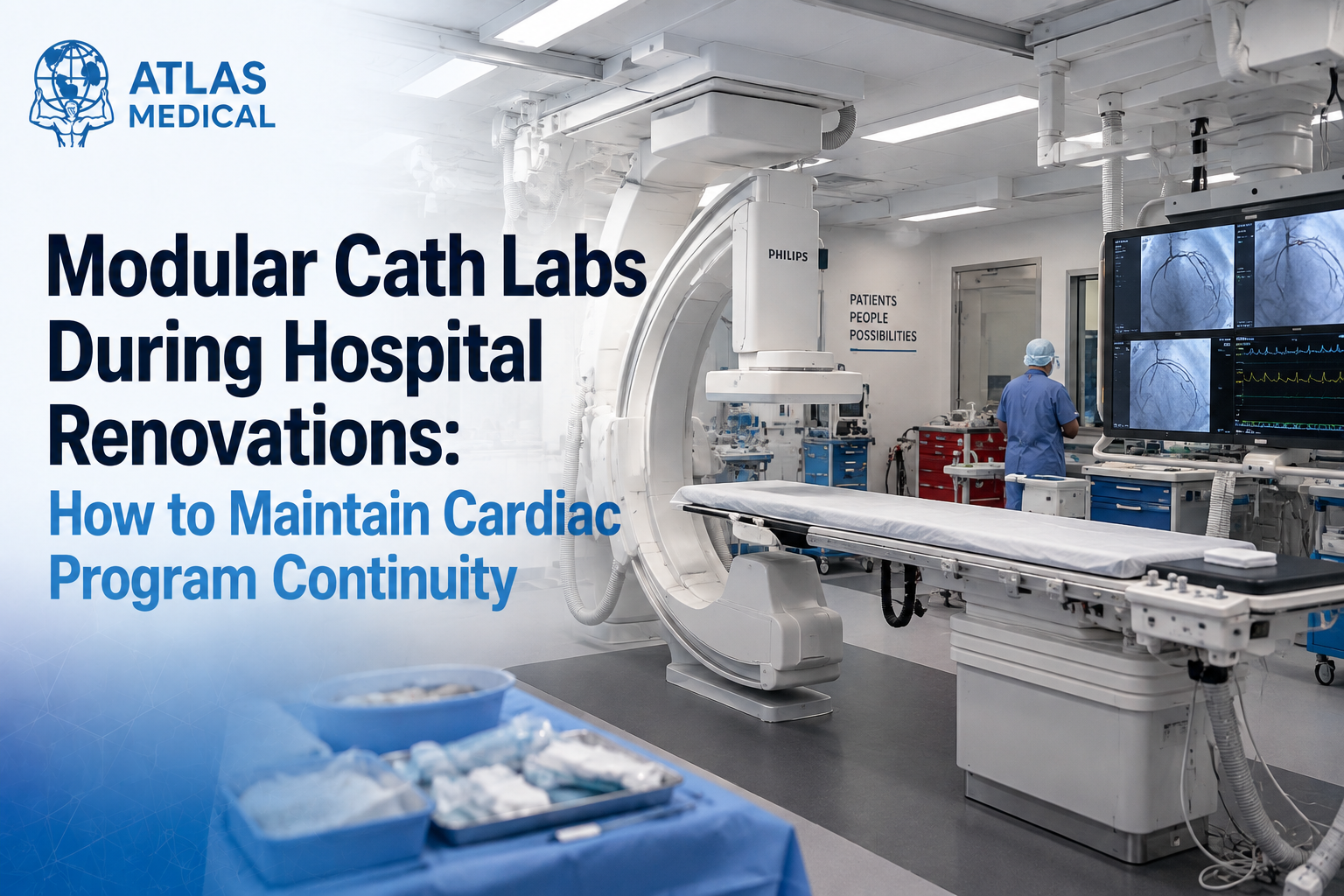
A cath lab renovation creates an unusual planning challenge for hospitals: the project is designed to improve cardiac services, but completing it may temporarily take critical procedural space out of operation. The construction schedule is only part of the problem. Hospital leaders also have to decide what happens to procedures, physicians, staff, patients, and workflows while the permanent lab is unavailable. A modular cath lab for hospital renovation can provide temporary procedural capacity on-site while work progresses inside the permanent facility. Atlas Medical specifically positions its modular cath lab rentals for renovations, temporary capacity, and projects where hospitals need to keep cases running. The key is to treat the modular lab as part of the renovation strategy—not as equipment that gets added after the construction plan is already finished.
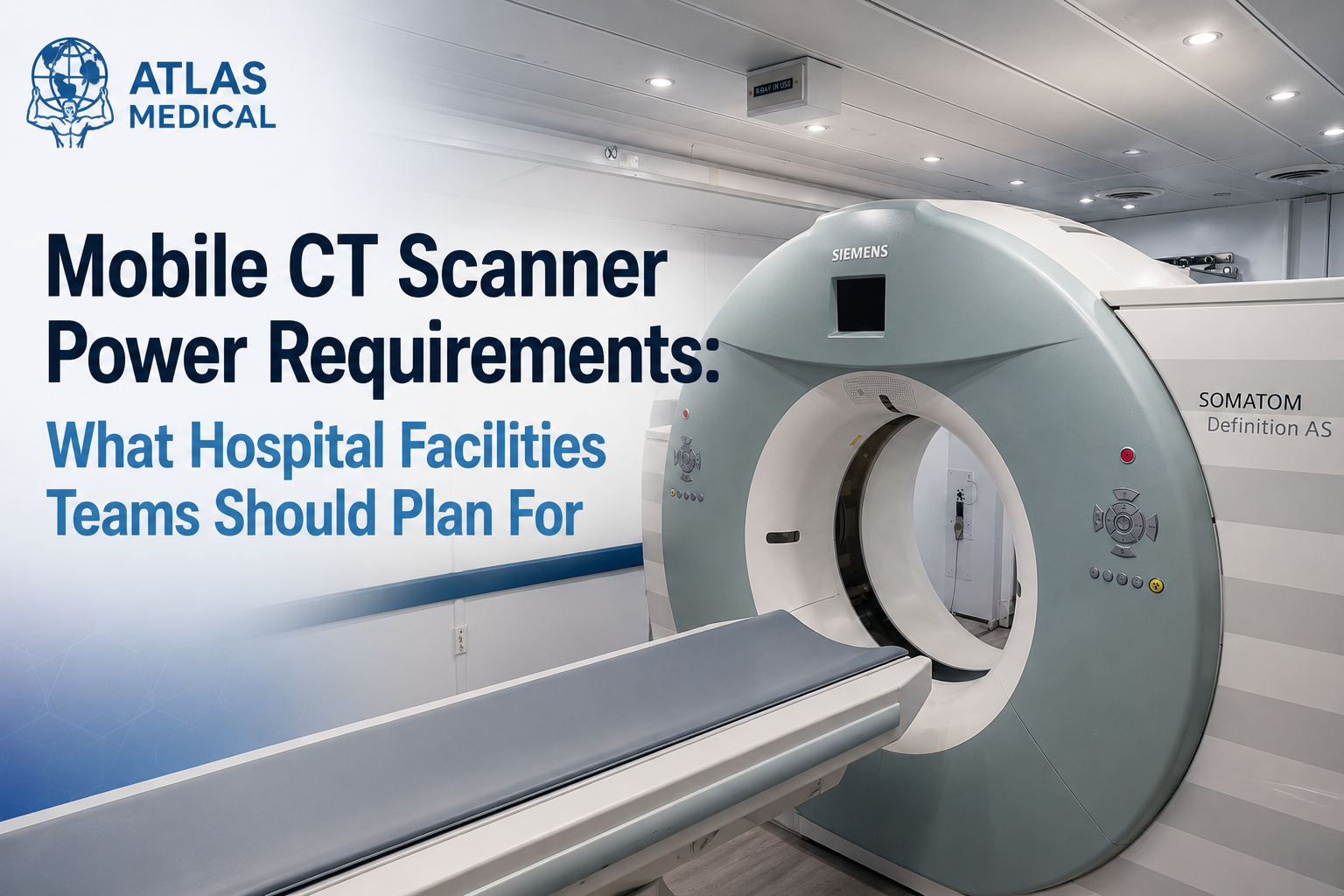
A mobile CT scanner may arrive on a trailer, but it still needs the electrical infrastructure required to operate advanced diagnostic imaging equipment. For hospital facilities and engineering teams, that makes power one of the first technical questions to resolve before delivery. Atlas Medical notes that a typical mobile CT unit requires 480V, 3-phase power . However, hospitals should not treat that figure as a universal specification for every trailer or scanner. The electrical requirements should always be confirmed for the specific mobile CT unit assigned to the project. Getting that information early gives facilities teams time to evaluate the site's existing electrical capacity, determine whether electrical work is necessary, coordinate responsibilities, and have the connection ready before the mobile unit arrives.
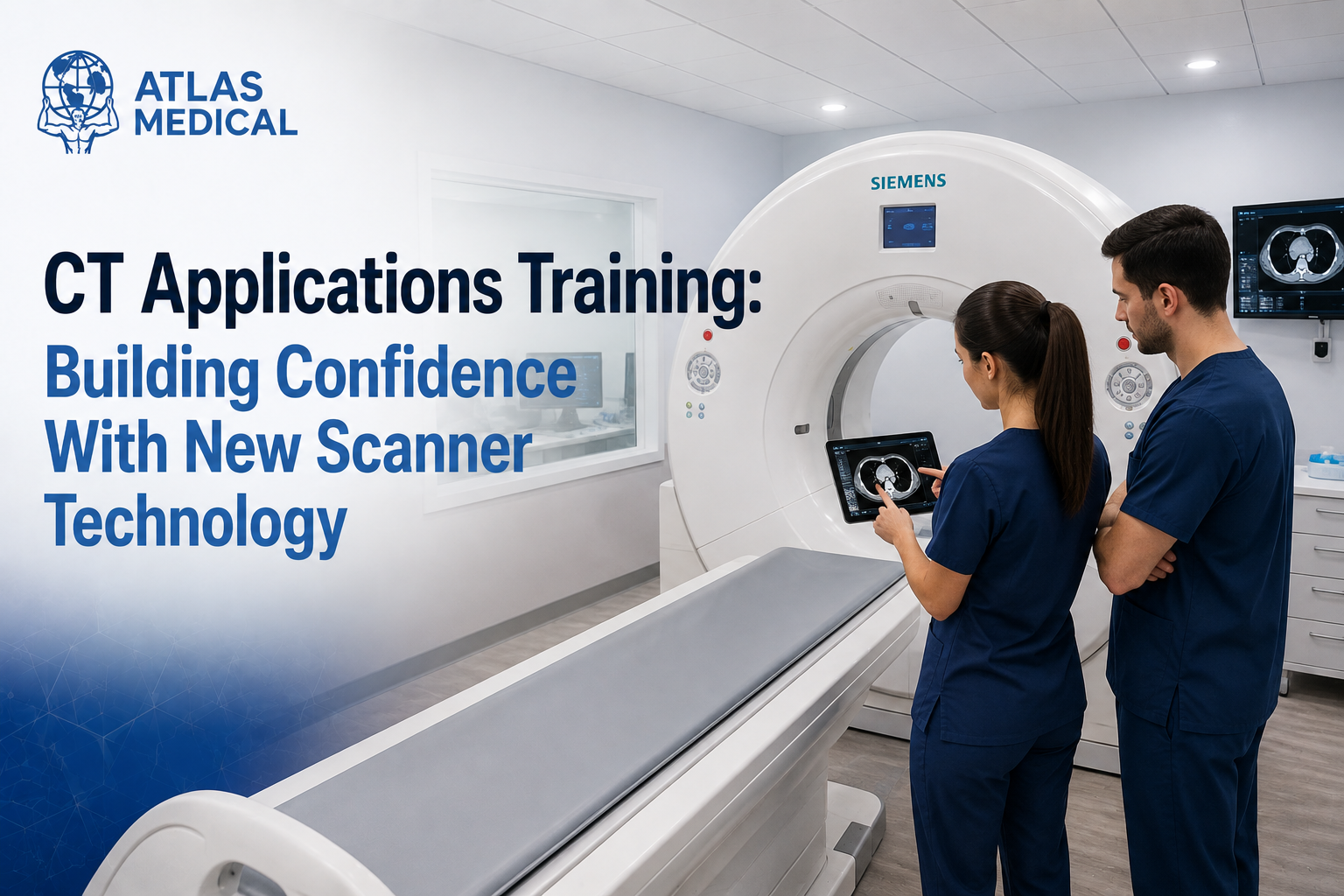
An experienced CT technologist already understands patient care, positioning, scan preparation, and the clinical demands of a busy imaging department. What changes when the scanner changes is the technology used to perform that work. A new interface, different protocol structure, unfamiliar reconstruction tools, or a change in manufacturer can create a learning curve even for an experienced team. CT applications training gives technologists hands-on, system-specific support so they can understand how the scanner fits into their department's clinical workflow. Hospitals may need this support when installing a scanner, replacing older equipment, changing OEM platforms, introducing advanced applications, opening a temporary imaging location, or onboarding additional staff. Atlas Medical provides imaging applications training and temporary technologist staffing for hospitals and imaging providers with project-based clinical support needs.
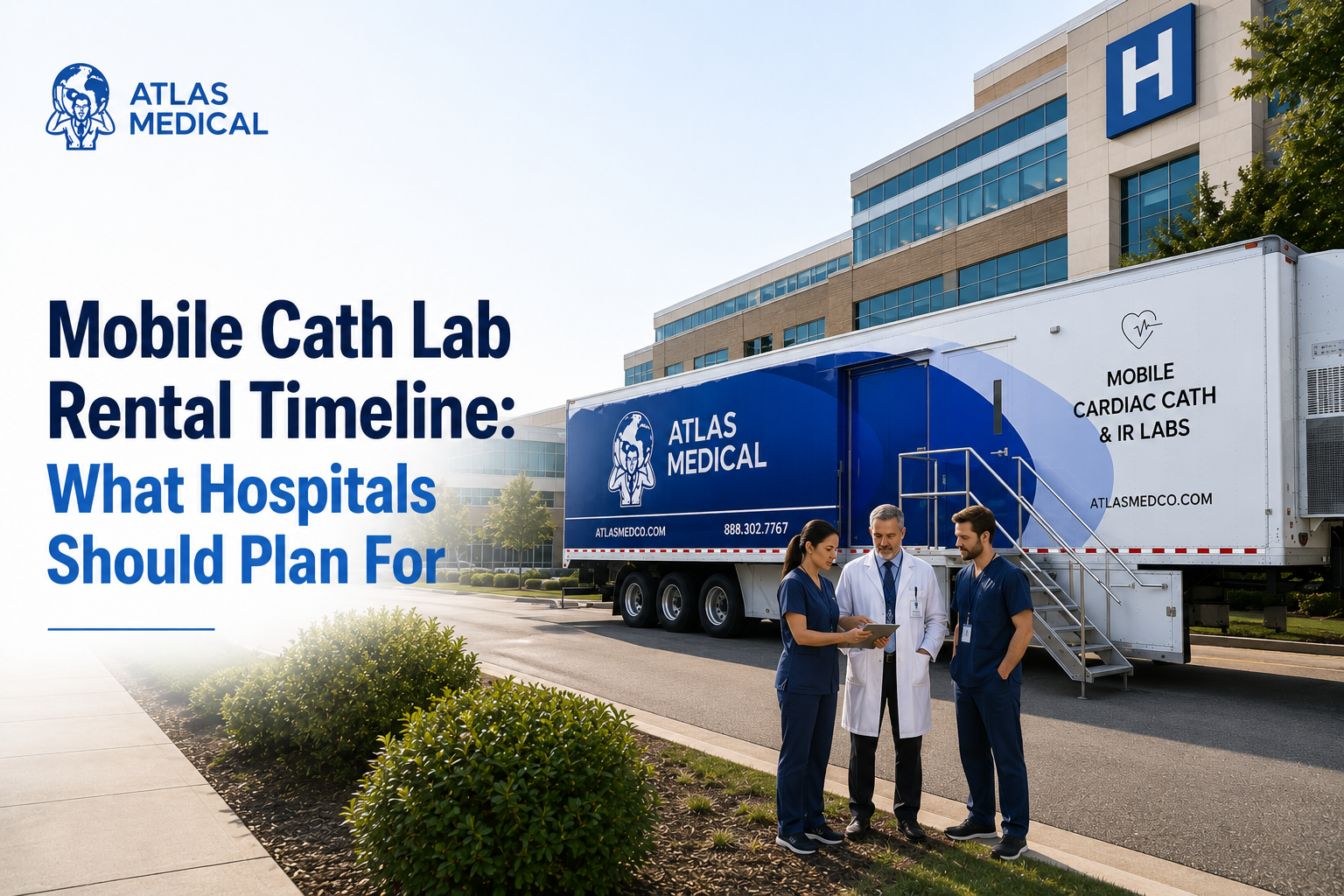
Planning a mobile cath lab rental? Learn the key stages hospitals should prepare for, from project assessment and site readiness to delivery and go-live.
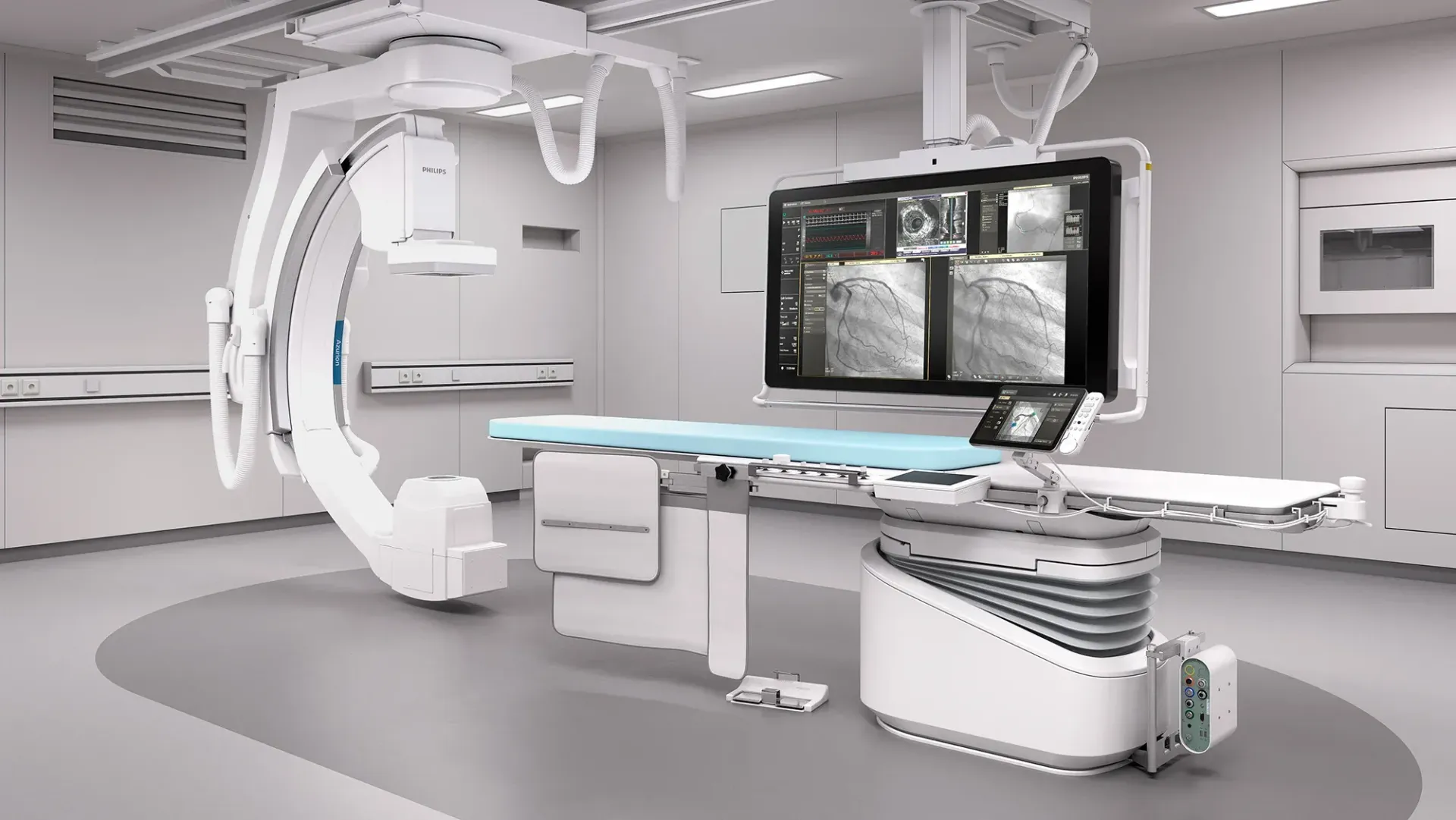
Comparing Philips Allura vs Azurion? Learn about each systems's workflow,dose management, 3D guidance, and long-term value for modern interventional labs.